

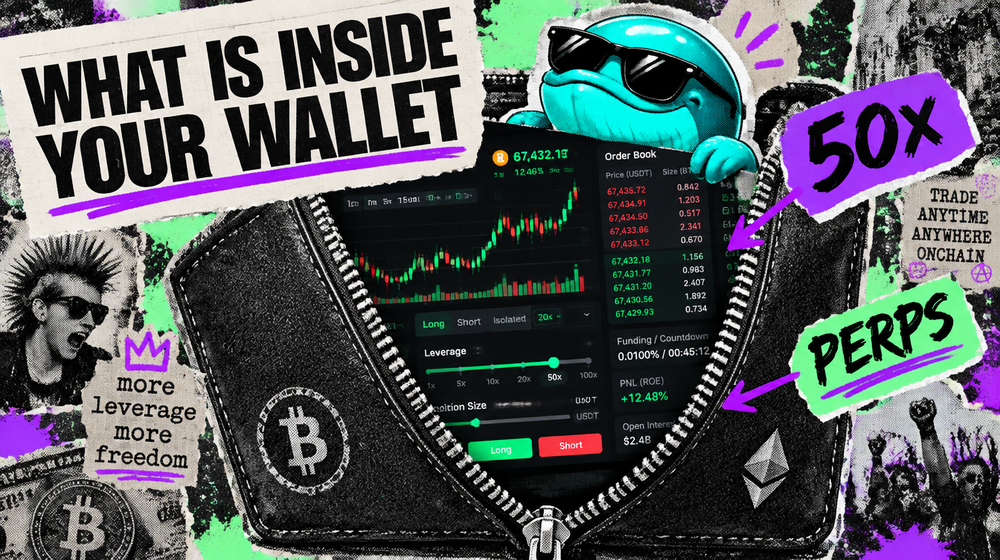
A self-custody wallet can now open a perp. A prediction market can now offer long and short. An app built to hold assets increasingly wants to own the entry, leverage, risk controls and liquidity too.
That is not just feature copying. Crypto is converging on the same product layer: turning attention into a tradable market.
This does not mean every crypto app becomes an exchange. The sharper point is that apps trying to retain users, liquidity and revenue increasingly need to own part of the trading stack.
TL;DR
Trading is one of the few crypto use cases that still repeats after incentives fade. Perps, prediction markets and tokenized assets turn news, volatility and narratives into action inside the app.
Convergence can improve UX, but it does not automatically create a good product. A new Trade button does not prove deep liquidity, retention or durable revenue.
Traders should watch where liquidity remains after the campaign ends, not just chase the latest market launch.
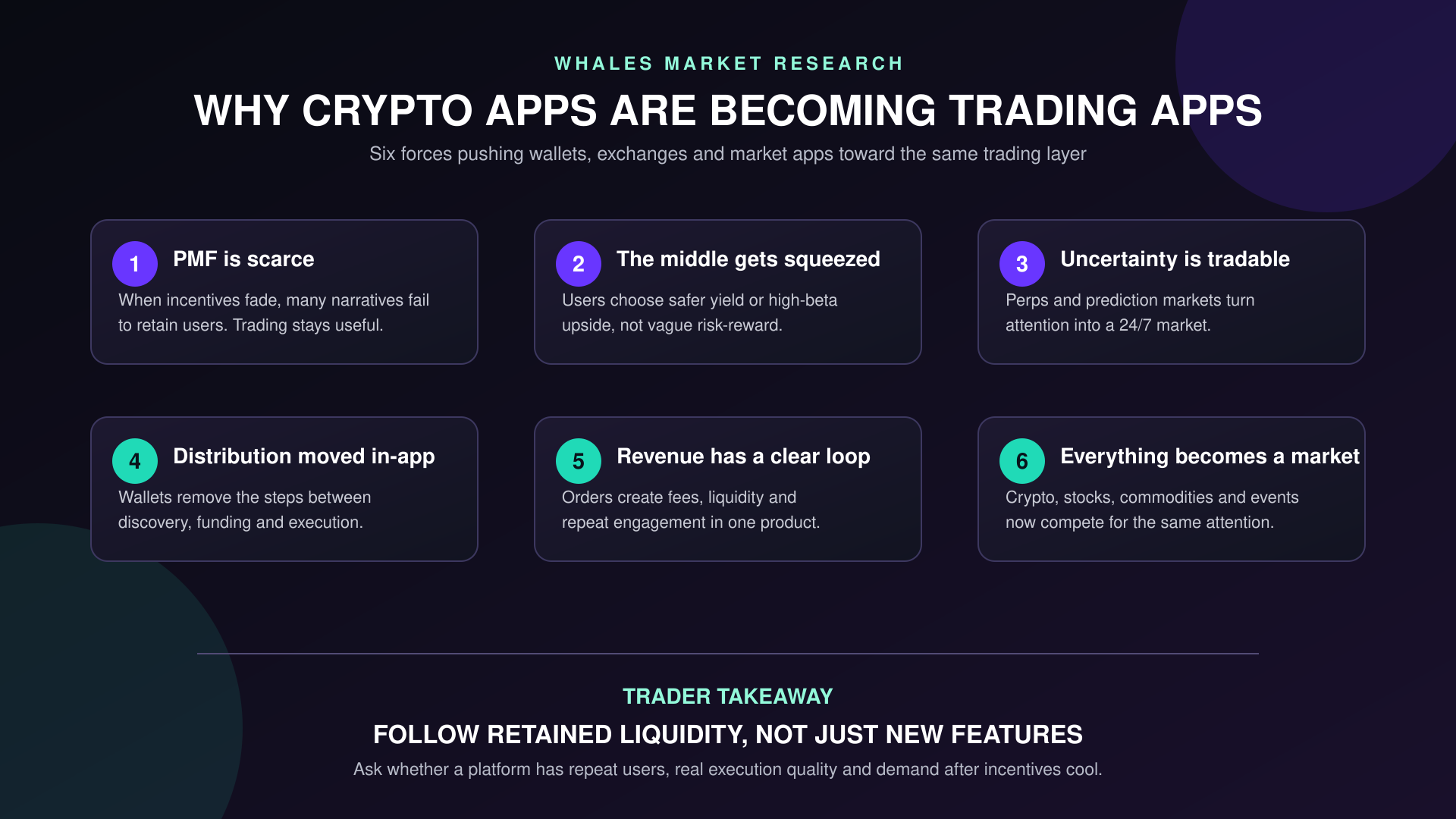
The convergence is already visible in the product
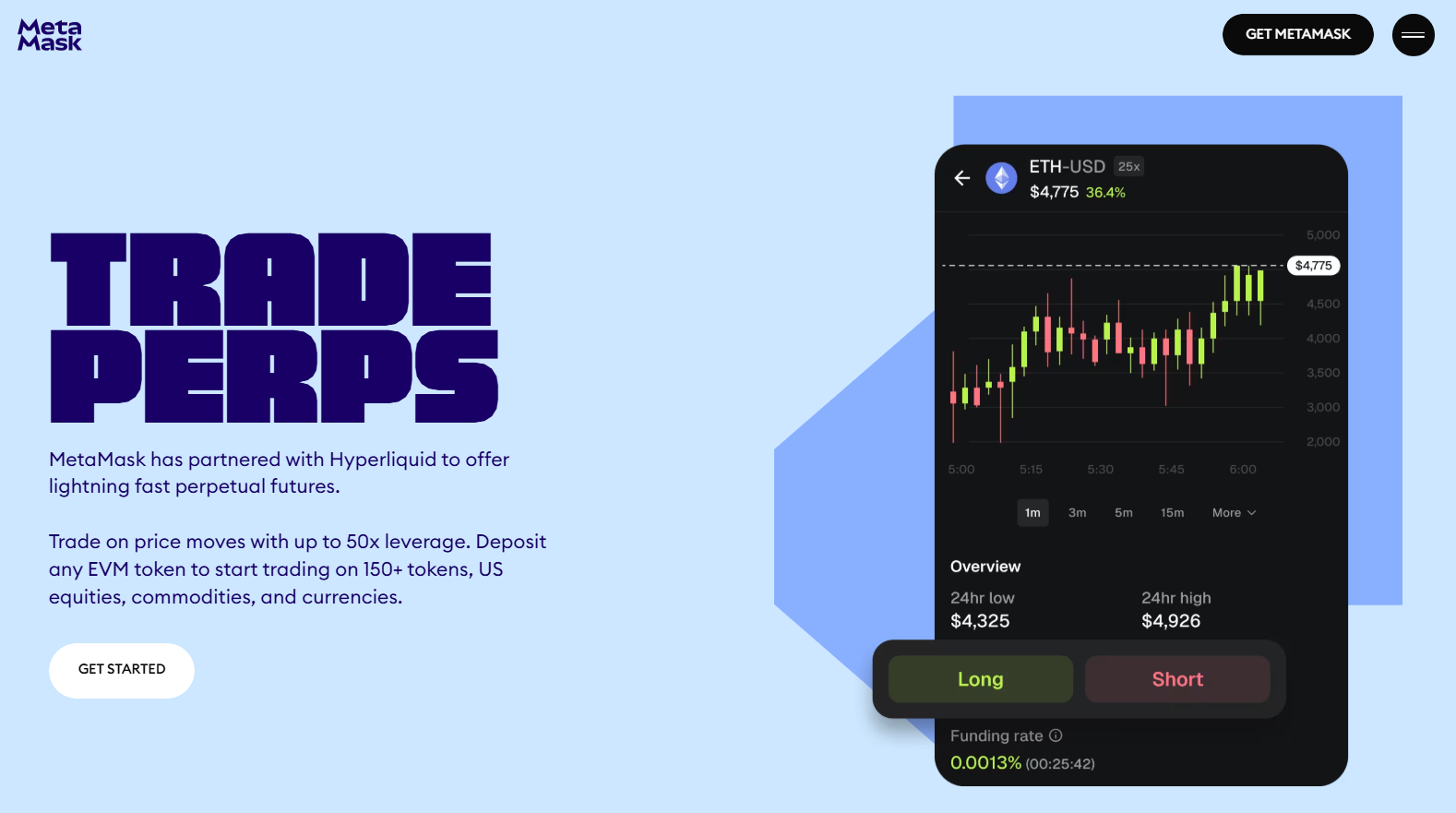
This is no longer a distant prediction. MetaMask brings perpetual futures into the wallet, with up to 50x leverage and EVM-token funding. Trust Wallet also offers perps across more than 100 markets with up to 200x leverage through partner venues. Both began with self-custody. Both are pulling execution into the place where users already hold assets.
The shift is not limited to wallets. Polymarket Perps now places crypto, equities, indices and commodities in one long/short interface. Kalshi also describes itself as a venue for both event contracts and perpetual futures.
Different apps reaching the same menu does not prove they will all win. It does show where teams believe demand exists. Here are six reasons why.
1. Product-market fit is much harder to find
Crypto once had a period where almost every new primitive could generate TVL, point farming and a fundraising narrative. The hard part always came later: when rewards fell, did anyone still use the product for the product?
Four Pillars describes a wave of pivots and shutdowns across infrastructure, social and gaming. It is a research view, not an official industry census. But it captures the real problem: incentives can buy early activity, not permanent retention.
Trading is different because it does not need a long roadmap to create a reason to return. Prices move, news lands, funding shifts, a token approaches launch or an event gets repriced. Every moment creates a decision. An app that only stores assets risks becoming invisible infrastructure. An app that helps users decide and execute has a reason to become a habit.
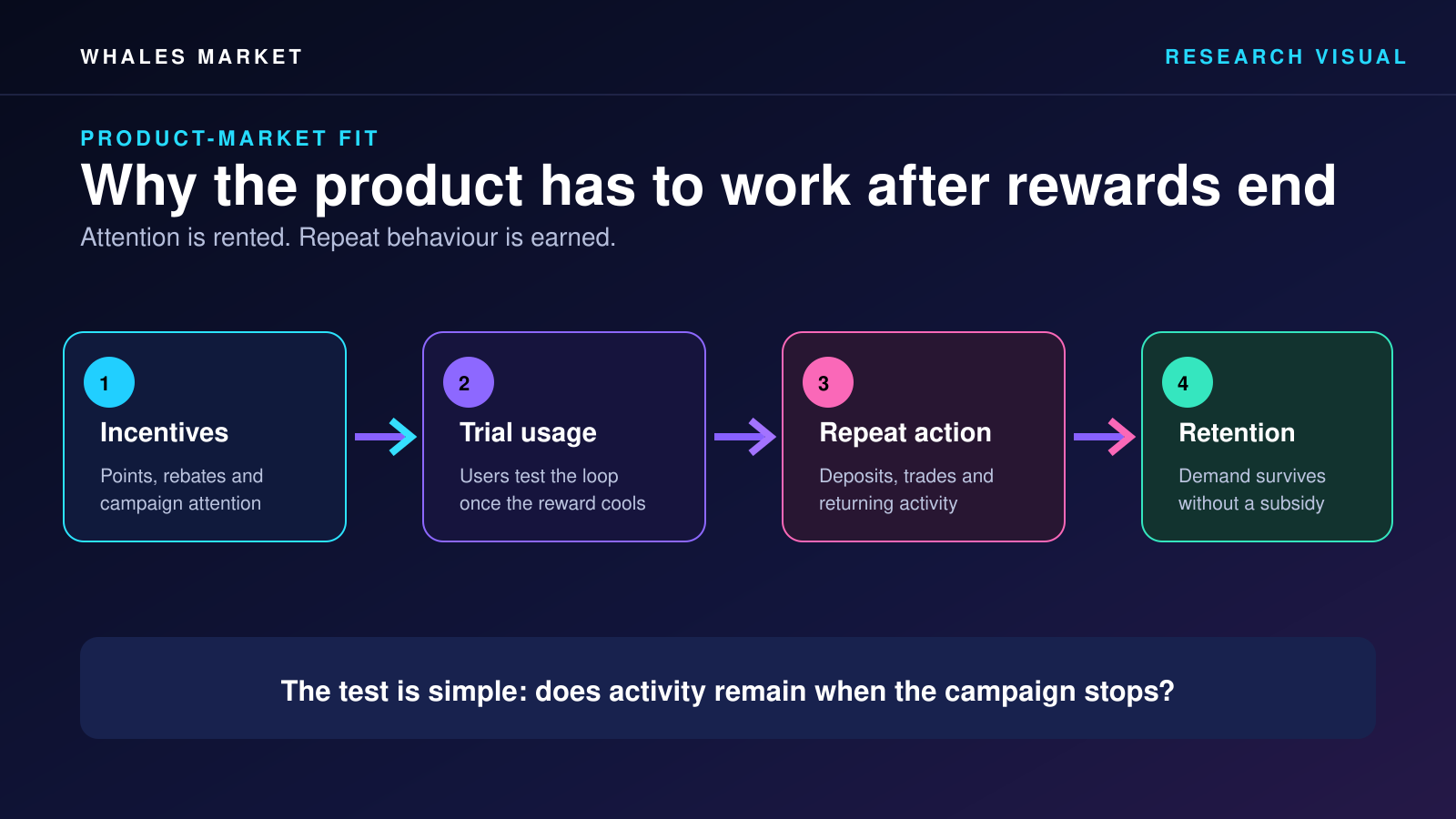
That does not mean DeFi, gaming or social are finished. It means they need to prove a standalone use case. A new product should not be judged by TVL during its first campaign week.
2. The middle of the risk curve is losing appeal
Many DeFi products once sold a simple proposition: deposit stablecoins, earn yield and take what looked like moderate risk. When yield falls but smart-contract, depeg, bridge and liquidity risk do not, the reward becomes harder to justify.
That is why the market is splitting in two. One side offers clearer capital preservation, such as stablecoin payments, tokenized Treasuries or tightly managed vaults. The other is high beta: memecoins, perps and prediction markets, where users knowingly accept volatility for bigger upside.
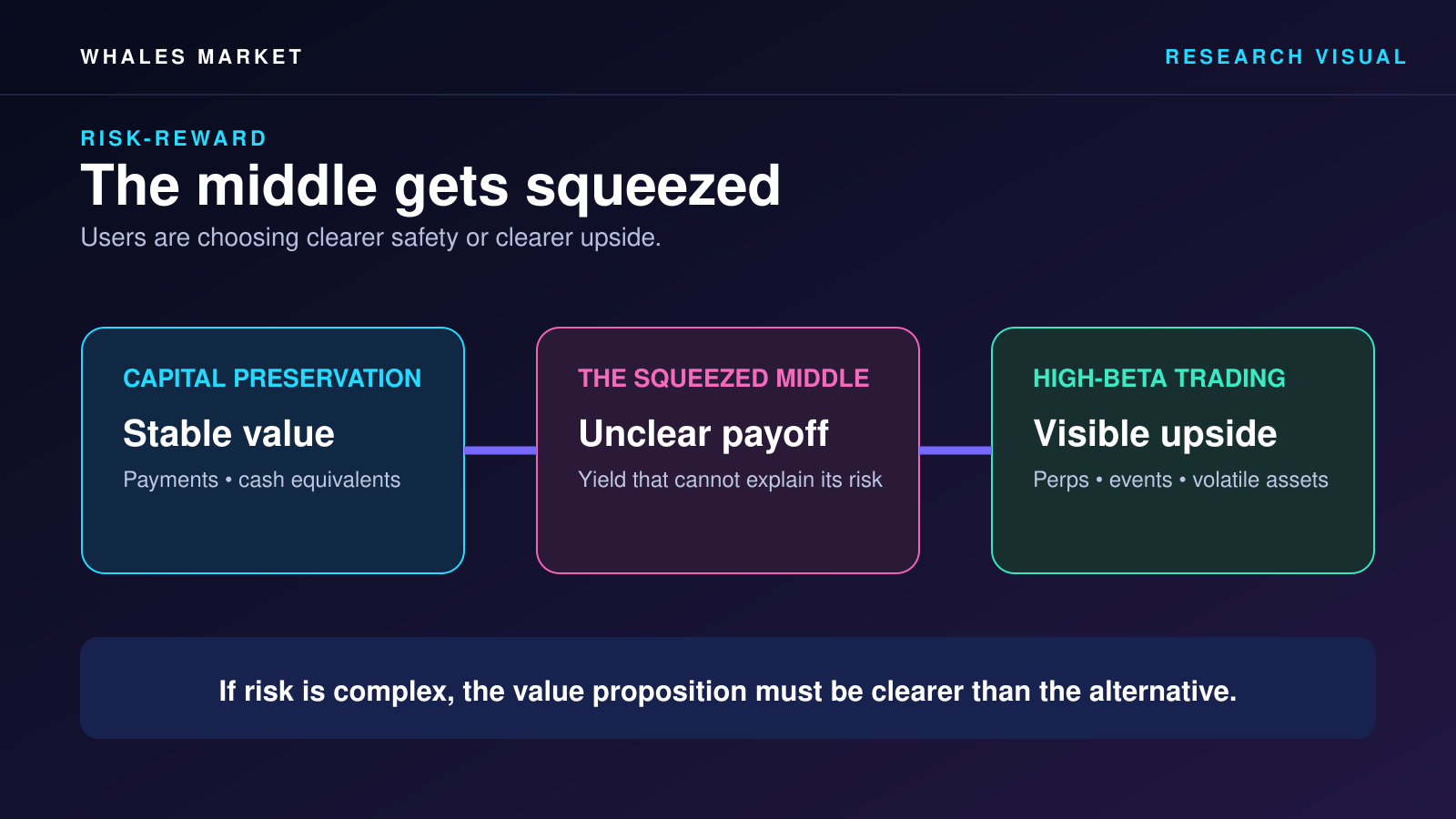
The middle struggles because the risk-reward trade is hard to explain. Users are less willing to accept a vague yield for a very real stack of risks. That is an inference from product behaviour, not a fixed rule. It does explain why more apps want trading: if they cannot offer compelling yield, they can still serve discovery, hedging and speculation.
When reading a protocol, do not ask only, “What is the APY?” Ask where it comes from, how long the subsidy lasts, whether capital stays after rewards disappear and whether the position can exit in a bad market.
3. Perps and prediction markets turn uncertainty into a product
Spot trading depends on users having capital and wanting to own the asset. Perps let them trade direction without holding spot. Prediction markets do the same for events. Both turn a question into a market: where will BTC go, how will a stock react, will a policy happen?
That creates a powerful product loop.
- News creates attention.
- Attention creates positions.
- Positions create volume, funding, liquidity and a reason to return.
Not every market is good because it has this loop, but the loop is far easier to understand than asking users to learn another DeFi primitive.
Polymarket shows how category boundaries are blurring. Whales’ prediction-market analysis explored how the platform attracts mindshare. Adding perps expands the question from “what will happen?” to “how do I want to express that view?”.
4. Distribution has moved inside the app
Trading a memecoin or perp once meant a long chain: find alpha on X or Telegram, check the chart, connect a wallet, bridge funds, swap stablecoins, choose a venue, then place the order. Every step was a place to lose the user.
Wallets that integrate trading are trying to cut that chain. MetaMask lets users fund with EVM tokens and open positions from the wallet. Trust Wallet puts perps, prediction markets and RWAs beside swap, stake and buy. That is not just UX polish. It is distribution.
When discovery, funding and execution live together, the app owns more of trading’s last mile. It knows what markets users watch, when they fund and what can turn interest into an order. Whales’ crypto-neobanks piece is useful context: winning apps do not just add features, they reduce the number of exits required to finish a financial task.
The downside is equally clear. Lower friction makes entry easier, but it also makes leverage and impulse easier. Good UX should explain liquidation, funding, slippage and risk limits, not just make Long easier to tap.
5. Trading creates a clearer revenue loop
A user holding tokens in a wallet may create no direct revenue. A user who trades creates order flow. That can generate fees, spreads, funding, liquidation revenue, referral economics or liquidity for market makers. That is why trading is more attractive to product teams than a portfolio dashboard.
Fees do not equal quality. Whales’ Robinhood Chain analysis makes the necessary distinction: chain fees, chain revenue and company revenue are not the same thing. A hot launchpad, rebate or gas-free campaign can light up a dashboard without proving how much activity remains later.
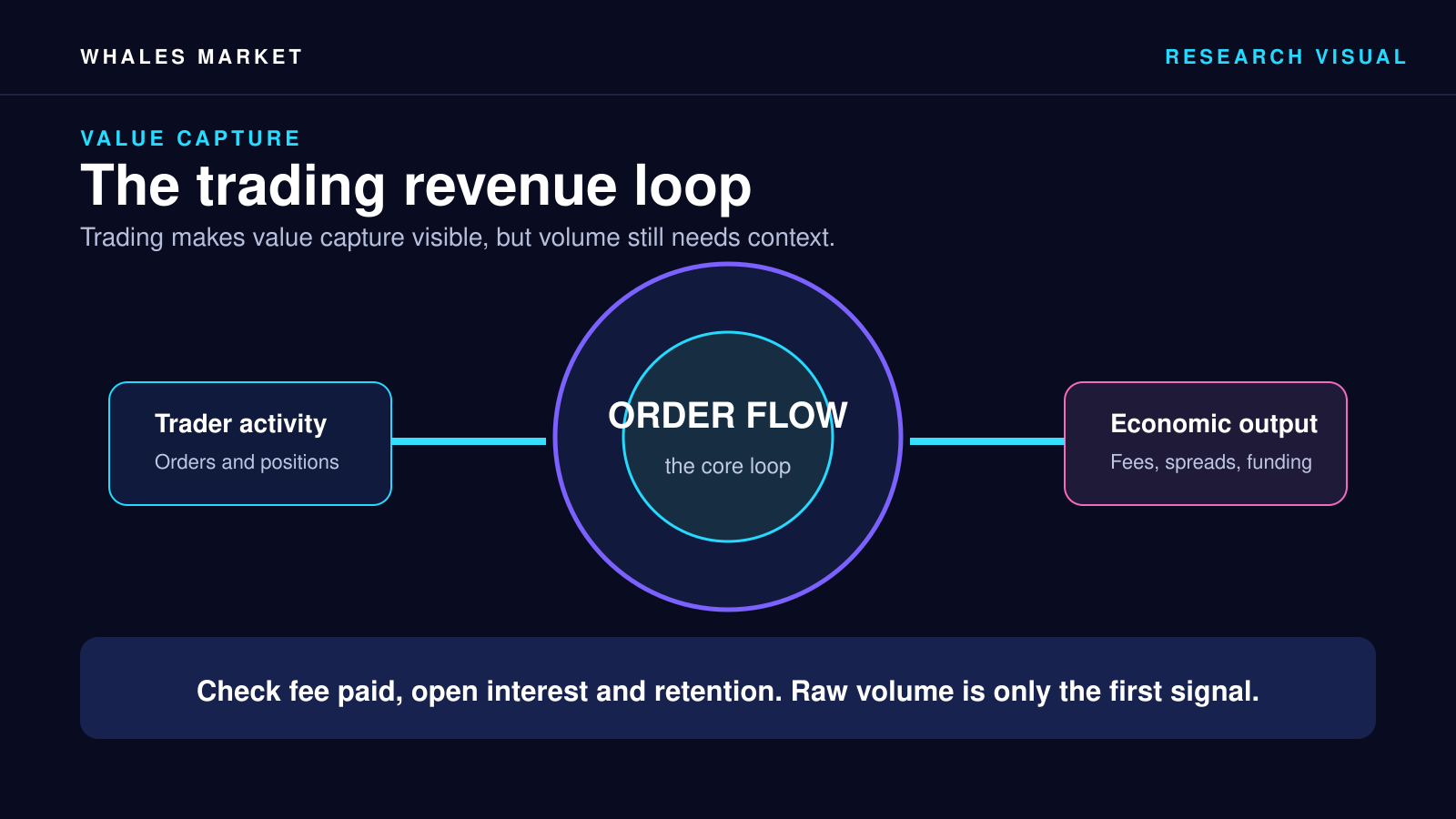
So when an app announces new revenue or volume, read it backwards: who created it, did they pay real fees, did volume come with open interest and liquidity, and is activity concentrated in one token or one incentive?
Whales’ Lighter vs Hyperliquid comparison makes another important point: airdrop farming can inflate volume, while open interest shows how much risk users hold on the venue. Bigger is not always better. What matters is the behaviour a metric measures.
6. Everything is becoming a market
Apps used to be classified by asset or function: crypto exchange, stock broker, wallet, prediction market. New interfaces are organised around a different question: which view can you trade, with which instrument and at what margin?
Polymarket now puts crypto, stocks, indices and commodities inside a perp category. MetaMask promotes tokens, US equities, commodities and currencies. At product level, that shows markets are not only competing to list more assets. They are competing to become the default interface for every kind of conviction.
The everything-exchange thesis has a serious risk. More markets require stronger oracles, liquidity, risk engines, leverage limits and liquidation handling. A market can look great in the UI and still fail at your order size. Asset count does not replace order-book depth.
Trader takeaway
When every app adds trading, a feature announcement becomes a weak signal. Treat each announcement as a question to investigate.
Before launch, ask which friction the app removes. A partner-powered perp tab may be good distribution, but it is not necessarily a moat. Owning liquidity, a margin engine, customer flow or settlement is a different story.
In the first 24 hours, do not only watch volume. Check which markets trade, the spread and price impact, whether incentives are pumping activity and whether liquidations work under real volatility.
Over the next 72 hours, watch retention. Do users return when the headline fades? Do open interest, deposits, fees paid and depth hold up? A good launch turns attention into repeated behaviour.
In week one, assess whether the app creates its own value or only routes orders to a stronger venue. A router can still be useful, but its valuation, token thesis and revenue durability should not be judged like a venue that owns the execution stack.
For tokens not yet publicly listed, pre-TGE price discovery can add another signal. Whales Market’s Upcoming Listings helps track projects approaching a market, but a pre-market price is only an agreement on expectations at one moment. It is not a post-listing price target. Pair it with circulating supply, settlement terms, catalysts and expected liquidity.
Conclusion
Crypto apps are not necessarily losing their identity. They are looking for measurable demand. Perps, prediction markets and multi-asset trading give them a direct path from attention to order flow.
That is why self-custody wallets, event markets and onchain brokers increasingly look alike. Adding trading does not make them equally good. Winners will turn convenience into sound execution, durable liquidity and risk controls users actually understand.
For traders, the opportunity is not guessing which app adds Trade next. It is finding where real users, real liquidity and demand remain after the first rewards disappear.
FAQ
Will every crypto app become a trading app?
No. The title is deliberately broad. Many apps can still win through payments, custody, infrastructure or a specialist use case. The point is that trading is becoming a more common retention layer, not every product’s destiny.
Why are perpetual futures appearing in so many apps?
Perps let users express a bullish or bearish view without owning spot, while creating a continuously open market. That suits crypto, equities, commodities and narrative-driven assets, but it comes with high liquidation risk.
How can you tell whether volume is real or incentive-driven?
Compare volume with open interest, fees paid, liquidity depth, returning traders and the duration of activity after a campaign. Volume alone does not prove product-market fit.
How does pre-market fit into this trend?
Pre-market is a form of price discovery before a token has broad spot liquidity. It is useful for reading early expectations, but it does not replace tokenomics, circulating supply, settlement terms or post-listing volatility risk.