


Alongside Proof of Stake, Proof of Work is an early algorithm widely used in blockchains. PoW enhances the accuracy of network verification by rewarding miners for their computing power contributions to the system. So what is Proof of Work? Let’s dive into this article.
What is Proof of Work?
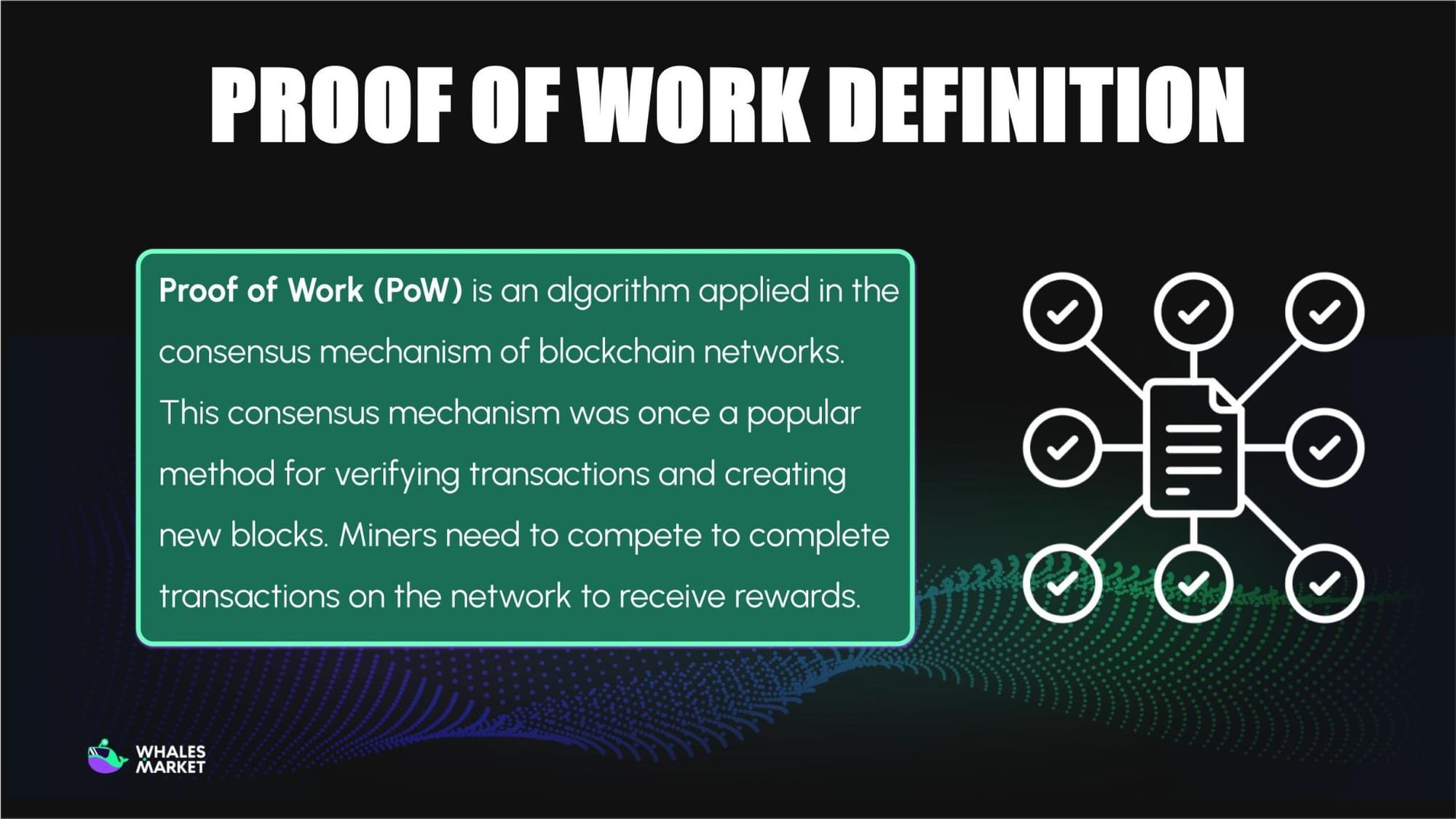
Proof of Work (PoW) is a type of consensus mechanism in blockchain networks, where miners need to compete to complete transactions on the network in order to receive rewards.
Proof of Work (PoW) was once a popular method for verifying transactions and creating new blocks. When cryptocurrency users want to transfer tokens to each other on a blockchain developed based on the PoW model, the blockchain network uses a distributed ledger to place transactions into a specific block.
However, the process of transaction confirmation and block arrangement requires human participation.
Proof of Work was successfully implemented by Satoshi Nakamoto for Bitcoin in 2009. Since then, PoW has been one of the most popular consensus mechanisms in the cryptocurrency ecosystem.
How did Proof of Work (PoW) come into existence?
The earliest idea for Proof of Work (PoW) was expressed in the essay "Pricing via Processing or Combatting Junk Mail" by scholars Cynthia Dwork and Moni Naor, addressing the issue of combating denial-of-service (DoS, DDoS) attacks and email spam.
- In 1997, Adam Back presented a mechanism to combat "Double Spending Protection" in the HashCash Whitepaper.
- In 2004, Hal Finney applied the concept of PoW to cryptocurrencies as a security solution through a mechanism called "Reusable Proof of Work."
- In 2009, Satoshi Nakamoto used Finney's idea to create the Proof of Work (PoW) consensus mechanism for Bitcoin.
- Since 2009, the Proof of Work (PoW) consensus mechanism has become the most popular consensus mechanism in the cryptocurrency ecosystem.
The Structure of the Proof of Work
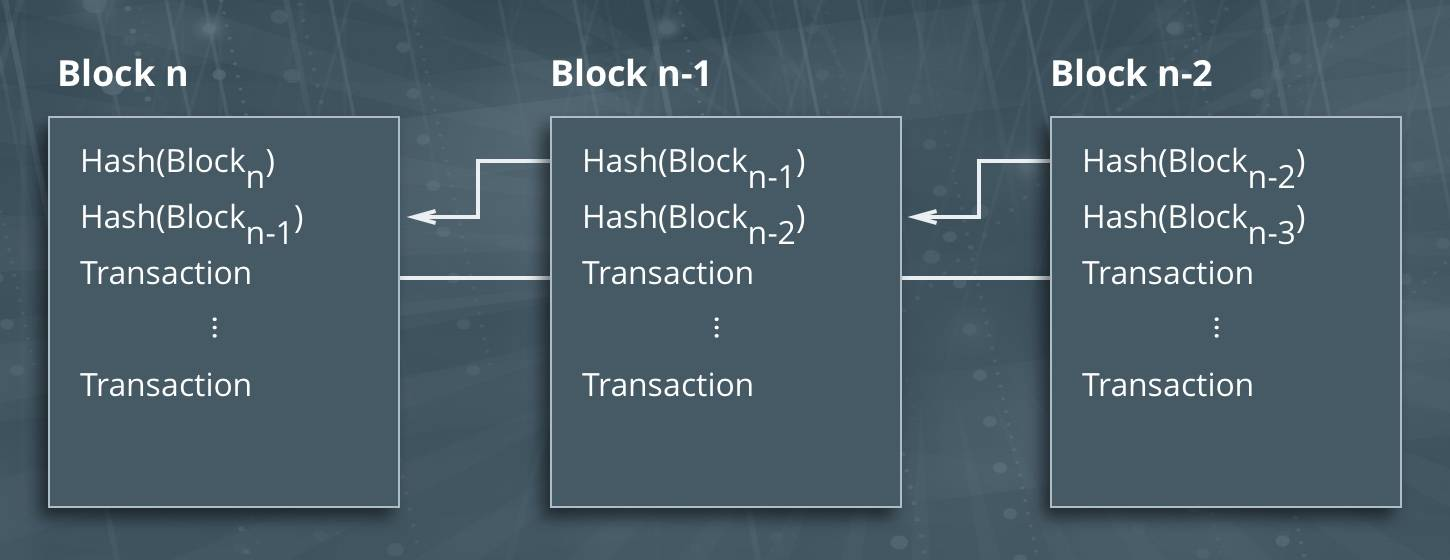
Blockchains are distributed ledgers that record all Bitcoin transactions, similar to how you enter transactions into a spreadsheet. Each block is like a cell in a spreadsheet. Information such as the transaction amount, wallet address, time, and date is recorded and encoded into the header of each block, a hexadecimal number generated through the blockchain hash.
Hash
The hash from the current block is stored and used in the next block. This creates a ledger of interconnected blocks that cannot be altered because the information from each block is included in the hash of the latest block. This is where Proof of Work comes into play.
A hash is an encoded hexadecimal number consisting of 64 digits. With modern technology, a hash can be generated in a few milliseconds with a large amount of data. The miners' job is to try to calculate that result, which takes a very long time in computer terms.
Mining is the process of verifying transactions by solving a hash and receiving a reward.
Nonce
Nonce is a hash consists of a string of numbers called a nonce, short for "number used once." When a miner (a program on a node working to solve a hash) starts mining, it creates a hash from publicly available information using a nonce of 0.
Learn more: Why must block nonce be random in Proof-of-Work systems?
Solving a hash
If the hash is smaller than the current network target, the miner has successfully solved that hash. The network target is a mathematical result of a formula converted into a hexadecimal number that determines the mining difficulty.
If the hash is larger than the target, the mining program adds a value of 1 to the nonce and creates a new hash. The entire network of miners attempts to solve the hash in this way.
On the Bitcoin blockchain, miners who successfully solve a hash receive a reward for their work.
Components of the Proof of Work Mechanism
Miners
Blockchains using PoW rely on a distributed network of computers called nodes. These nodes have the crucial responsibility of accepting transaction batches from other nodes and proposing or validating new transaction blocks for the entire network.
In this context, nodes are often referred to as miners, as they contribute computing power and resources to generate the network's underlying cryptocurrency.
"Work" in PoW represents the computing power that nodes contribute to validating a new transaction block. This power is represented in the SHA-256 cryptographic hash function, which differentiates PoW from other consensus mechanisms.
A key algorithm, called difficulty adjustment, ensures the network takes a fixed amount of time to validate new transaction blocks. This adjustment occurs approximately every 2016 blocks (about 2 weeks) to maintain a stable block time of 10 minutes. Notably, individual miners joining or leaving the network does not directly affect the difficulty level in short periods.
Block Reward
Miners receive rewards when they find a hash below a threshold set by the network. Upon discovering a valid block hash, miners share this information with other miners for verification and quick integration into their blockchain copy. This verification process prevents fraudulent actions such as double-spending.
Currently, miners receive a fixed reward of 6.25 BTC/block, along with user transaction fees. This reward structure incentivizes miners to compete in the PoW system, encouraging honesty, as any attempt to interfere with the system will result in wasted resources.
This reward is halved after every 210,000 blocks (approximately 4 years). This reduction, known as the halving cycle, raises concerns about the risk of decreasing miner incentive if the price of Bitcoin is not high enough to keep up with mining. However, as miners leave the network, the difficulty level also adjusts, thereby reducing the cost of mining Bitcoin.
The economics of Bitcoin mining are not simple. Many financial factors influence miners to continue operating, even without clear profitability.
Advantages of Proof of Work
Proof of Work (PoW) offers several significant benefits, protecting against distributed denial-of-service (DDoS) attacks and minimizing the risks associated with cryptocurrency mining.
- DDoS Protection: PoW places a high limit on the network. This requires any action to first overcome this limit. Therefore, to attack the network, an attacker needs to use a large amount of computing power and spend a lot of time on computation. While an attack is possible, it comes at a very high cost.
- Block mining capability: The important thing is not the amount of money in the wallet, but the computing power to solve the block mining problem. Therefore, on a blockchain network, those with money are not guaranteed to have power.
Disadvantages of Proof of Work
PoW has disadvantages in terms of high cost, wasteful computing power, and 51% attack vulnerability.
- High costs: Mining requires specialized computer equipment with very complex algorithms, which is very expensive for individuals. Therefore, this activity is mainly carried out by groups of miners. These groups use energy-intensive equipment, increasing mining costs.
- Waste of computing power: Miners create new blocks through strenuous labor, consuming a lot of electricity. However, this computational work is not applicable in other fields.
- 51% attack: An attack occurs when a group of users controls the majority of mining power. This allows attackers to control and alter most events on the network. They can monopolize the creation of new blocks, collect all rewards, and even reverse transactions.
For example: If Alice sends money to Bob via the Blockchain and a 51% attack occurs, the transaction could be blocked. Such an attack could trigger a hard fork, creating two parallel blockchains. One chain would have more miners (the 51% chain) and would mine more blocks. The longer chain would eventually be accepted and the shorter chain rejected, rendering the transaction invalid.
Read more: Why is 51% attack the biggest danger to crypto?
Conclusion
Proof of Work (PoW) is one of the foundational consensus mechanisms that shaped the modern blockchain industry. By requiring miners to contribute real computational power to validate transactions and secure the network, PoW creates a system where security is enforced through economic cost. Its implementation in Bitcoin proved that decentralized networks could operate securely without centralized intermediaries.
FAQs
Why is PoW important in blockchain?
PoW secures the network by making attacks extremely expensive, ensuring that transaction validation requires real computational effort.
How do miners earn rewards in PoW?
Miners receive block rewards and transaction fees when they successfully solve a cryptographic hash and add a new block to the blockchain.
What is a nonce in Proof of Work?
A nonce (number used once) is a variable that miners adjust repeatedly to generate a hash that meets the network’s difficulty target.
What does a 51% attack mean?
A 51% attack happens when a single entity or group controls the majority of the network’s mining power, potentially allowing them to manipulate transactions or reverse payments.
What are the main advantages of PoW?
PoW offers strong security, resistance to DDoS attacks, and decentralization based on computational contribution rather than token ownership.