


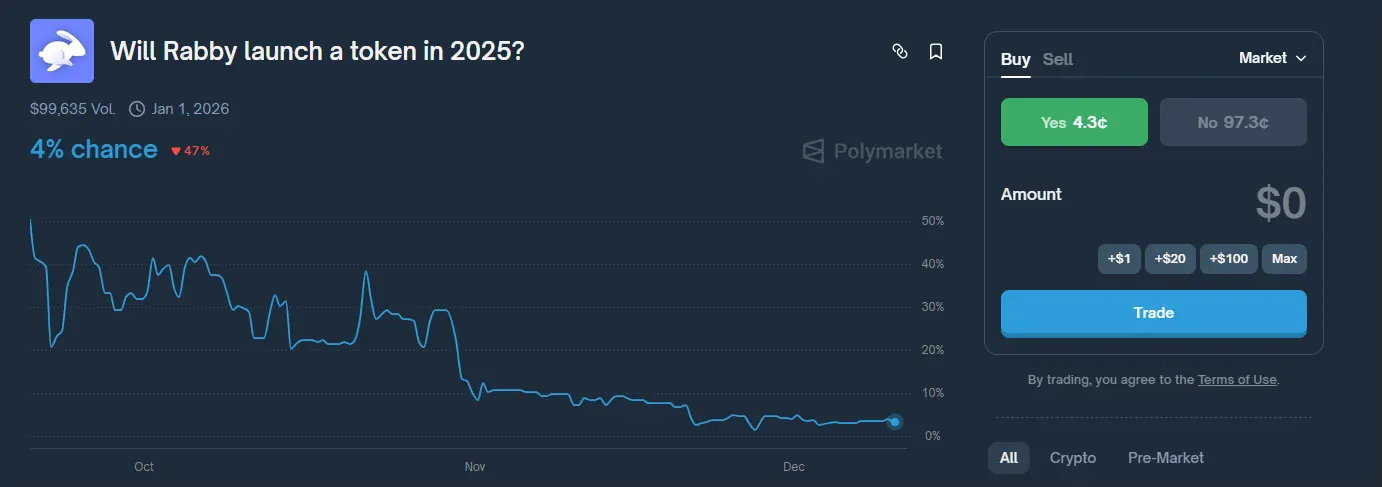
Only 4% of Polymarket users believe Rabby will launch a token in 2025, while the overwhelming majority thinks it won’t happen. With just 3 weeks left before the market closes, the real question is whether Rabby has a late surprise in store or if the crowd is right to bet on No.
Rabby Wallet Overview
Rabby Wallet is a non-custodial EVM wallet built for traders who trading across chains all day. It supports storing, managing, and transacting crypto assets across multiple networks without the usual friction. Created by the DeBank team, Rabby focuses on two things: smooth multichain usability and strong asset protection.
Instead of forcing users to switch networks manually, Rabby auto-detects the correct chain every time a DApp is opened and routes the wallet straight to it. The result is a cleaner, faster experience for anyone jumping between protocols.
Rabby also adds a safety layer before every transaction. It scans for risks, shows balance changes, and reveals what will actually happen before the user signs, reducing mistakes, scams, and unwanted approvals.

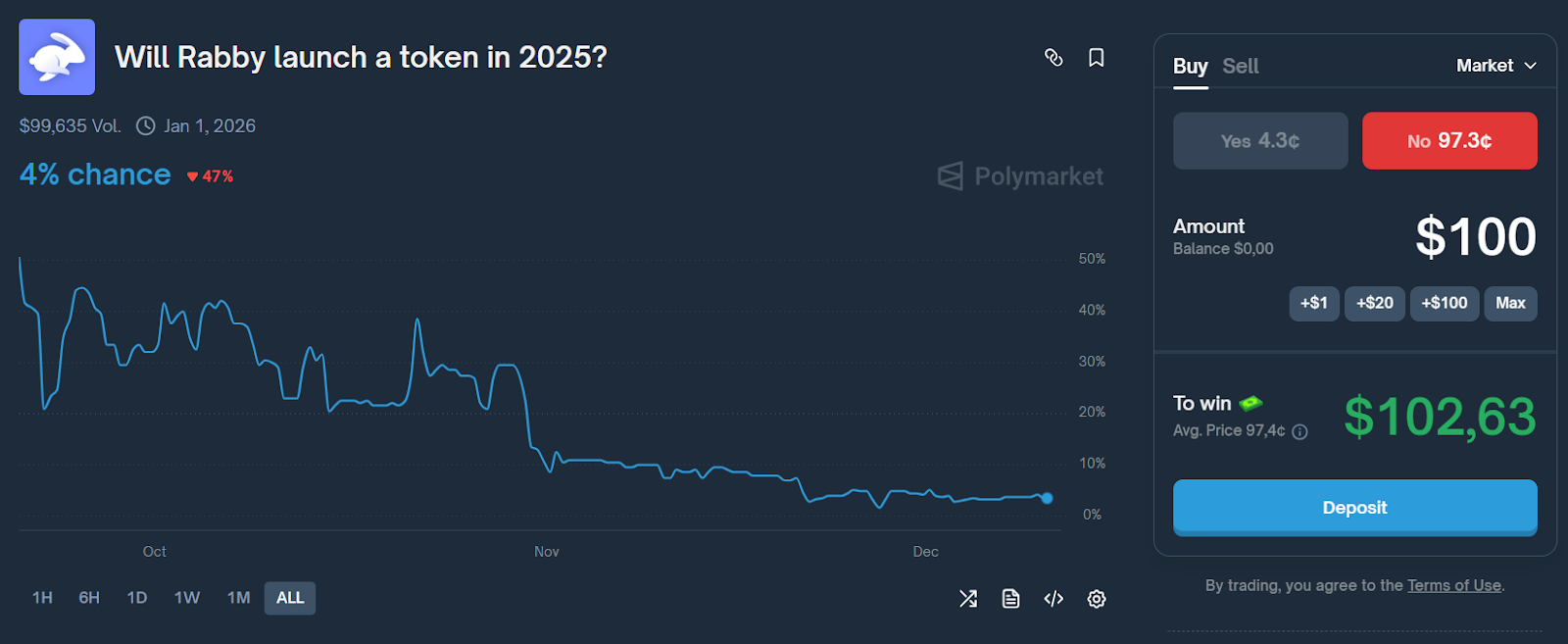
On Polymarket, the question "Will Rabby launch a token in 2025?" is drawing a lot of attention with almost 100,000 USD in trading volume. The interesting part is that just a few months ago, half of the market still believed Rabby would launch a token, but now only 4% believe this will happen in 2025. So what has changed?
Will Rabby launch a token in 2025?
Why is the Yes side collapsing so badly?
Looking at the chart makes it very clear: in October, the Yes side once went up to 50%, meaning half of the market believed Rabby would launch a token. Now it is only 4%. Why did this happen?
The crypto market is in a strong correction phase
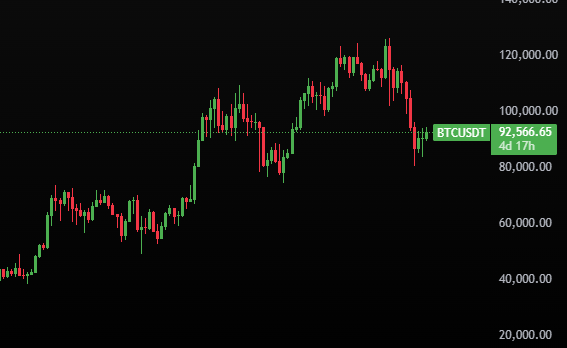
This is a very important factor that many people overlook. Bitcoin reached an all time high of around $125,000 in early October 2025, but then began to fall sharply. At the moment, BTC is trading around the $85,000 to 93,000 range, which means it has dropped about 30% from the peak.
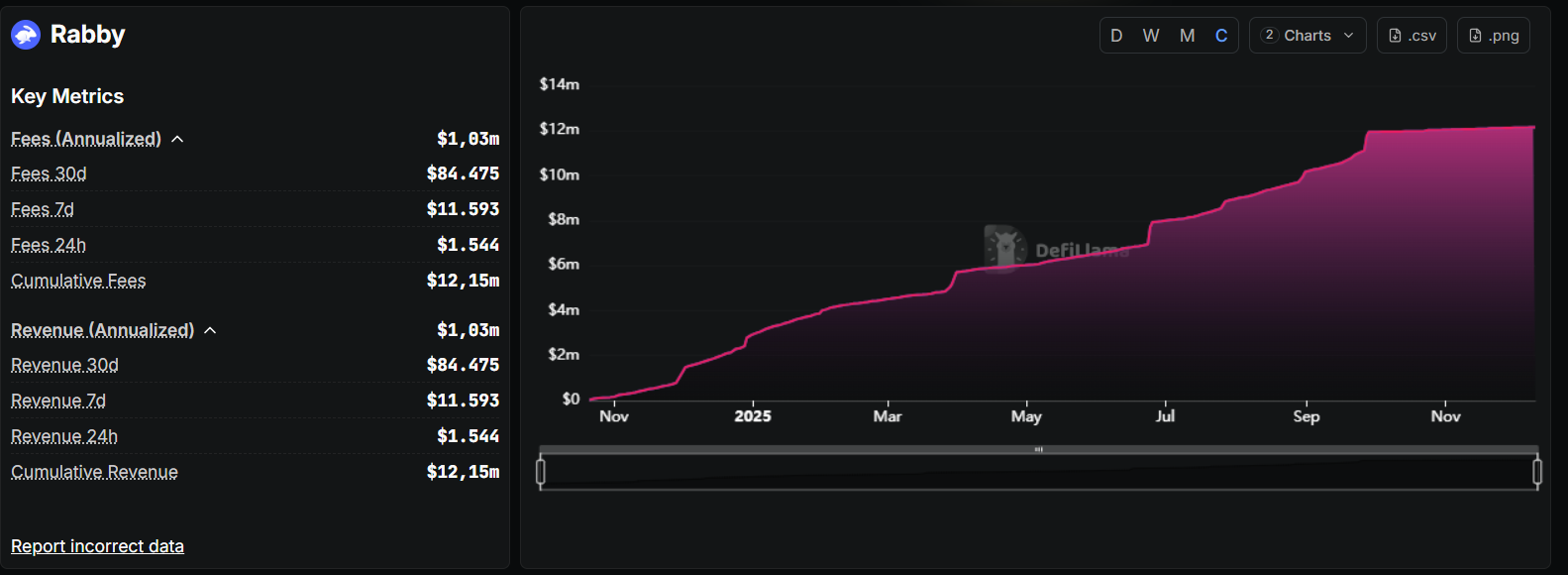
When the overall market goes down, the revenue of DeFi wallets like Rabby is also heavily affected. According to DefiLlama, Rabby’s revenue from early October until now has slowed down sharply, increasing by only $1M and almost moving sideways.
This is completely different from the previous explosive phase, when there were days with more than $1M in revenue.
The simple reason is that users trade less, swap less, and bridge less, so the fees collected drop accordingly.
The year is almost end and the team is still silent
Launching a token in a weak market makes it difficult for any project to achieve a strong valuation. Because of that, Rabby has every reason to delay any token plan until conditions improve, allowing the team to secure better fundraising outcomes and a healthier valuation.
The evidence is that in September 2025, Rabby caused a big wave when it ran a community survey asking "Will Rabby launch a token in 2025?" and everyone thought the token was coming soon. But since then there has been no official announcement about any token launch date.
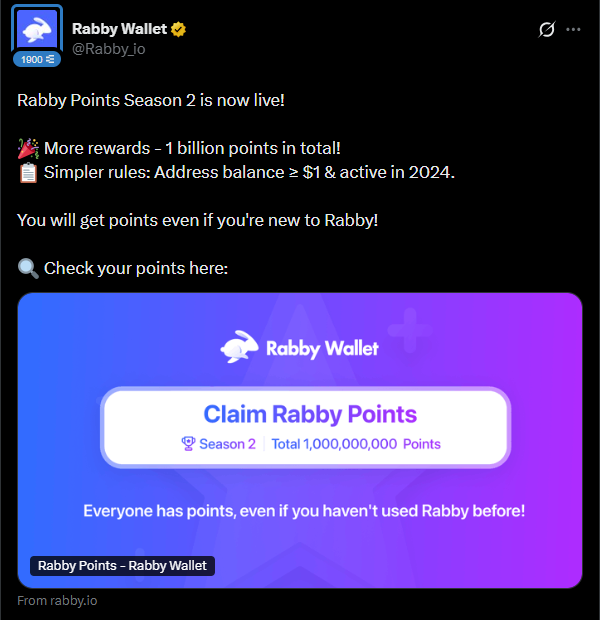
On top of that, the Rabby Points Season 2 program has been live since July 2024 and the project still has not made any clear move. With only 3 weeks left and still no visible signal, the chance of a timely token launch is close to zero.
Pressure from DeFi 2.0 (no token needed)
Rabby Wallet, developed by DeBank, a very powerful tool without having its own token. The team can focus on making money through integrated services such as swaps, portfolio tracking, and security features without having to face the legal and distribution complexity that comes with a token.
In September 2025, Rabby launched Rabby Perps for futures trading, kept integrating new blockchains, and completed security audits. From that, it is quite clear that the current priority is not launching a token but continuing to develop the product.
Rabby Perps is live — now on Rabby Mobile and Rabby Extension.
— Rabby Wallet (@Rabby_io) September 6, 2025
Trade with up to 40x leverage across 100 markets.
Go long or short anytime, anywhere.
Powered by @HyperliquidX pic.twitter.com/Dpy4aiFq9O
Because of these reasons, the market is gradually selling Yes shares and switching more heavily into No.
Why are most users choosing No?
With No trading at 97.3 cents, a trader receives 1 dollar if Rabby does not launch a token before the deadline, which is roughly a 2.7% return in 3 weeks. It sounds small, but this is a relatively safe method, and all visible signals point toward Rabby not being able to launch a token in 2025:
- There is no announcement about a token launch date.
- The team is busy developing the product.
- The market is in a downtrend, which is not a good time for a TGE.
- Revenue from fees is falling along with the broader market.
However, this is not a guaranteed bet, because there are always risks and limitations:
- Low return: putting in $100 only yields about $2.8 if the bet wins
- A surprise is still possible: even with low probability, Rabby could suddenly drop a token out of nowhere
- Locked capital: funds are locked for 3 weeks, and if a better opportunity appears, the trader cannot move the capital
- Heavy loss if wrong: if 100 dollars goes into No and Rabby does launch a token, the entire amount is lost
Who should bet on No? This path fits those who want relatively stable returns with larger capital, are comfortable with a lower profit margin, and prefer high probability outcomes. It is suitable for people who do not like taking big risks.
Why the Yes side still draws brave traders?
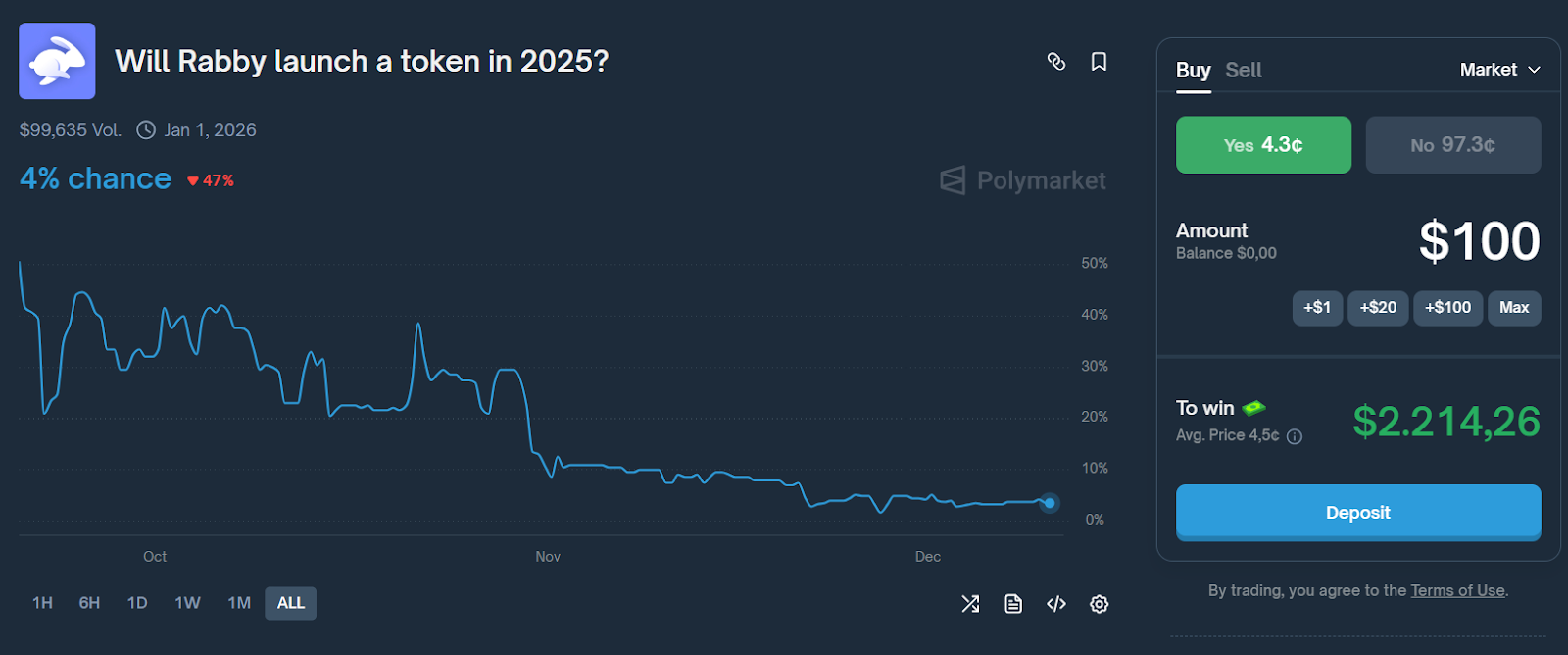
With Yes trading at just 4.3 cents, if Rabby unexpectedly launches a token before 31 December, the payout is 1 dollar, which is a 23 times return. Putting in 100 dollars and winning would return 2,214$. That is a very attractive ratio for a lottery style bet.
Rabby is not an unknown project. It has $25M in investment from Sequoia, Coinbase Ventures, and DragonFly, and has 4.2M users. The points system has been running for nearly 2 years. From a technical standpoint, the team is fully capable of launching a token at any moment if it chooses.
However, this is clearly a decision that goes against the crowd and carries very high risk. So some important points must be understood:
- Extremely low winning probability (around 4%): The market is essentially saying this scenario is almost impossible
- The project is completely quiet: Only 3 weeks remain and there are still no signals
- The market is in a downtrend: Launching a token right now would be a risky move, and the team may prefer to wait for a better time
- Total loss if wrong: Putting $100 into Yes and Rabby not launching a token means losing the entire $100.
Who should bet on Yes? This path is for those who accept losing a small amount of money in exchange for a chance at a 23 times return. Because of that, it is important not to put all capital into this one bet.
Conclusion
Overall, No is the safer choice right now, since every visible sign suggests Rabby is unlikely to launch a token within the next 3 weeks. That said, crypto is always full of surprises, and with a 23 times payoff, the Yes side still looks tempting for anyone who likes high risk, high reward bets.
Whichever side is chosen, it is important to do extra research about Rabby, follow what the team is doing, and only risk money that can be lost without serious impact. In the end, the decision always belongs to the individual trader.
Disclaimer: This article is for informational purposes only, not investment advice, and Whales Market is not responsible for any of your investment decisions.
FAQs
Q1. Why does the Rabby token question attract so many Polymarket users?
Rabby is a major wallet in the EVM ecosystem, with 4.2 million users and earlier hints about a token, which naturally fuels curiosity and market expectations.
Q2. How does a sharp crypto market drop affect the chance of a Rabby token?
A downtrend pushes revenue and valuations lower and raises TGE risk, so many projects prefer to delay token launches until the market recovers.
Q3. Why did the Yes side on Polymarket fall from 50% to 4%?
The team has given no new signals, revenue is moving sideways, and overall sentiment is weak, so traders have gradually shifted from Yes to No.
Q4. What benefits does Rabby get from delaying a token launch?
The team can optimize valuation, avoid legal risk, and gain more time to refine products like Rabby Perps and security features before adding a token layer.
Q5. Why does the Yes side still have hope even with low probability?
Rabby has the technical ability to launch a token at any time and has been running a points system for nearly 2 years, so a surprise is still possible.
Q6. Should new users join the Rabby token market?
They can, but it is important to understand the risks, read the Yes and No analysis carefully, and only use money they are willing to lose in a fast moving market.