

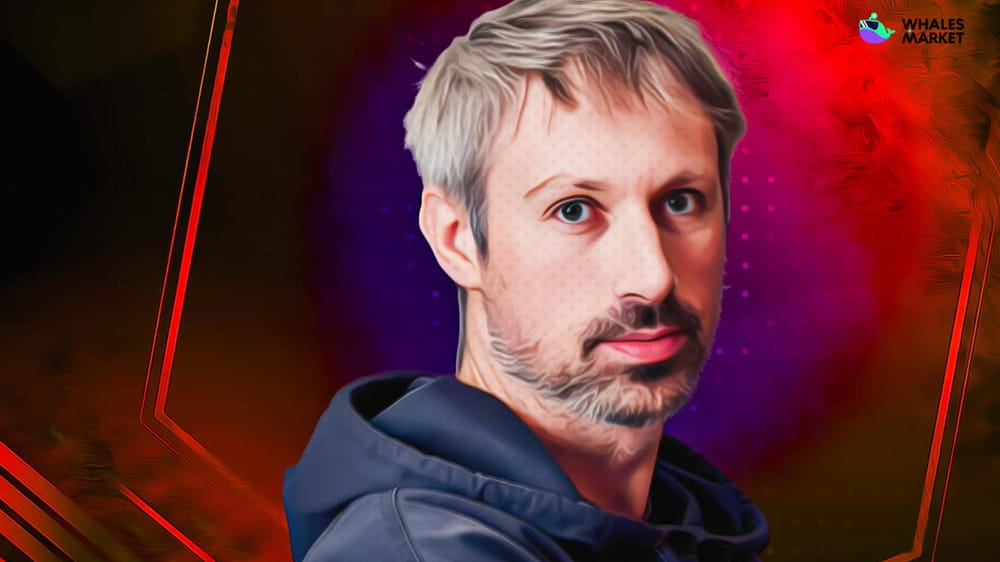
Gavin Wood stands as a seminal figure in the Web3 landscape, known for his profound technical contributions and expansive vision for a decentralized internet. A co-founder of Ethereum, he later founded Parity Technologies and created the Polkadot and Kusama networks. Wood is also the inventor of the Solidity smart contract language, demonstrating a consistent drive to build foundational technologies for distributed systems.
Who is Gavin Wood?
Gavin Wood is a British computer scientist and innovator recognized as one of the architects of the modern blockchain ecosystem. Holding a Ph.D. in Computer Science, he is celebrated for his deep technical expertise and ability to articulate complex concepts with clarity. His work has consistently focused on advancing decentralized technologies, establishing him as a leading advocate for the Web3 movement.
Career Background
Gavin Wood's journey into blockchain began after a varied early career in software development and research, influenced by his academic background in programming languages. He became deeply involved with blockchain technology as a co-founder of Ethereum, where he wrote the initial functional specification and played a critical role in its early development. Following his departure from Ethereum, Wood founded Parity Technologies, aiming to develop more robust and scalable infrastructure for the decentralized web. This transition marked a significant shift towards realizing his independent vision for cross-chain interoperability, which would later manifest as Polkadot.
Product or Technology Contributions
Wood's technical ingenuity is evident in several cornerstone technologies. He invented Solidity, the programming language that became instrumental for writing smart contracts on the Ethereum blockchain, enabling a new era of decentralized applications. Subsequently, he architected Polkadot and its canary network, Kusama, as solutions for blockchain interoperability and scalability. These networks facilitate seamless communication and transaction between diverse blockchains, employing a sharded multichain architecture. Furthermore, he developed Substrate, a framework that empowers developers to build custom blockchains with ease, further expanding the potential for decentralized innovation.
Industry Impact
Gavin Wood's influence extends deeply into the development of Web3, a term he coined to describe a decentralized internet powered by blockchain technology. Through Parity Technologies, he has been instrumental in building core blockchain infrastructure, shaping the foundational layers for numerous decentralized applications and protocols. His work has inspired a generation of developers and projects, providing not only tools but also a coherent philosophical framework for the decentralized future. Beyond individual projects, Wood's contributions have pushed the discourse on blockchain standardization and governance, advocating for more resilient and adaptable distributed systems.
Vision for the Future
Wood envisions a future internet that prioritizes user empowerment, data sovereignty, and privacy, with Polkadot playing a central role in realizing this decentralized paradigm. He advocates for a web where individuals retain control over their digital identities and data, free from centralized intermediaries. Wood frequently discusses the challenges inherent in achieving this vision, such as scalability and widespread adoption, alongside the immense opportunities for innovation. He also champions decentralized autonomous organizations (DAOs) as a transformative model for governance, believing they can foster more equitable and transparent forms of collective decision-making in a digital world.
Key Beliefs or Philosophy
At the core of Gavin Wood's philosophy are principles of decentralization, open-source software, and community-driven development. He firmly believes in technological sovereignty, empowering users and developers alike to control their digital infrastructure rather than relying on proprietary systems. Wood offers pointed critiques of centralized systems, arguing they inherently create power imbalances and vulnerabilities. He advocates for a more equitable and transparent digital world built on trustless protocols. His stance contrasts with narrower blockchain ideologies, emphasizing a broad, inclusive ecosystem over single-chain maximalism, driving towards a multi-faceted and interconnected web.
FAQ
What inspired Gavin Wood to coin the term "Web3"?
Wood introduced the term "Web3" to describe a paradigm shift towards a decentralized online ecosystem, moving beyond the centralized architecture of Web2. He envisioned an internet where users, rather than corporations, control their data and digital identities, driven by blockchain technology. This term became a rallying cry for developers and enthusiasts seeking a more open and equitable digital future.
What are the primary technical challenges Polkadot aims to overcome?
Polkadot specifically addresses issues of interoperability and scalability that hindered early blockchain development. It allows various blockchains to communicate and share information securely, which was a major limitation previously. Additionally, its sharded architecture, utilizing parallel processing through parachains, significantly enhances transactional throughput, overcoming bottlenecks common in single-chain networks.
What is Parity Technologies' current focus beyond Polkadot and Kusama?
Beyond maintaining and evolving the Polkadot and Kusama ecosystems, Parity Technologies actively contributes to Web3 infrastructure. This includes developing core blockchain components, supporting developer tools, and engaging in research for future decentralized technologies. Their work often involves fostering the growth of the broader Substrate development community.
How does Gavin Wood personally engage with the Web3 community?
Gavin Wood frequently engages with the Web3 community through public appearances, keynote speeches at major conferences, and technical discussions. He is known for his detailed explanations of complex blockchain concepts and often participates in developer forums and educational initiatives. His consistent presence helps to guide and inspire ongoing innovation within the decentralized space.
What non-technical aspects does Gavin Wood emphasize for Web3 adoption?
Wood emphasizes the importance of user experience and intuitive design to facilitate broader Web3 adoption beyond early enthusiasts. He believes that for Web3 to achieve mainstream success, decentralized applications must be as easy to use and accessible as their centralized counterparts. He also highlights the need for robust governance models that can adapt to evolving challenges and community needs.
Conclusion
Gavin Wood's relentless pursuit of a decentralized internet has profoundly shaped the Web3 movement. Through his foundational technical contributions, visionary leadership, and philosophical advocacy, he continues to drive innovation in blockchain technology. His work underscores a lasting commitment to fostering a more open, transparent, and user-empowered digital future, influencing the trajectory of decentralized systems for years to come.