

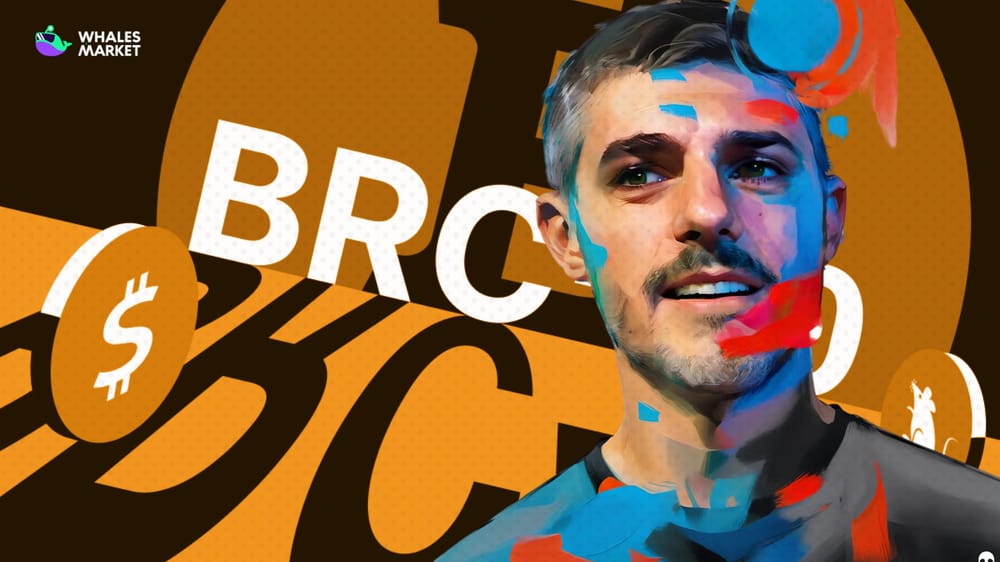
Casey Rodarmor stands as a pivotal figure in the Web3 landscape, recognized primarily as the creator of the Ordinals protocol. His innovative work has fundamentally reshaped perceptions of Bitcoin's capabilities, introducing new forms of digital artifacts and fungible tokens to the network. Through his contributions, Rodarmor has ignited a broad discussion about the future potential and evolving utility of the world's first cryptocurrency.
Who is Casey Rodarmor?
Casey Rodarmor is a software engineer and innovator credited with developing the Ordinals protocol and the BRC-20 token standard on the Bitcoin blockchain. He is known for enabling the creation of unique digital assets, often referred to as "inscriptions" or "Bitcoin NFTs," and fungible tokens directly on Bitcoin. His work has expanded the narrative around Bitcoin's functionality beyond its traditional role as peer-to-peer electronic cash.
His Professional Path to Bitcoin Innovation
Before his influential contributions to Bitcoin, Casey Rodarmor built a career as a software engineer, including a tenure at Google. His professional background instilled a disciplined and often minimalist approach to software development and design. These prior experiences honed the technical precision and conceptual clarity that would later define his work in the blockchain space.
The Genesis of Ordinals and BRC-20
Rodarmor's primary technical contribution is the Ordinals protocol, which assigns a unique identifier to each individual satoshi, the smallest unit of Bitcoin. This numbering system allows for arbitrary data, such as images, text, or video, to be "inscribed" onto specific satoshis, creating unique digital artifacts on the Bitcoin blockchain. Building upon this, he developed the BRC-20 token standard, which leverages the Ordinals protocol to enable the creation and transfer of fungible tokens on Bitcoin, akin to ERC-20 tokens on Ethereum.
Impact on Bitcoin's Utility and Ecosystem
The introduction of Ordinals and BRC-20 has profoundly impacted the Bitcoin ecosystem by expanding its utility beyond simple value transfer. These technologies have fostered a new wave of innovation, enabling creators and developers to leverage Bitcoin for digital art, collectibles, and decentralized finance applications. This expansion has led to increased transaction activity and a reimagining of Bitcoin's potential as a platform for diverse digital assets.
A Philosophy for Bitcoin's Evolution
Rodarmor holds a distinct philosophy regarding Bitcoin's future, advocating for its continued evolution and expansion of functionality. He envisions Bitcoin not merely as a store of value or transactional currency, but as a robust platform capable of supporting a richer array of applications and digital artifacts. His work reflects a belief that innovation, even if it challenges existing norms, is crucial for Bitcoin's long-term relevance and growth in the broader Web3 landscape.
Addressing Community Concerns and Debates
Rodarmor's innovations have generated considerable debate within the Bitcoin community, particularly concerning network congestion and the philosophical adherence to Bitcoin's original design principles. Critics raise concerns about increased transaction fees and block space usage, arguing that non-financial data clutters the network. Supporters, however, view these developments as a natural progression and a testament to Bitcoin's adaptability, enhancing its appeal to a wider audience.
FAQs
What motivated Casey Rodarmor to create the Ordinals protocol?
Casey Rodarmor was driven by the idea of bringing digital artifacts directly onto the Bitcoin blockchain, similar to how NFTs exist on other chains. He saw an untapped potential within Bitcoin's immutable ledger to host unique digital content without altering the core protocol. His motivation stemmed from a desire to expand Bitcoin's expressive capabilities.
How does the "inscription" process work technically?
Inscriptions are created by attaching data to individual satoshis using an update to Bitcoin's Taproot soft fork, specifically leveraging its data-carrying capacity. This process involves creating a Bitcoin transaction that commits the digital content as part of the witness data, making it an indelible part of the blockchain. The Ordinals protocol then provides a framework for tracking and identifying these inscribed satoshis.
What is the "recursive inscription" feature introduced by Ordinals?
Recursive inscriptions allow inscriptions to reference data from other existing inscriptions on the Bitcoin blockchain. This means that a new inscription can call upon elements or code already present in another inscription, enabling more complex and modular digital artifacts to be built. This feature significantly enhances the functionality and composability of Bitcoin-native assets.
Has Casey Rodarmor proposed any other significant Bitcoin improvements?
While Ordinals and BRC-20 are his most prominent contributions, Casey Rodarmor has engaged with the Bitcoin development community on various technical discussions. He frequently contributes to conversations about Bitcoin's scaling, scripting capabilities, and potential future soft forks. His involvement often centers on exploring ways to expand Bitcoin's utility while maintaining its core security principles.
What is the current status of Casey Rodarmor's involvement with Ordinals?
Casey Rodarmor remains an active participant and core contributor to the Ordinals project. He continues to guide its development, propose new features, and engage with the community regarding its evolution. He often shares his insights and plans through public platforms, demonstrating ongoing commitment to the protocol he initiated.
Conclusion
Casey Rodarmor's work with the Ordinals protocol and BRC-20 has undeniably carved a new path for Bitcoin's future. His innovations continue to drive discourse and development within the blockchain space, pushing the boundaries of what is possible on the foundational cryptocurrency. As the ecosystem evolves, his contributions ensure Bitcoin remains a dynamic and increasingly versatile platform for digital innovation.