

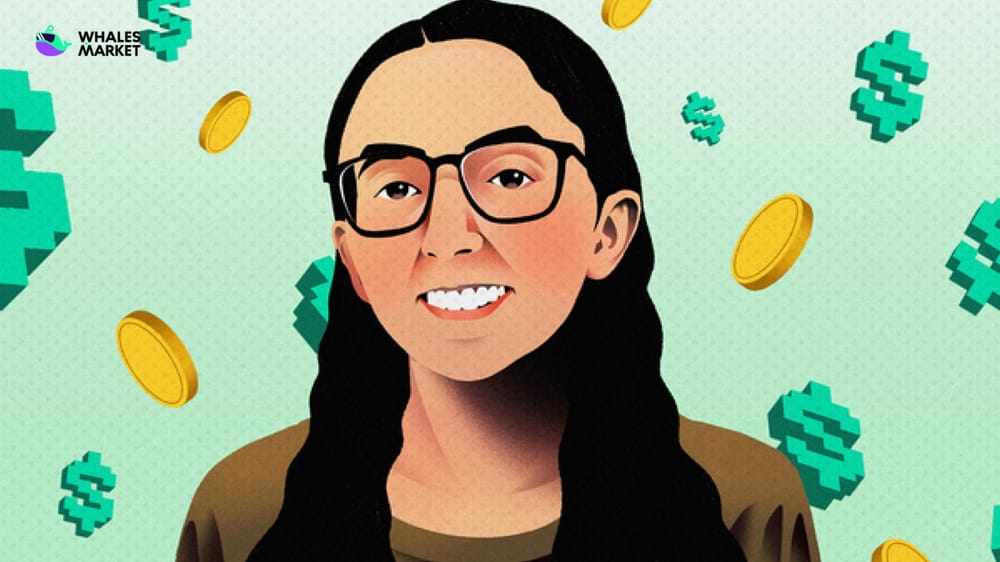
Caroline Ellison emerged as a central figure in one of the largest financial collapses in Web3 history. As the former CEO of Alameda Research, a quantitative trading firm closely associated with the FTX cryptocurrency exchange, her trajectory from a promising quant to a key defendant in federal fraud cases captured global attention. Her story is deeply intertwined with the unraveling of a multi-billion dollar empire and its far-reaching implications for the crypto industry.
Who is Caroline Ellison?
Caroline Ellison is an American former hedge fund manager, best known as the CEO of Alameda Research. She became a pivotal figure in the downfall of the FTX cryptocurrency exchange, which was also co-founded by her on-again, off-again boyfriend Sam Bankman-Fried. Her identity is primarily defined by her executive role at Alameda and her subsequent legal involvement in the fraud charges surrounding the company's collapse.
Early Career and Rise at Alameda Research
Ellison began her career at Jane Street, a prominent quantitative trading firm, where she honed her skills in mathematics and probability. This foundation in sophisticated trading strategies and risk assessment proved invaluable. Her quantitative background was highly regarded in the nascent crypto trading world, making her a natural fit for firms operating at the intersection of finance and technology.
She transitioned into the crypto space by joining Alameda Research in 2018, shortly after its inception. Quickly demonstrating her capabilities, Ellison ascended the ranks, eventually taking on the role of co-CEO and later sole CEO in 2021. In this leadership position, she oversaw Alameda's trading operations, managed its balance sheet, and navigated the volatile crypto markets.
Strategic Contributions and Trading Mechanics
Within Alameda Research, Ellison was deeply involved in formulating the firm's trading strategies and systems. She contributed to the development and implementation of proprietary algorithms designed to execute high-frequency trades and capitalize on market inefficiencies. These tools were central to Alameda's aggressive market presence.
Her work aimed at optimizing trading execution across various cryptocurrency exchanges, contributing to Alameda's reputation as a significant player in the broader crypto ecosystem. The firm utilized these sophisticated mechanics to generate substantial profits, often leveraging its close relationship with FTX to facilitate large-scale transactions and maintain liquidity.
The FTX/Alameda Collapse and Legal Ramifications
Ellison's tenure as CEO culminated in the catastrophic collapse of FTX and Alameda Research in November 2022. She became a key focus of investigations, facing specific allegations related to her oversight of Alameda's finances and its undisclosed use of FTX customer funds. Prosecutors accused her of participating in a scheme to defraud FTX customers and lenders by misappropriating billions of dollars.
In December 2022, Ellison pleaded guilty to multiple federal fraud charges, including wire fraud, conspiracy to commit wire fraud, and conspiracy to commit money laundering. Her cooperation with authorities was a significant development, leading to her extensive testimony against Sam Bankman-Fried during his fraud trial. Her testimony detailed the inner workings of the alleged scheme and provided critical evidence regarding Bankman-Fried's directives and knowledge of Alameda's illicit activities.
Alameda's Operational Peak and its Undoing
Before its spectacular collapse, Alameda Research experienced periods of significant operational success under Ellison's leadership, particularly during the cryptocurrency bull run of 2020-2021. The firm recorded substantial profits, contributing to the rapid expansion and influence of the FTX-Alameda ecosystem. These successes allowed Alameda to become a major market maker and liquidity provider across various digital assets.
However, these achievements were inextricably linked to and ultimately overshadowed by the undisclosed misuse of FTX customer deposits. The reliance on these borrowed funds, combined with risky investments and the lack of proper risk management, created an unsustainable financial structure. The firm's peak performance was therefore a prelude to its downfall, revealing a foundation built on fraudulent practices.
Lessons and Legacy in Web3
Caroline Ellison's case has profoundly impacted the broader crypto industry, influencing regulatory discussions worldwide. Her testimony and the details of the FTX-Alameda collapse have highlighted critical gaps in oversight, risk management, and corporate governance within the Web3 space. Regulators are now scrutinizing crypto exchanges and trading firms with increased intensity, pushing for greater transparency and accountability.
Her story serves as a stark cautionary tale within the Web3 ecosystem, emphasizing the dangers of concentrated power, lack of independent oversight, and the potential for financial fraud. It underscores the importance of robust internal controls and ethical leadership in a rapidly evolving and largely unregulated industry. The events surrounding Alameda Research have prompted a reevaluation of trust and integrity in digital finance.
FAQs
What were Caroline Ellison's academic qualifications?
Caroline Ellison graduated from Stanford University in 2016 with a bachelor's degree in mathematics. Her strong academic background in quantitative fields laid the groundwork for her subsequent career in high-frequency trading and algorithmic finance. This education provided her with the analytical tools necessary for complex market analysis.
Was Caroline Ellison the sole CEO of Alameda Research?
Caroline Ellison served as co-CEO of Alameda Research alongside Sam Trabucco until August 2022, when Trabucco resigned. Following his departure, she became the sole CEO of the company, holding that position until Alameda Research's collapse in November 2022. Her leadership role evolved over time within the firm.
Where is Caroline Ellison now?
Following her guilty plea in December 2022, Caroline Ellison has been cooperating with federal prosecutors in the United States. She is currently out on bail and awaiting sentencing, which will occur after the completion of all related legal proceedings, including any other trials where her testimony may be required. Her legal status is contingent on her ongoing cooperation.
What was the nature of Caroline Ellison's relationship with Sam Bankman-Fried?
Caroline Ellison had a romantic relationship with Sam Bankman-Fried, which was on-again and off-again during their time working together at Alameda Research and living in close quarters with other FTX executives. This personal connection became a notable aspect of the public narrative surrounding the FTX collapse, adding a layer of complexity to their professional interactions.
Has Caroline Ellison expressed remorse for her actions?
During her testimony and public statements following her guilty plea, Caroline Ellison has expressed remorse for her involvement in the fraudulent activities that led to the collapse of FTX and Alameda Research. She acknowledged her role in the misuse of customer funds and stated her regret for the harm caused to victims. Her cooperation with authorities also reflects an acceptance of responsibility.
Conclusion
Caroline Ellison's journey from a promising quantitative analyst to a key figure in a monumental financial fraud case offers a compelling narrative for the Web3 era. Her story not only highlights the vulnerabilities within the nascent digital asset industry but also serves as a potent reminder of the enduring importance of ethical governance and regulatory oversight. As the industry matures, the lessons from the FTX-Alameda collapse, with Ellison's role central to them, will continue to shape discussions on accountability and trust in the future of finance.