

Slippage is unavoidable during trading, especially on DEXs. It not only negatively impacts the user experience but also reduces potential profits. So what is slippage in crypto? Let’s dive into this article.
What is slippage?
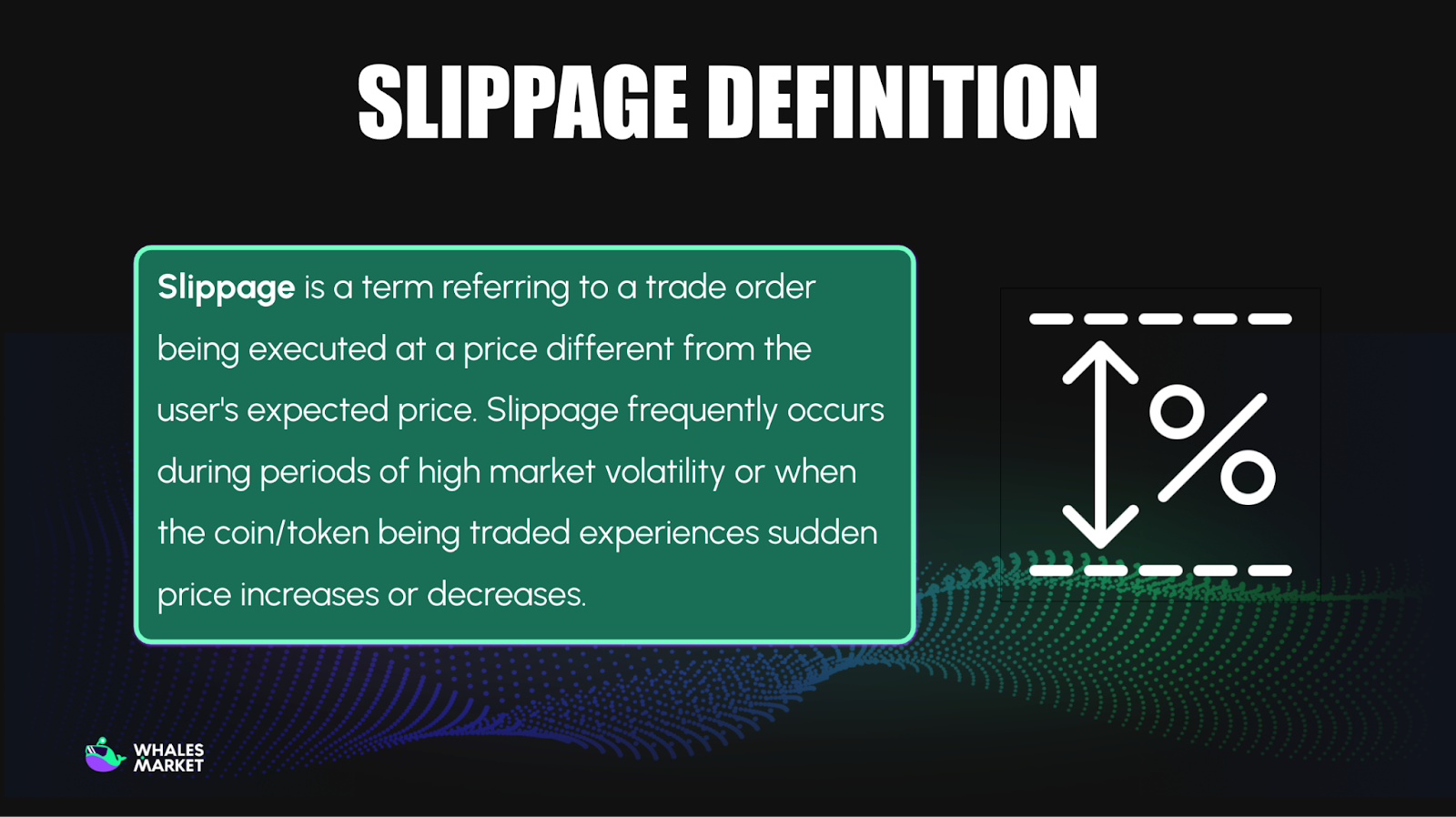
Slippage is a term referring to a trade order being executed at a price different from the user's expected price. Slippage frequently occurs during periods of high market volatility or when the coin/token being traded experiences sudden price increases or decreases.
When executing a trade on an AMM, traders incur two losses:
- First, the transaction fee percentage from the protocol (for example, Uniswap has a transaction fee of 0.3%, PancakeSwap is 0.2%).
- Second, the slippage.
How does Slippage occur?
Essentially, slippage doesn't represent a positive or negative outcome; it simply indicates the difference between the expected price and the actual price. When an order is executed, the token is bought/sold at the most favorable price offered by the market maker or exchange. This price, when compared to the expected price, can result in three categories:
- Positive slippage: The trade is executed at a better price than expected. For example, a buy order is filled at a lower price than anticipated, or a sell order is executed at a higher price. This benefits the trader.
- Negative slippage: The trade is executed at a worse price than expected. A buy order may be filled at a higher price, or a sell order at a lower price, often due to low liquidity or sudden price movement.
- No slippage: The trade is executed exactly at the expected price. This usually occurs in highly liquid markets where order depth is sufficient to absorb the trade size without moving the price.
Market prices can change rapidly in a short period, allowing slippage to occur during the delay between when an order is placed and when the order is completed.
Causes of Slippage
Low Liquidity
Slippage due to low liquidity often occurs when users want to swap a much larger amount of assets than the AMM's liquidity pool allows. Furthermore, without careful checking, users may trade in pools with low or even no liquidity, making asset loss inevitable.
For example, this is an image of a BUSD - ONT transaction. The trader wants to swap 2,000 BUSD for ONT. When you trade on a regular CEX, $2,000 isn't a large sum.
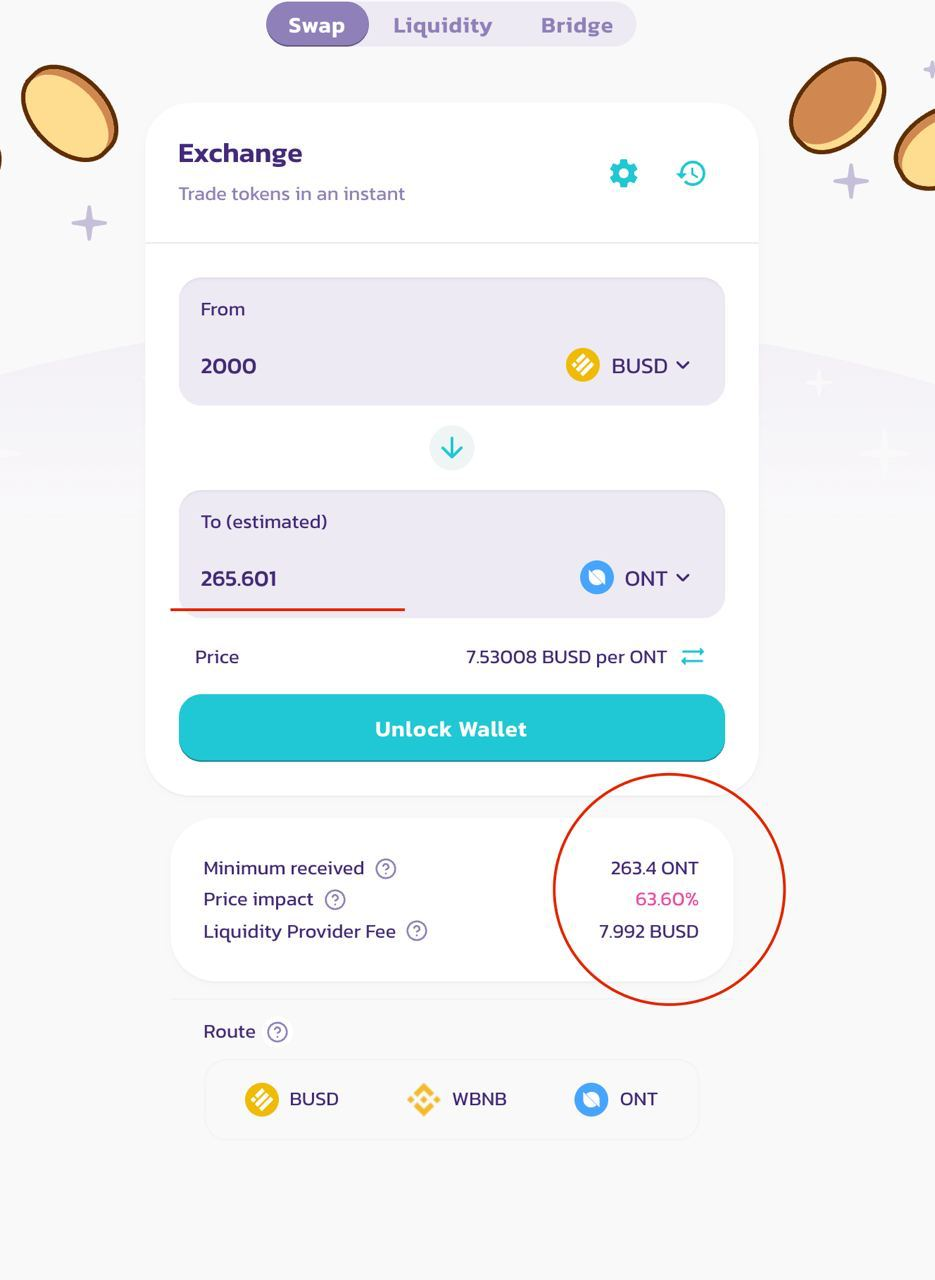
However, on PancakeSwap, the pool containing ONT has almost no liquidity, leading to slippage of up to 64%. Therefore, this is completely disadvantageous for you when buying ONT on PancakeSwap.
Front-Running Bot
Front-running bots exploit the ability to foresee future price movements and place orders just before those movements to profit. Front-running bots influence price and create slippage in the following way:
- Front-running bots identify a potential front-run trade (a sufficiently large slippage, impacting the price enough to generate profit).
- They insert a buy order of appropriate size and volume (because buy orders also affect the price) before the user's order.
- They sell immediately after the user's order is executed. The bots' profit comes from the slippage created by the user, allowing them to buy low and sell high in a short period.
Excessively Large Transactions
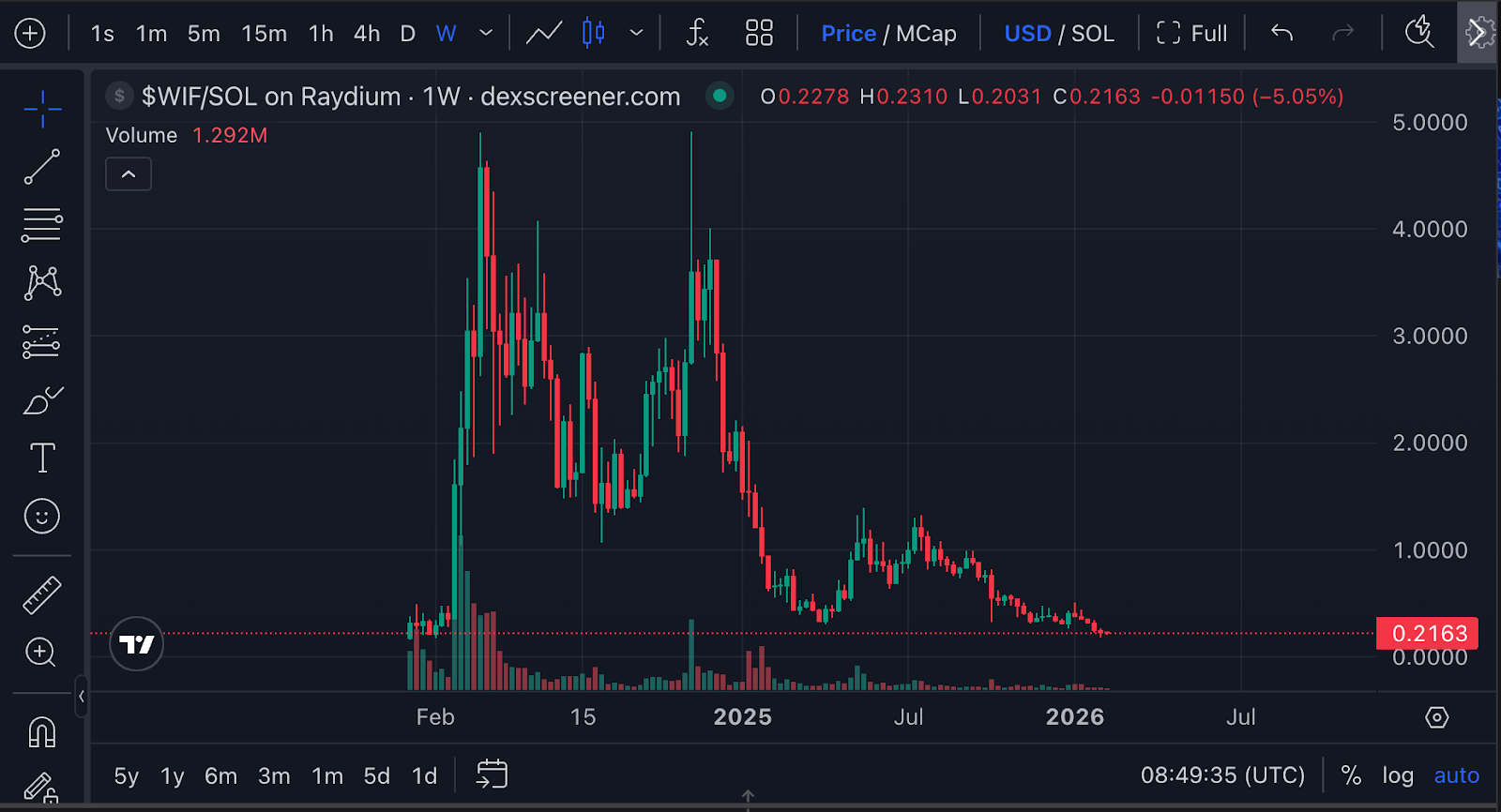
In fact, transactions with values far exceeding the pool of a coin/token can also cause significant slippage. Back in early 2024, when the memecoin dogwifhat was a sought-after name in the cryptocurrency market, one user lost up to 60% of their initial capital due to slippage.
Specifically, on the morning of January 11, 2024, an investor used $8.9 million to execute three transactions worth $6.25 million, $1.78 million, and $893,000 respectively to buy dogwifhat (WIF).
The story wouldn't be worth mentioning if this user hadn't suffered a loss of $5.7 million (equivalent to 60%) due to slippage. The reason for this is that all three orders were high-value and exceeded the pool's capacity, resulting not only in asset loss but also causing the price of WIF to jump to $3 USD.
Market Volatility
When the market experiences significant volatility, whether positive or negative, many investors rush to place orders.
For example: You intend to sell ETH at $2,000, but due to a gas fee adjustment, someone else sells before you, causing the price of ETH to drop to $1,950 or $1,900. At this point, your order is executed at a lower price.
How to avoid Slippage when Trading in Crypto
Avoid trading during periods of high market volatility
BTC prices are affected by several macroeconomic news events, such as the Fed raising/lowering interest rates. This is when you should limit trading to avoid slippage due to high market volatility.
Adjust slippage levels and monitor price impact
If you accept trading during peak times, you should set a slippage level that you can tolerate.
To avoid excessive slippage, pay attention to the price impact parameter. If this parameter is high, it means you are trading a large amount compared to what the pool can provide, and you should look for other pools to trade in.
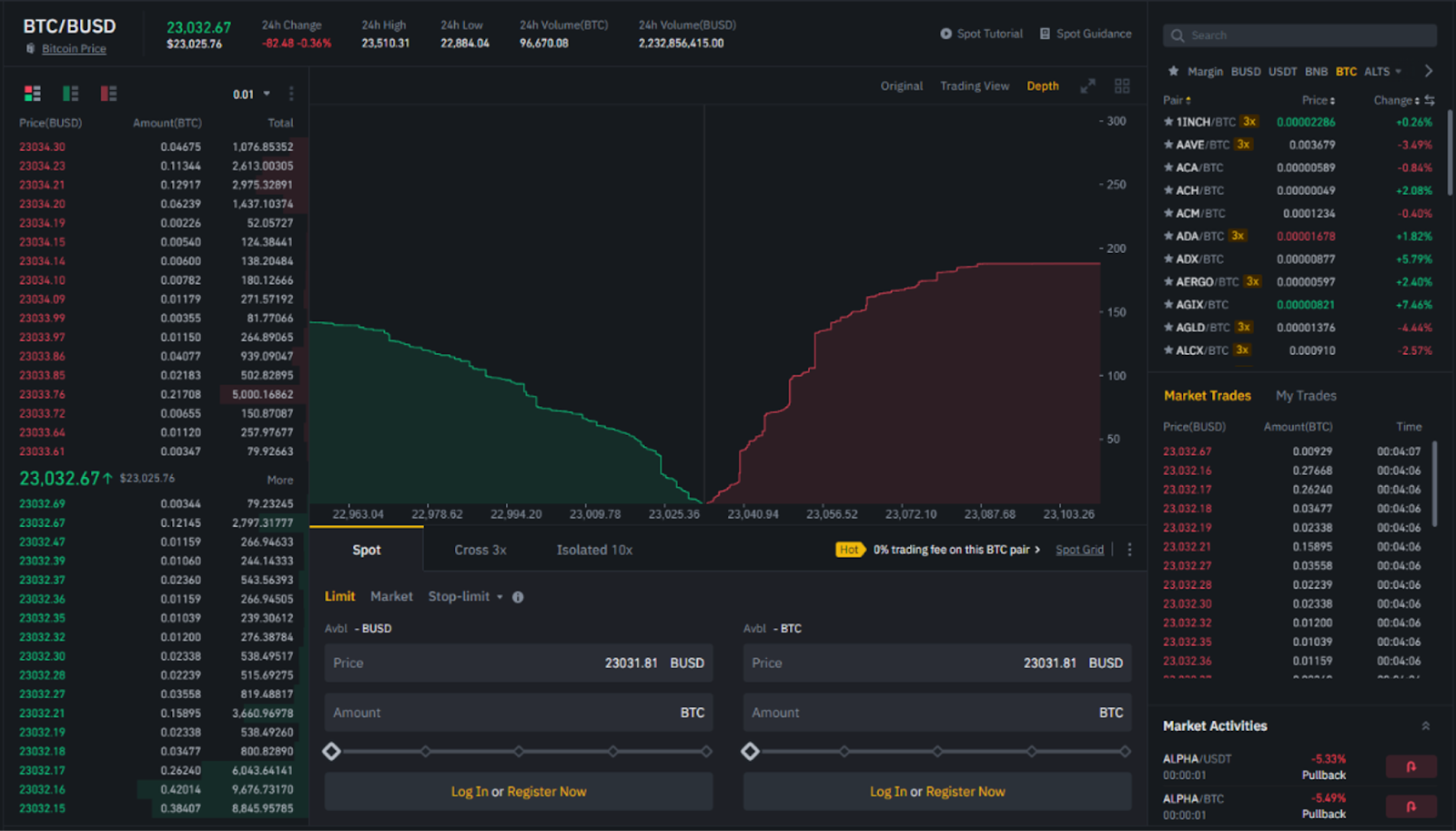
For CEX exchanges, traders will monitor the slippage level in the Depth option.
OTC Trading
OTC (over-the-counter) refers to private transactions for buying or selling cryptocurrencies that are not executed on regular exchanges and do not have a public order book.
Because buy and sell orders are only traded through agreements and are not listed on the exchange's order book, OTC trading is virtually free of slippage if the buyer/seller agrees on the price and quantity of coins to be sold.
Although OTC trading is not common among retail investors, it is a popular form of trading for large investors with assets of tens of millions of dollars or more. They are forced to trade OTC because the liquidity on exchanges is insufficient.
Using DEX Aggregators or Manual Comparisons
With the operating model of DEX Aggregators, they compare multiple DEXs to find the liquidity pool with the highest liquidity. From there, they calculate and determine the most optimal route to minimize slippage. Some popular DEX aggregators include 1Inch, Matcha, OpenOcean, etc.
However, a weakness of DEX aggregators is the inability to compare tokens across different chains and the lack of integration with bridges to support comprehensive trading in the DeFi space. Therefore, for some less popular chains or tokens, traders must perform manual comparisons.
Conclusion
Slippage is a natural part of trading, particularly in decentralized markets where liquidity, volatility, and execution speed directly influence price. While it is not inherently negative, slippage can significantly reduce profits or increase losses when trading large amounts, low-liquidity tokens, or during volatile market conditions.
FAQs
Why does slippage happen more often on DEXs?
DEXs rely on liquidity pools (AMMs), where price changes dynamically based on trade size and available liquidity, making them more sensitive to large orders.
Is slippage always negative?
No. Slippage can be positive (better price), negative (worse price), or neutral. However, traders usually experience negative slippage in volatile conditions.
How does low liquidity increase slippage?
When liquidity is low, even a moderately sized trade can significantly move the price within the pool, resulting in high slippage.
What is the role of front-running bots in slippage?
Front-running bots detect pending transactions and place trades before and after them to profit from the price movement, increasing slippage for the original trader.
How can I reduce slippage when trading?
You can reduce slippage by trading in high-liquidity pools, splitting large orders into smaller ones, adjusting slippage tolerance, using DEX aggregators, and avoiding high-volatility periods.