

By 2025, there are estimated to be over 100 active Layer 1 blockchains, reflecting how competitive this sector has become. The Layer 1 narrative surged between 2020 and 2022, as new networks promised faster speeds and lower fees, attracting billions of USD in capital and users.
Layer 1 represents the foundational layer of blockchain technology, the backbone on which the entire decentralized ecosystem is built. By providing the essential infrastructure for dApps, smart contracts, and other blockchain layers, Layer 1 ensures that the ecosystem remains transparent, trustless, and secure.
So what is Layer 1? Let’s dive into this article.
What is Layer 1 Blockchain?
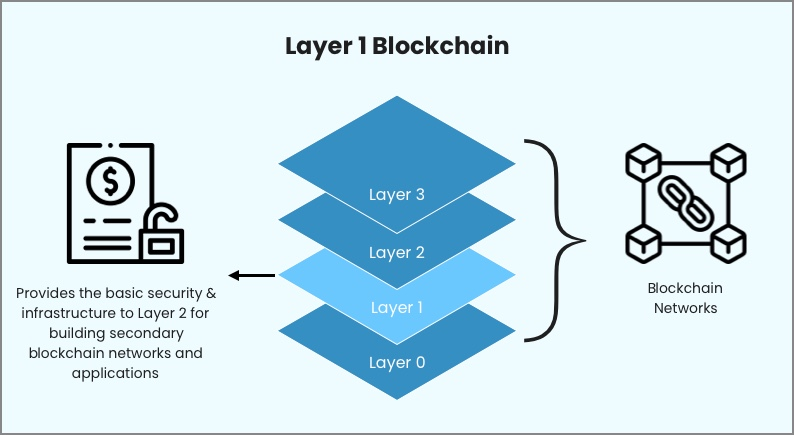
Layer 1 blockchain (L1) is the essential base layer for the blockchain infrastructure. It is a distributed ledger technology (DLT) designed to securely record transactions on a public, immutable, and trustless ledger.
L1 provides the infrastructure for developing decentralized applications (dApps), processing and validating transactions for smart contracts, dApps, and other Layer 2 solutions.
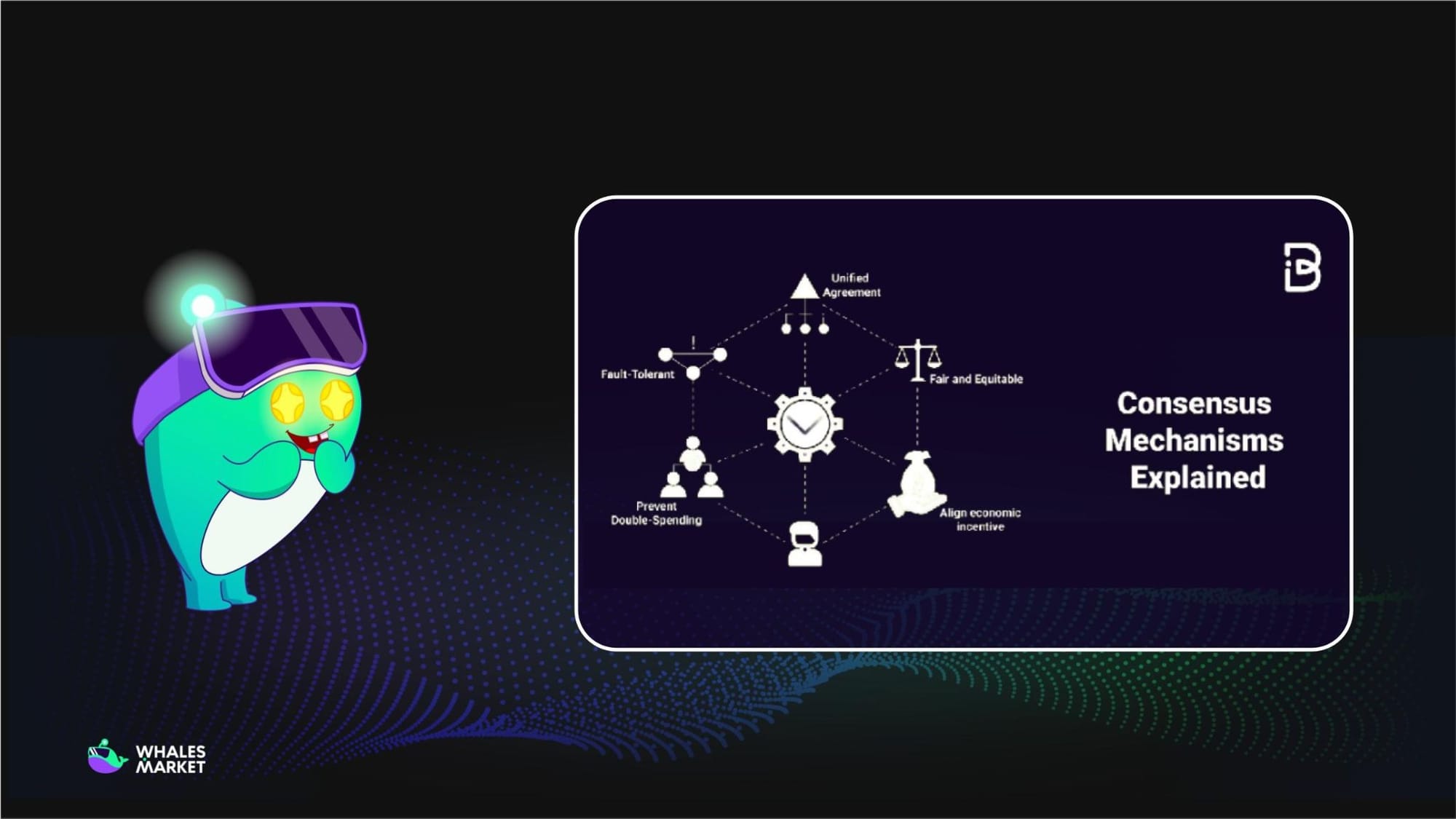
The core of a L1 is a consensus mechanism that regulates and records transactions in the ledger. This ensures the ledger is immutable and trustworthy by all network participants. Common consensus mechanisms on Layer-1 blockchains include Proof of Work (PoW), Proof of Stake (PoS), and Delegated Proof of Stake (DPoS).
Unique Feature of Layer 1
The unique feature of Layer 1 is that it operates independently, without depending on any other network. It is responsible for ensuring security and consensus for the entire ecosystem, including dApps and Layer 2 solutions built on its platform.
With this key role, Layer 1 brings many benefits to developers:
- Freedom of innovation: They can build new protocols and applications on Layer 1 without creating a separate blockchain, saving time and resources.
- Security and decentralization: The Layer 1 platform ensures security for the entire ecosystem, bringing trust and transparency to decentralized applications.
- Interoperability: Layer 1s interact with each other, facilitating the exchange of information and value between different blockchain ecosystems.
With its advantages in security, decentralization, and interoperability, Layer 1 is playing an important role in driving blockchain innovation and adoption in various fields.
Types of Layer 1 blockchain
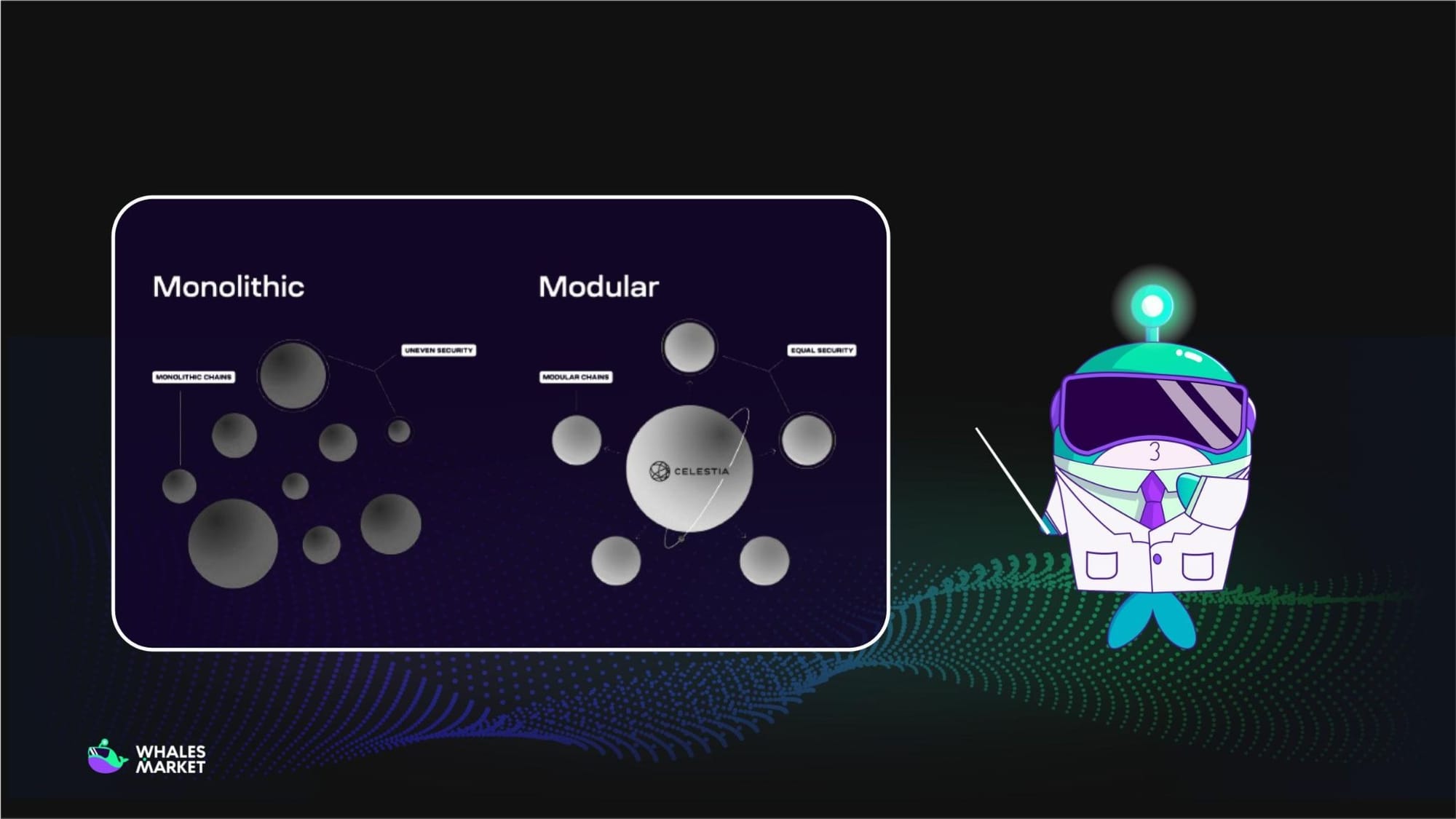
Layer 1 blockchains can generally be divided into two architectural models: Monolithic blockchains and Modular blockchains. The main difference lies in how they handle execution, consensus, and data availability.
Monolithic Blockchain
A monolithic blockchain performs all core functions, including execution, consensus, and data availability, on the same base layer. Everything happens within one unified system. In this model, the Layer 1 chain:
- Validates transactions
- Executes smart contracts
- Stores transaction data
- Secures the network
- All in a single architecture
This design is straightforward and easier to understand. However, scaling can be challenging because every node must handle all responsibilities.
Examples of monolithic Layer 1 blockchains include:
- Bitcoin: Focused primarily on security and simple transaction execution.
- Solana: Optimized for high throughput but still processes execution and consensus on the same base layer.
- BNB Chain: Handles smart contracts, validation, and settlement within a single chain structure.
Monolithic chains aim to improve performance directly at Layer 1 by adjusting consensus mechanisms, block size, or validator design.
Modular Blockchain
A modular blockchain separates responsibilities across different layers instead of handling everything in one place.
In this architecture:
- One layer may focus on consensus and security
- Another layer handles execution
- A separate layer may provide data availability
- This separation allows each component to scale independently
Ethereum has gradually moved toward a modular design. Ethereum now positions its main chain primarily as a settlement and data availability layer, while execution is increasingly handled by Layer 2 rollups.
Other examples include:
- Celestia: Focuses on data availability while leaving execution to external rollups.
- Cosmos: Enables independent application-specific chains connected through shared communication standards.
Modular architecture is designed to address scalability limitations by breaking the blockchain into specialized layers rather than forcing one chain to do everything.
Main components: How does Layer 1 work?
To understand Layer 1 clearly, it helps to look at its core architectural components. These are the building blocks that make a blockchain function.
Consensus Mechanism of Layer 1
A consensus mechanism is a set of rules or mechanisms that nodes in a blockchain network follow to ensure the accuracy, transparency, and consistency of transaction data across the entire system.
Essential roles of consensus mechanisms:
- Ensuring accuracy: The consensus algorithm helps to validate that all nodes in the network have the same version of the ledger, preventing data manipulation or fraud.
- Transparency: All transactions are recorded and made public on the blockchain, allowing anyone to check and verify their validity.
- Consistency: The consensus algorithm ensures that all nodes agree on the current state of the ledger, preventing network splits.
Common types of consensus mechanisms:
- Proof of Work (PoW): Requires participating nodes to solve complex mathematical problems to validate transactions and receive rewards. Bitcoin is a typical example that uses the PoW mechanism.
- Proof of Stake (PoS): Nodes stake a certain amount of money to become validator and participate in the transaction validation process. Nodes with higher stakes are more likely to be selected to validate the next block. Ethereum is transitioning to using the PoS mechanism.
- Delegated Proof of Stake (DPoS): Users delegate the right to validate transactions to a selected number of nodes. DPoS is used in EOS and Tron.
- Byzantine Fault Tolerance (BFT): Uses a consensus algorithm to ensure that even if some nodes in the network fail or intentionally cheat, the system can still function correctly. BFT is used in Hyperledger Fabric and Quorum.
Execution Layer
The execution layer is where transactions and smart contracts are processed. When a user sends a transaction or interacts with a decentralized application, the execution layer:
- Interprets the request
- Updates account balances
- Executes smart contract logic
- Changes the blockchain state
Without the execution layer, the network would not be able to run applications or support DeFi, NFTs, or other on-chain use cases.
Data Layer
The data layer stores transaction records and block information. Each block contains:
- Transaction data
- A reference to the previous block
- A cryptographic hash
This structure ensures immutability. Once data is confirmed and added to a block, altering it would require rewriting the entire chain, which is practically infeasible in secure networks.
Networking Layer
The networking layer connects all nodes in the system. It enables transaction broadcasting, block propagation, node-to-node communication.
Without this peer-to-peer communication layer, the blockchain would not be decentralized.
Native Token
Every Layer 1 blockchain has a native token. It serves multiple purposes including:
- Paying transaction fees
- Staking for network security
- Incentivizing validators
- Acting as the base asset of the ecosystem
The native token is not just a tradable asset. It is deeply integrated into the network’s economic and security model.
Main Properties of L1 & Blockchain Trilemma
Beyond its components, every Layer 1 must deal with a fundamental design challenge known as the Blockchain Trilemma. It refers to the trade-off between three core properties: security, scalability, and decentralization.
Security of Layer 1
Layer 1 blockchain prioritizes security by using cryptographic algorithms and a decentralized network structure. Blockchain immutability, achieved through cryptographic hashing, ensures the integrity and tamper-proofing of transactions recorded on the network.
Key points in layer 1 security:
- Encryption algorithms: Complex cryptographic algorithms are used to encrypt transaction data, ensuring that only authorized users can access and change the information.
- Decentralized network: There is no central entity controlling the network, preventing fraud and data manipulation.
- Cryptographic hashing: Each block on the blockchain is assigned a unique hash value, which is generated based on the contents of that block and the block before it.
Scalability of Layer 1
Layer 1 blockchains are facing the challenge of scalability. They need to process a large number of transactions while still ensuring efficiency. To solve this problem, many Layer 1 protocols have applied advanced techniques such as sharding, sidechains, and state channels to improve the scalability and throughput of the network.
Here are some ways that Layer 1 chains can improve scalability by changing their underlying structure:
- Increasing block size: Larger blocks allow for more transactions, thus increasing network speed. However, the downside is that the computers securing the network (nodes) need to upgrade their hardware, which can lead to network centralization.
- Changing the consensus mechanism: Proof of Stake (PoS) consensus mechanisms are typically faster and less resource-intensive than Proof of Work (PoW).
- Sharding: Sharding allows Layer 1 chains to split data into separate components called shards. This helps reduce network congestion and increase transaction speeds. Sharding was once a major part of Ethereum’s long-term roadmap. However, over time, Ethereum shifted toward a rollup-centric approach, prioritizing Layer 2 scaling while using the main chain primarily for data availability and settlement. Cross-shard communication and complexity were among the challenges influencing this strategic pivot.
- Layer 2 and Rollups: Instead of scaling directly on Layer 1, many ecosystems now rely on Layer 2 solutions such as rollups. Rollups process transactions off-chain and then post compressed data back to the main chain for security. This approach significantly increases throughput while inheriting Layer 1 security. Ethereum, in particular, has embraced a rollup-centric roadmap, positioning Layer 1 as a secure base layer while scaling execution through Optimistic and ZK rollups.
The scalability challenge is a major issue, so scaling solutions are being developed to improve the performance of Layer 1.
The Blockchain Trilemma
The big challenge of Layer 1 Blockchains is arguably the balancing act between Decentralization, Security, and Scalability.
The primary goal of Layer 1 Blockchains is to provide the core functionality of blockchain technology. However, the biggest challenge lies in achieving a balance between three key elements: decentralization, security, and scalability. This is known as the “blockchain trilemma” of blockchain, because it is difficult to optimize all three elements at the same time.
Early Layer 1 blockchains (such as Bitcoin and Ethereum) prioritized decentralization and security, but this affected the scalability of the network. Therefore, Layer 1 developers are working hard to adjust their designs to improve scalability or look for “off-chain” alternatives.
Conclusion
In essence, Layer 1 serves as the cornerstone of blockchain innovation, shaping the foundation for security, decentralization, and scalability. While it continues to face the well-known blockchain trilemma, ongoing advancements in consensus mechanisms and scaling solutions like sharding and sidechains are pushing its limits forward.
As these technologies mature, Layer 1 will not only sustain the next generation of decentralized applications but also redefine how digital value and trust are built across networks.
Disclaimer: This article is for informational purposes only, not investment advice, and Whales Market is not responsible for any of your investment decisions.
FAQs
What does a Layer 1 blockchain mean?
Layer 1 refers to the base layer of a blockchain network. It is responsible for processing transactions, maintaining consensus, and ensuring the overall security and functionality of the ecosystem. Examples include Bitcoin, Ethereum, and Solana.
Why is scalability a major issue for Layer 1 blockchains?
Because Layer 1 must maintain decentralization and security while handling a growing number of transactions, a trade-off known as the blockchain trilemma. Increasing speed often risks reducing security or decentralization.
What is the Layer 1 problem?
The Layer 1 trilemma refers to the difficulty of achieving all three attributes: security, decentralization, and scalability at the same time. Improving one often means compromising another, making it a core challenge in blockchain design.
Which Layer 1 blockchains are leading today?
Bitcoin and Ethereum remain dominant, while others like Solana, Avalanche, and Aptos are gaining traction with innovative scaling approaches and faster consensus mechanisms.
What’s next for Layer 1 development?
Future Layer 1 chains are focusing on modularity, improved scalability, and cross-chain interoperability. These advancements will allow for faster transactions, lower fees, and seamless communication between different blockchain ecosystems.