


In DeFi, DEX is the first option when users need to trade coin or token. So what is DEX? Let’s dive into this article.
What is DEX?
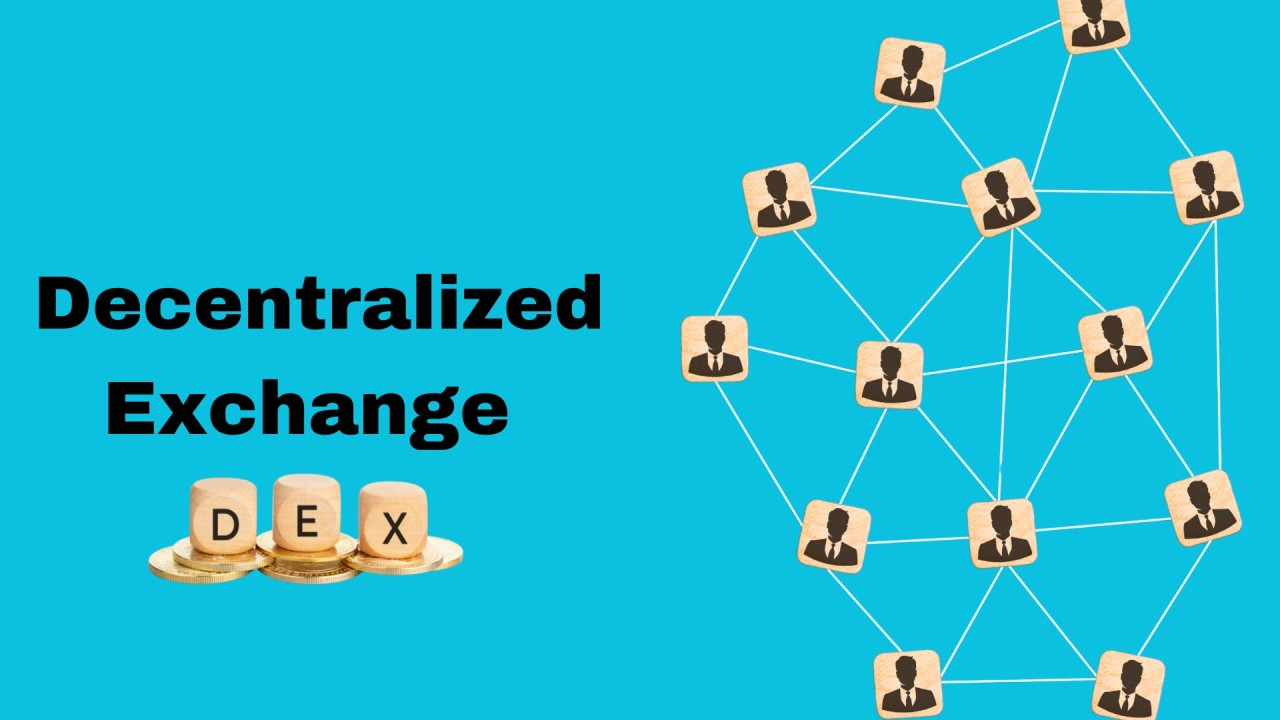
DEX is a decentralized exchange, operating on the blockchain platform, allowing users to trade tokens with each other without going through any intermediary.
DEX operates based on smart contracts on the blockchain to automate the transaction process. At the same time, it ensures transparency, safety and reliability when trading cryptocurrencies.
Key Features of DEX
- Decentralized: No company or organization holds the right to manage your wallet. Transactions are made through smart contracts on the blockchain.
- No KYC/AML required: Most DEXs do not require identity verification, you just need to connect your wallet (Metamask, Trust Wallet...) to trade.
- Transparent environment: All transactions are public on the blockchain, anyone can check.
- Liquidity and slippage: Some DEXs use the AMM (Automated Market Maker) model such as Uniswap, PancakeSwap, Balancer... to provide liquidity, but the possibility of slippage is high when the transaction volume is large.
- Transaction fees: Usually have to pay gas fees (Ethereum, BNB Chain...) or protocol fees, depending on the network.

Outstanding of DEX
Supported by smart contracts
DEX exchanges are supported by smart contracts with clearly defined rules and terms. This can ensure that they will do exactly what users want quickly and at low cost, without having to trust a centralized third party.
Furthermore, once smart contracts are executed, they cannot be deleted or changed, and all information about terms, contract execution time, etc. are stored on the blockchain. This helps ensure the integrity and transparency of transactions on the DEX exchange.
Non-custodial & privacy
A prominent feature of the DEX exchange compared to the CEX exchange is non-custodial. Users only need to connect their non-custodial wallet to the DEX exchange to be able to use and trade on the exchange, and do not need to provide any personal information such as email, phone number, etc. or perform KYC like on the CEX exchange.
While connecting a non-custodial wallet gives users complete control over their assets, not having to provide personal information gives them privacy during transactions.
Providing a variety of features
In addition to simple token swap transactions, most decentralized exchanges today have integrated many features such as providing liquidity, lending, staking, farming... to attract more users and cash flow.
In this way, the DEX floor can bring benefits to both sides:
- On the user side: Increase capital efficiency to earn more profits.
- On the DEX floor itself: Provide the ability to rotate assets between features on the floor, increase trading volume and ultimately increase the TVL (total value locked) value of the floor.
How does DEX work?
On the DEX, all transactions take place directly between users, without going through an intermediary, thanks to smart contracts that automatically match orders and manage funds. You retain full control of your assets, reducing the risk of security or fraud, while the creation of representative tokens or proxy assets is done through decentralized smart contracts.
The operating principle of the DEX is based on smart contracts to automate the trading process.
Orderbook
Like a traditional financial exchange (TradFi) or cryptocurrency exchange, some DEXs use orderbooks to process trades.
DEX orderbooks match trades and do not require users to deposit funds into the exchange's internal wallet. This way, users remain in control of their funds.
In DEXes, there are two types of orderbooks: on-chain and off-chain. As the name suggests, on-chain orders involve transactions that occur outside the blockchain and are then synchronized or settled on-chain at a later date. The reason for the existence of off-chain (on-chain) orderbooks is that they are more efficient, requiring less gas fees for transactions (in the case of Ethereum tokens).
AMM
AMM stands for Automated Market Maker, which is an order matching mechanism commonly used by DEXs and can be used when referring to DEXs. AMMs allow assets to be traded through liquidity pools instead of using the Central Limit Order Book (CLOB) matching mechanism like centralized exchanges (CEX).
DEX Aggregators
Like a search engine, a DEX aggregator screens for a specific pair across DEXs so that the trader doesn’t have to do it manually.
In times of volatility or liquidity, this can be a game changer that low liquidity can significantly impact swap rates between DEXs, and as a result, the trader could end up with a very unsatisfactory price for a trade without the aggregator’s help.
DEX aggregators also allow for the splitting of trades across multiple DEXs, further improving the overall trading price.
The first and perhaps most well-known DEX aggregator is 1inch, which was created during a hackathon in 2019 and has continued to grow since then. The aggregator has adjusted for gas fees and transaction costs when displaying results, reducing a common headache when it comes to DEX-based DeFi swaps.
Types of DEX
Here are some popular classification methods to help investors choose the right platform for trading:
- Classification by order matching mechanism: AMM DEX and Central Limit Order Book (CLOB) DEX.
- Classification by transaction type: Spot Exchange, Margin Exchange (Leverage), Perpetual Exchange (Derivatives), ...
- Classification by ecosystem: Layer 1, Layer 2 and others.
- Classification by liquidity: Liquidity Center and DEX Aggregator.
AMM DEX and Central Limit Order Book (CLOB) DEX
AMM DEX will need to be provided with liquidity by Liquidity Providers into Liquidity Pools. When users make transactions, their assets will be converted into liquidity pools according to the calculation of Smart Contracts instead of matching orders according to the order book mechanism on CEX exchanges. Some DEX exchanges using the AMM mechanism include Uniswap, Sushiswap, Balancer, etc.
Centralized Limit Order Book (CLOB) is the mechanism used to execute user transactions. Using the order book mechanism will help users' transaction orders to be matched quickly.
With the advent of layer 1/layer 2 blockchains and appchains with significantly improved transaction processing capabilities and speed, Order Book DEXs are gradually receiving attention recently. Some prominent Order Book DEX projects include dYdX, Serum, Orderly Network, etc.
Classification by transaction type
Similar to CEX exchanges with many features such as spot trading, leverage trading (Margin) and derivatives trading (Perpetual), DEX exchanges also have many different types. However, at the present time, there is no DEX exchange that provides all 3 complete features, so users need to pay attention and use the right platform. Some outstanding DEX exchanges with each feature include:
- Spot trading platform: Curve, Pancakeswap, Balancer….
- Margin trading platform: Mango Market, Ooki…
- Derivatives trading platform: Perpetual Protocol, dYdX, GMX,…
Classification by ecosystem
DEX exchanges are usually built in different ecosystems and each system will have a DEX exchange that is the leader in liquidity, TVL and trading volume. Below are some prominent DEX exchanges in each ecosystem:
- Ethereum/Layer 2: Uniswap, SushiSwap,…
- BNB Chain: Pancakeswap, Biswap,…
- Solana: Meteora, Jupiter,...
- Sui: Momentum, Cetus,...
- Aptos: Hyperion, Tapp Exchange,...
Currently, most DEX exchanges have switched to supporting Multichain, which means that users can choose to trade on many different ecosystems instead of being limited to one ecosystem. However, usually if it is not the main ecosystem supported by that DEX exchange, the liquidity of that system will be low, affecting the price.
Classification by liquidity
When looking at the liquidity sources of decentralized exchanges (DEX), we can divide the market into two main categories: AMM Liquidity Center and AMM Liquidity Aggregator.
- AMM Liquidity Center: These are automated exchanges (AMMs) that own and manage their own “liquidity pools”. These exchanges do not need to rely on other third parties to have enough liquidity for trading. Examples include Uniswap, Pancakeswap, Sushiswap,...
- AMM Liquidity Aggregator: These are exchanges that aggregate liquidity from many other AMM Liquidity Centers. The strength of AMM Liquidity Aggregators is the ability to aggregate liquidity from many different sources on the same blockchain, and they have the ability to choose the best trading price when comparing many different liquidity pools. However, they still depend on AMM Liquidity Centers to provide liquidity. Examples include 1Inch Exchange, Raydium,…
Conclusion
Decentralized Exchanges (DEXs) represent one of the core innovations driving the DeFi ecosystem forward. By enabling users to trade directly from their wallets without intermediaries, DEXs offer transparency, privacy, and full control over asset qualities that traditional exchanges cannot match.
FAQs
What is Dex?
DEX stands for Decentralized Exchange, which is a decentralized exchange. DEXs operate on blockchain platforms, allowing users to trade tokens with each other without going through any intermediaries.
How does Dex work?
Decentralized exchanges (DEXs) operate on a peer-to-peer (P2P) network, allowing users to trade directly with each other without intermediaries.
How is a DEX different from a Centralized Exchange (CEX)?
Unlike CEXs, DEXs do not hold user funds or require identity verification (KYC). Users keep full control of their assets by connecting a non-custodial wallet such as MetaMask or Trust Wallet.
What are the risks of trading on a DEX?
DEXs can face issues such as slippage, smart contract vulnerabilities, and lower liquidity compared to major centralized exchanges. Additionally, transaction fees depend on the blockchain network being used.
What types of DEXs exist?
DEXs can be classified by their trading mechanisms (AMM or Order Book), transaction types (Spot, Margin, Perpetual), ecosystems (Ethereum, BNB Chain, Solana, etc.), or liquidity models (Liquidity Center or Aggregator).