

Blockchain is often praised for its transparency and immutability, but transparency does not equal privacy. On public blockchains, transaction data exists permanently and can be analyzed to infer user behavior. When on-chain data is combined with off-chain information such as KYC records or social media activity, real-world identities can be fully exposed.
As a result, blockchain privacy is no longer optional but a necessary condition if blockchain is to become infrastructure for real-world finance and data.
What is Blockchain Privacy?
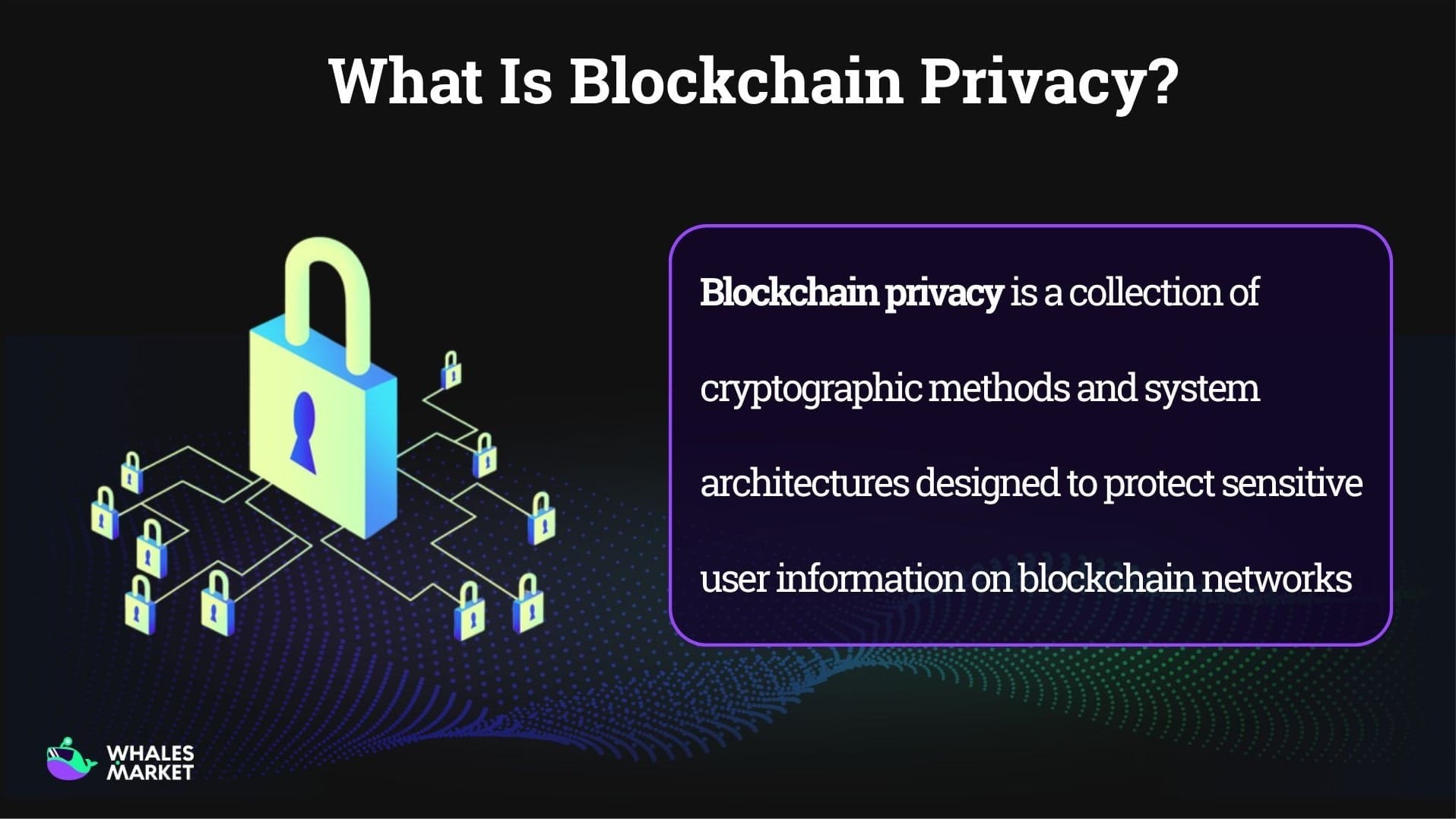
Blockchain privacy is a collection of cryptographic methods and system architectures designed to protect sensitive user information on blockchain networks. Instead of hiding transactions from the network, privacy-preserving blockchains allow transaction validity to be verified without revealing the underlying content.
Senders, recipients, transaction amounts, or internal states of smart contracts can be concealed, while the blockchain still maintains integrity and resistance to fraud.
The core problem that blockchain privacy aims to solve lies in the apparent conflict between two opposing needs. Blockchains require transparency to achieve trustless operation, while individuals and enterprises require privacy to protect assets, financial strategies, and personal data.
Privacy does not eliminate transparency but shifts transparency away from raw data toward the correctness of that data.
Why is Blockchain Privacy necessary?
The importance of privacy
As more financial activity moves on-chain, radical transparency is becoming a structural constraint rather than an advantage.
- Strategic confidentiality: Open ledgers expose positions, capital movements, hedging logic, and rebalancing behavior, leaving participants vulnerable to front-running, copy trading, and targeted liquidity manipulation.
- Operational risk and compliance: Institutions cannot operate effectively if counterparties, clients, cash flows, and financial architectures are fully visible to the public.
- Deep liquidity execution: For large trades, signaling intent alone can move the market, creating slippage long before an order is fully executed.
Blockchain stores data in a near-permanent manner. Once a wallet address is linked to a real-world identity, the entire financial history, past and future, becomes exposed. In an environment where data is increasingly treated as an asset, exposing personal cash flows represents a serious risk.
Privacy is also directly related to fungibility. On blockchains without privacy, coins can be tainted based on their transaction history, reducing interchangeability and weakening the role of cryptocurrencies as neutral mediums of exchange.
For businesses and organizations, the issue is even clearer. No entity wants to publicly expose cash flows, payroll data, or partnership relationships. Without solving the privacy problem, blockchain will struggle to move beyond experimental use cases and become infrastructure for industries beyond finance.

Damage caused by on-chain data exposure
While blockchain transparency and immutability are often viewed as advantages, exposure of on-chain data, including transaction history, wallet addresses, and asset balances, creates opportunities for malicious actors to exploit public information. This has enabled increasingly sophisticated attacks, leading to massive financial losses and erosion of community trust.
These risks are not theoretical and have been demonstrated by numerous real-world incidents, such as:
- Ronin Network (2022, $625M loss): This incident is related to privacy because publicly available validator and on-chain transaction information allowed attackers to precisely target victims. Privacy mechanisms such as ring signatures could make linking real-world identities to on-chain wallets more difficult, reducing social engineering risk.
- Wormhole (2022, $325M loss): A smart contract vulnerability in a cross-chain bridge was exploited through a signature verification bypass. Metadata leakage across chains allowed attackers to track and replicate transactions. Privacy mechanisms at the bridge level, such as zk-SNARKs, could hide amounts and sender or receiver information, making analysis and exploitation more difficult.
- Poly Network (2021, $611M loss): A smart contract vulnerability was exploited after attackers leveraged the full transparency of DeFi protocols, where all code and transactions were publicly visible. Privacy can help obscure smart contract state, preventing attackers from reverse-engineering behavior from public data.
- Bybit (2025, $1.5B loss): A private key leak from a hot wallet occurred through a supply chain attack involving malicious JavaScript. Public wallet addresses and transaction data enabled attackers to track funds and select high-value targets. Stealth addresses could break linkage and disrupt tracing efforts.
These events not only caused direct losses totaling billions of dollars but also triggered indirect consequences such as market volatility and loss of market share, underscoring the urgent need for privacy solutions to protect on-chain data.

What are the benefits of Blockchain Privacy?
Blockchain privacy enhances trust, security, and user autonomy by allowing data to be verified without exposing sensitive information, making it a critical component of modern decentralized systems.
- Enhanced Data Confidentiality: Sensitive information can be protected while still allowing verification, ensuring that only necessary data is revealed.
- User Control Over Personal Data: Individuals maintain ownership of their data and can decide what to share, with whom, and under what conditions.
- Reduced Risk of Data Breaches: By minimizing the exposure of raw data, blockchain privacy mechanisms lower the chances of large-scale leaks or hacks.
- Trust Without Disclosure: Technologies like zero-knowledge proofs allow transactions to be validated without revealing underlying details.
- Improved Security: Cryptographic methods ensure that data cannot be tampered with or accessed without authorization.
- Protection Against Surveillance: Users can transact without exposing their identity or transaction patterns to unnecessary observers.
- Increased Adoption of Decentralized Systems: Strong privacy guarantees make blockchain technology more appealing for enterprises and individuals alike.
How Does Blockchain Support Data Privacy?
At its core, blockchain privacy is not about hiding data but about proving correctness without revealing details. This is made possible by major advances in modern cryptography, particularly mechanisms that decouple transaction validity from transaction content.
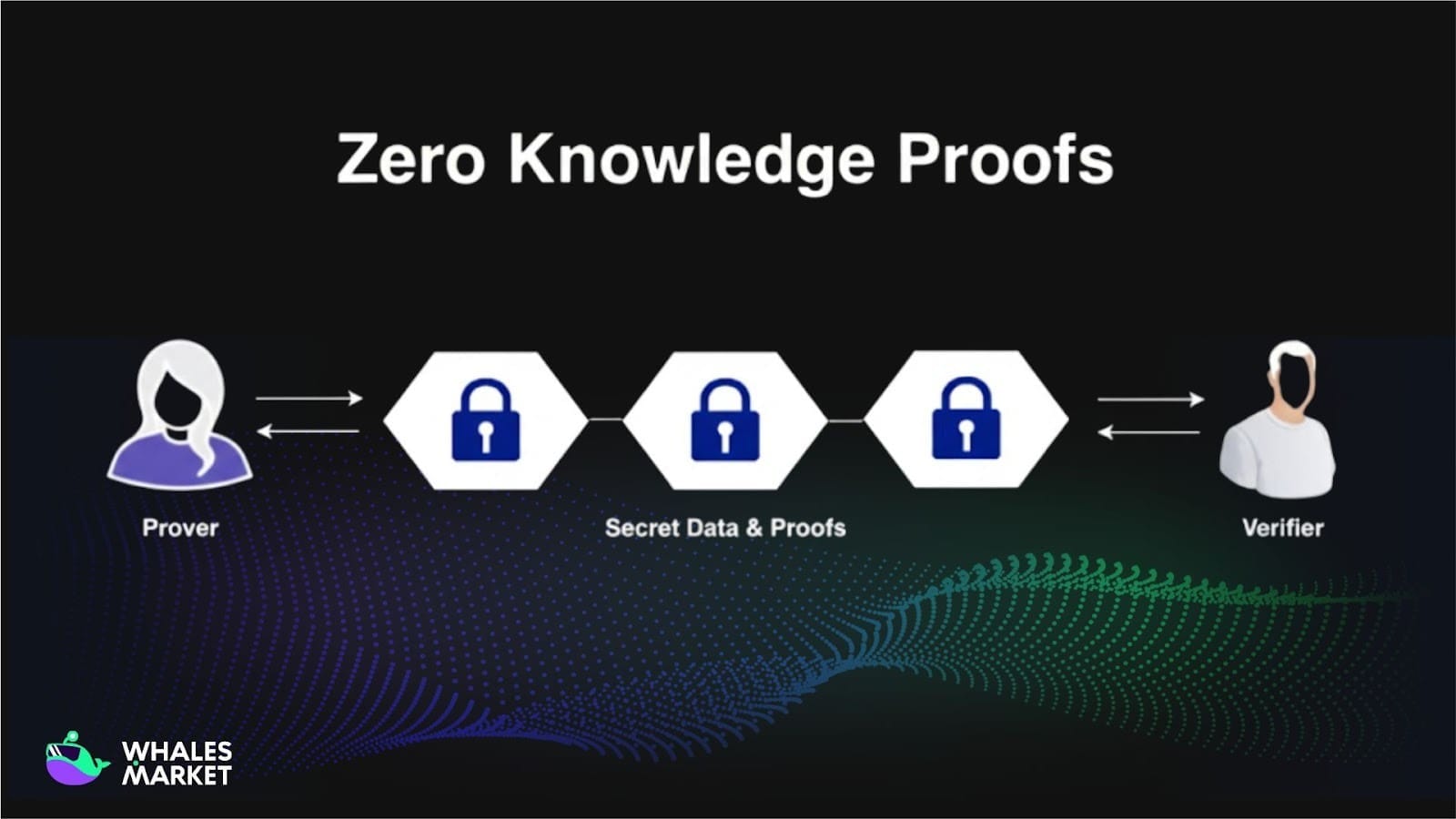
Central to this approach are Zero-Knowledge Proofs (ZKP). Fundamentally, ZKPs allow one party to prove that they have performed a valid action, such as having sufficient balance, following transaction rules, or not committing fraud, without revealing any underlying information.
In a blockchain context, this means the network can verify that a transaction is valid without knowing who the sender is, who the recipient is, or the exact amount transferred. Variants such as zk-SNARKs and zk-STARKs have become foundational technologies for modern blockchain privacy systems, ranging from private payments to smart contracts with hidden state.
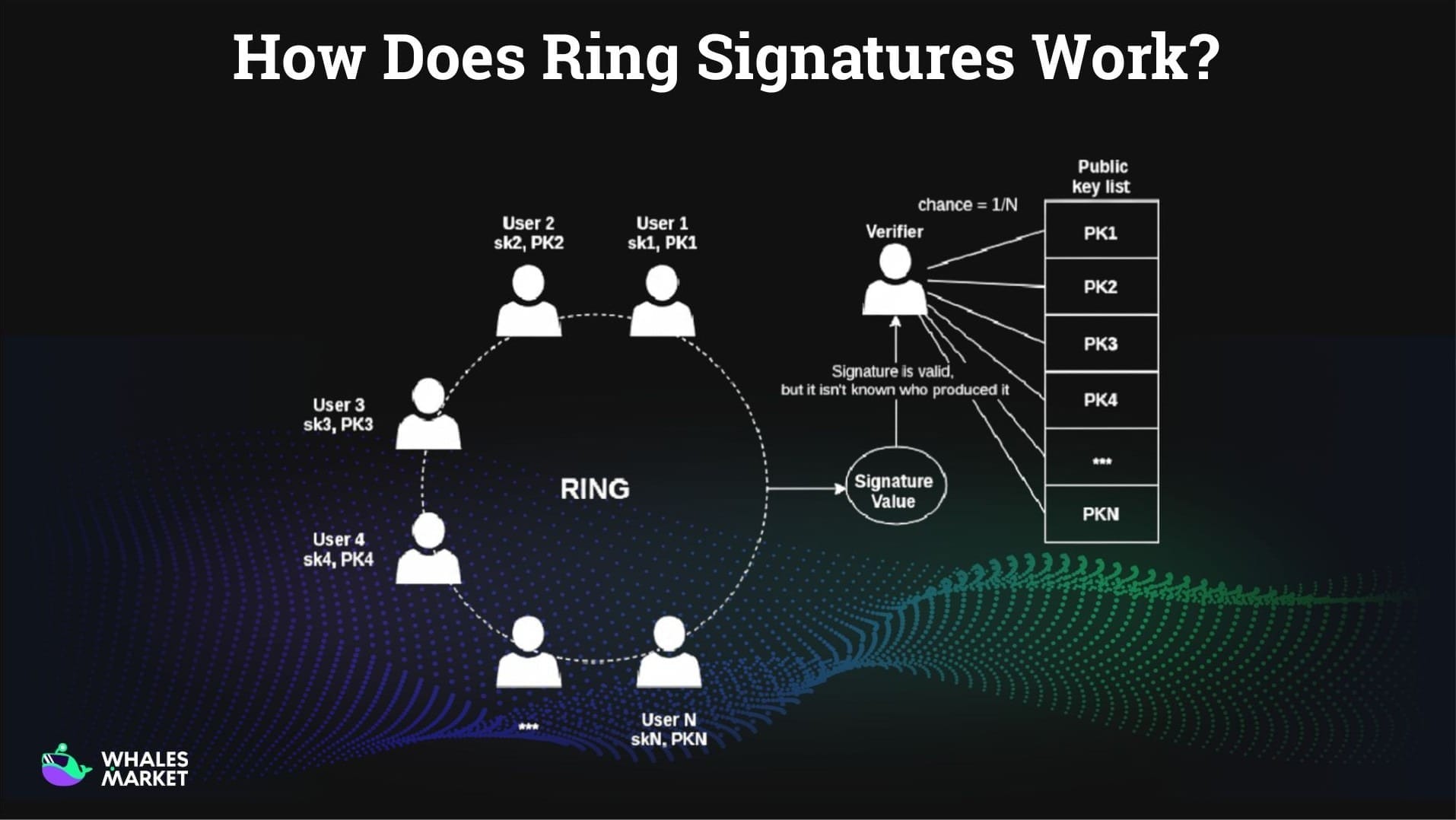
However, not all blockchain privacy systems rely entirely on zero-knowledge proofs. Some adopt alternative approaches that focus on obscuring the linkage between transactions. Ring Signatures are a prominent example of this approach.
As illustrated, Ring Signatures operate on a simple principle:
- The sender does not stand alone. Instead of signing a transaction with a single signature, the sender’s real signature is placed within a ring of multiple public keys.
- The blockchain and validators can verify that one of the keys in the ring produced a valid signature, but cannot determine which key belongs to the actual sender.
- From an external perspective, all members of the ring have equal probability, fully obscuring transaction origin.
On the recipient side, Stealth Addresses address a different problem not directly shown in the illustration: linking multiple transactions to the same wallet. For each incoming payment, the system automatically generates a one-time address.
On-chain, these addresses appear as independent destinations with no indication that they belong to the same recipient. This makes aggregating transaction histories for flow analysis nearly impossible.
When these mechanisms are combined with encrypted transaction amounts, as in the Ring Confidential Transactions (RingCT) model, blockchain privacy becomes more comprehensive.
The sender is hidden within a crowd, the recipient cannot be linked, and the amount is concealed. Despite this, the blockchain can still verify transaction validity and prevent fraud.
Notable Projects in the Blockchain Privacy Ecosystem
The surge in Zcash (ZEC) value, with growth exceeding 1,500% within a few months in early 2026 from around $30 to $400-$500, reignited strong interest in privacy coins.
This momentum was amplified by enthusiastic promotion from Mert Mumtaz, CEO of Helius Labs, who actively positioned Zcash as a private Bitcoin with superior privacy technology. This advocacy contributed to ZEC light-client integrations into platforms such as Solana and sparked broader discussions around privacy in DeFi.
look some of you are in the replies asking why I've been shilling Zcash for a while
— mert (@mert) October 1, 2025
relatively simple
i) three important missions in crypto: markets, store of value, privacy/freedom
the last one has been slept on, and it's about to make a comeback as CBDCs and centralized… pic.twitter.com/ne0TwnPCsq
Below is a comparison table of representative privacy blockchains and privacy layers, highlighting how they balance privacy and performance.
| Project | Core Privacy Technology | Privacy by Default | Key Strengths | Main Trade-offs |
|---|---|---|---|---|
| Monero | Ring Signatures, Stealth Addresses, RingCT | Yes | High fungibility, difficult to trace, comprehensive privacy | Large transactions, limited acceptance by CEXs and institutions |
| Zcash | zk-SNARKs (shielded transactions) | No | Strong zero-knowledge privacy, flexible compliance | Optional privacy leads to weak network effects |
| Aztec | zk-SNARKs, zk-rollup, private execution | Yes (at L2) | Private DeFi and smart contracts on Ethereum | Complex infrastructure, UX not yet mainstream |
| Oasis Network | Trusted Execution Environments (TEE), ParaTime | Yes (depending on ParaTime) | Confidential smart contracts, suitable for data and enterprises | Dependence on TEE hardware, trust assumptions |
| Secret Network | TEE-based confidential contracts | Yes | Smart contracts with private state by default | Trust assumptions around TEE, limited composability |
| Zama | Fully Homomorphic Encryption (FHE) | Yes (at compute layer) | Computation directly on encrypted data, very strong privacy | High computational cost, not optimized for large-scale deployment |
The Role of Blockchain Privacy in 2026
Investment fund perspectives on blockchain privacy
From a purely technical perspective, blockchain privacy can be viewed as a niche focused on anonymity. However, major investment funds see privacy as a long-term competitive advantage for blockchain infrastructure.
According to analysis from Andreessen Horowitz (a16z crypto), as performance, transaction fees, and scalability across blockchains converge, the true differentiator will be how data is protected.
Ecosystems where data and logic execute in private environments make migration to other chains more costly and risky, creating durable network effects centered around privacy. In this context, privacy is not just a security feature but a structural moat for the entire ecosystem.
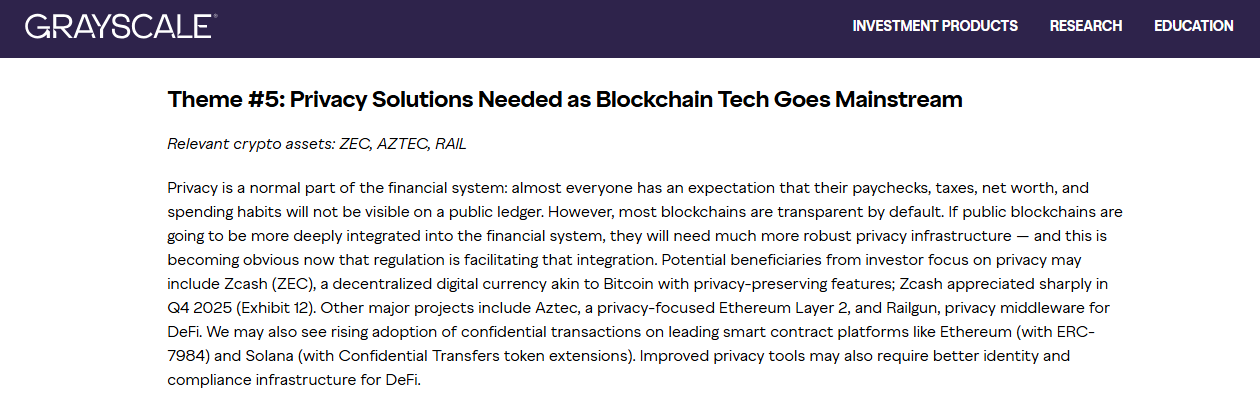
This view is reinforced by Grayscale, which considers privacy a prerequisite for institutional capital to participate deeply in blockchain markets from 2026 onward. Financial institutions cannot accept environments where trading strategies, client data, or partnerships are exposed on public ledgers.
Privacy models that allow selective disclosure and compliance proofs without revealing raw data will therefore play a critical role in institutional adoption.
Similar forecasts appear in analyses from Galaxy Digital, where privacy is positioned alongside institutional DeFi and asset tokenization as a core pillar of next-generation on-chain infrastructure.
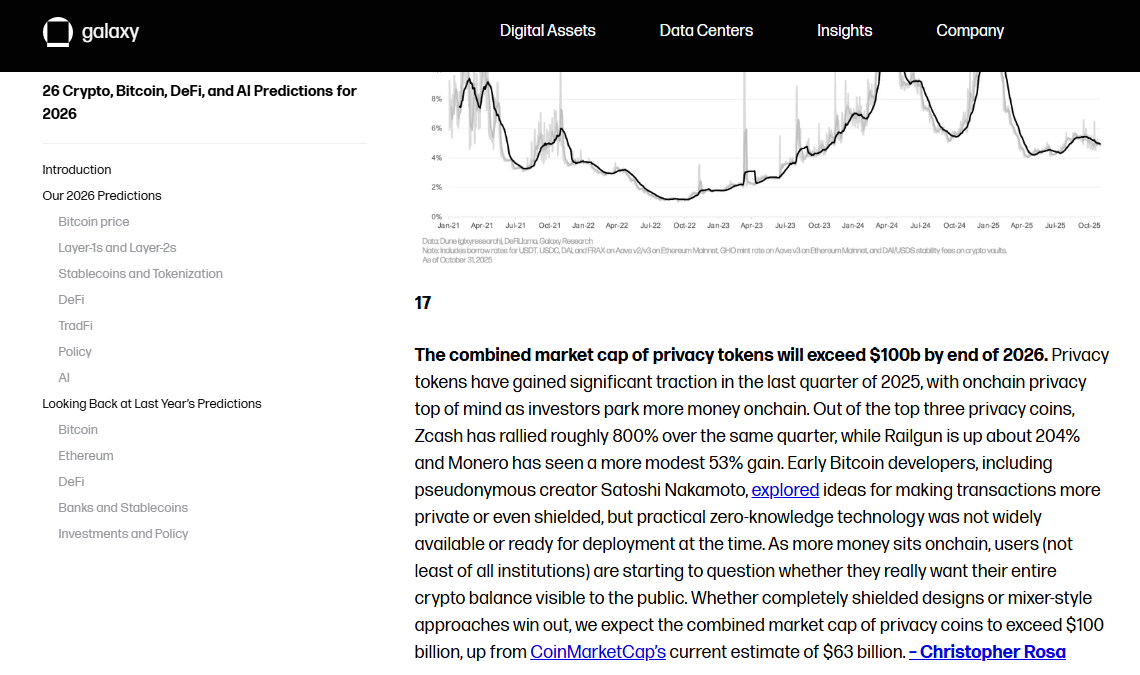
As performance and cost across chains converge, data and logic protection becomes the fundamental differentiator. Controlled privacy is a mandatory condition for sustained institutional participation beyond 2026.
AI Agents and Privacy
Entering 2026, a major emerging trend is the rise of autonomous AI agents capable of executing trades, purchasing data, paying for APIs, or managing portfolios. In public blockchain environments, this introduces a new risk: AI strategies can be reverse-engineered through on-chain data.
If all transactions are public, adversaries can analyze AI agent behavior to front-run or replicate strategies. This makes privacy a mandatory requirement for on-chain AI.
Models such as zkML combined with private smart contracts allow AI agents to prove computation results without revealing input data or internal logic. This enables a new class of use cases:
- Trading bots that hide strategies to avoid front-running
- Data marketplaces that trade AI training data without exposing model architecture
- AI agents that autonomously pay for services without disclosing budgets
In this context, privacy protects not only humans but also machine strategies.
Risks and Challenges of Blockchain Privacy
Despite its strategic advantages, blockchain privacy introduces significant risks and challenges that any privacy-focused system must address:
- High technical complexity: Zero-knowledge proofs, confidential execution, and FHE require complex infrastructure, high computational costs, and significantly more difficult auditing compared to traditional blockchains.
- Performance and UX trade-offs: Private transactions often involve higher latency, higher fees, and less intuitive user experiences, which hinder mainstream adoption.
- Regulatory and compliance risk: Privacy is often perceived as a tool for concealment, placing protocols under regulatory pressure and forcing the adoption of selective disclosure models.
- Trust assumptions and long-term security: Approaches relying on TEE or new cryptographic assumptions carry risks related to hardware vulnerabilities, implementation flaws, and future threats such as quantum computing.
Conclusion
Blockchain privacy is not opposed to transparency. It represents the next evolutionary step, where blockchains retain public verifiability while respecting the privacy needs of individuals and organizations.
As blockchain moves closer to becoming infrastructure for finance, data, and digital identity, privacy cannot remain an optional enhancement. It must become a default architectural component, much like encryption has become a standard of the modern Internet.
FAQs
Q1. Is blockchain privacy the same as anonymity?
No. Blockchain privacy focuses on protecting sensitive data such as transaction amounts, counterparties, and execution logic while still allowing public verification. Anonymity removes identity entirely, whereas privacy often enables selective disclosure when required.
Q2. Can blockchain privacy coexist with regulation and compliance?
Yes. Modern privacy systems use cryptographic proofs to demonstrate compliance, such as solvency, sanctions screening, or transaction validity, without revealing underlying user data. This approach is often referred to as privacy-preserving compliance.
Q3. Why is blockchain privacy critical for institutional adoption?
Institutions cannot operate in environments where trading strategies, capital flows, and counterparties are fully transparent. Blockchain privacy enables large-scale execution, risk management, and custody without exposing sensitive financial information.
Q4. How does blockchain privacy prevent front-running and market manipulation?
By hiding transaction details such as order size, timing, and routing, privacy mechanisms reduce information leakage. This prevents adversaries from exploiting mempool data or copying strategies before trades are executed.
Q5. Are privacy blockchains only used for payments?
No. While early privacy blockchains focused on payments, modern privacy infrastructure supports private smart contracts, DeFi execution, data marketplaces, identity systems, and AI agent transactions.
Q6. Does blockchain privacy reduce transparency and trust?
Blockchain privacy does not remove transparency. It shifts transparency from raw data to cryptographic correctness, allowing the network to verify rule enforcement without exposing sensitive information.