


Nodes are considered the backbone for maintaining and operating a blockchain network. At the same time, they are a vital component that shapes blockchain as a distributed and decentralized ledger.
What is a Node in blockchain?
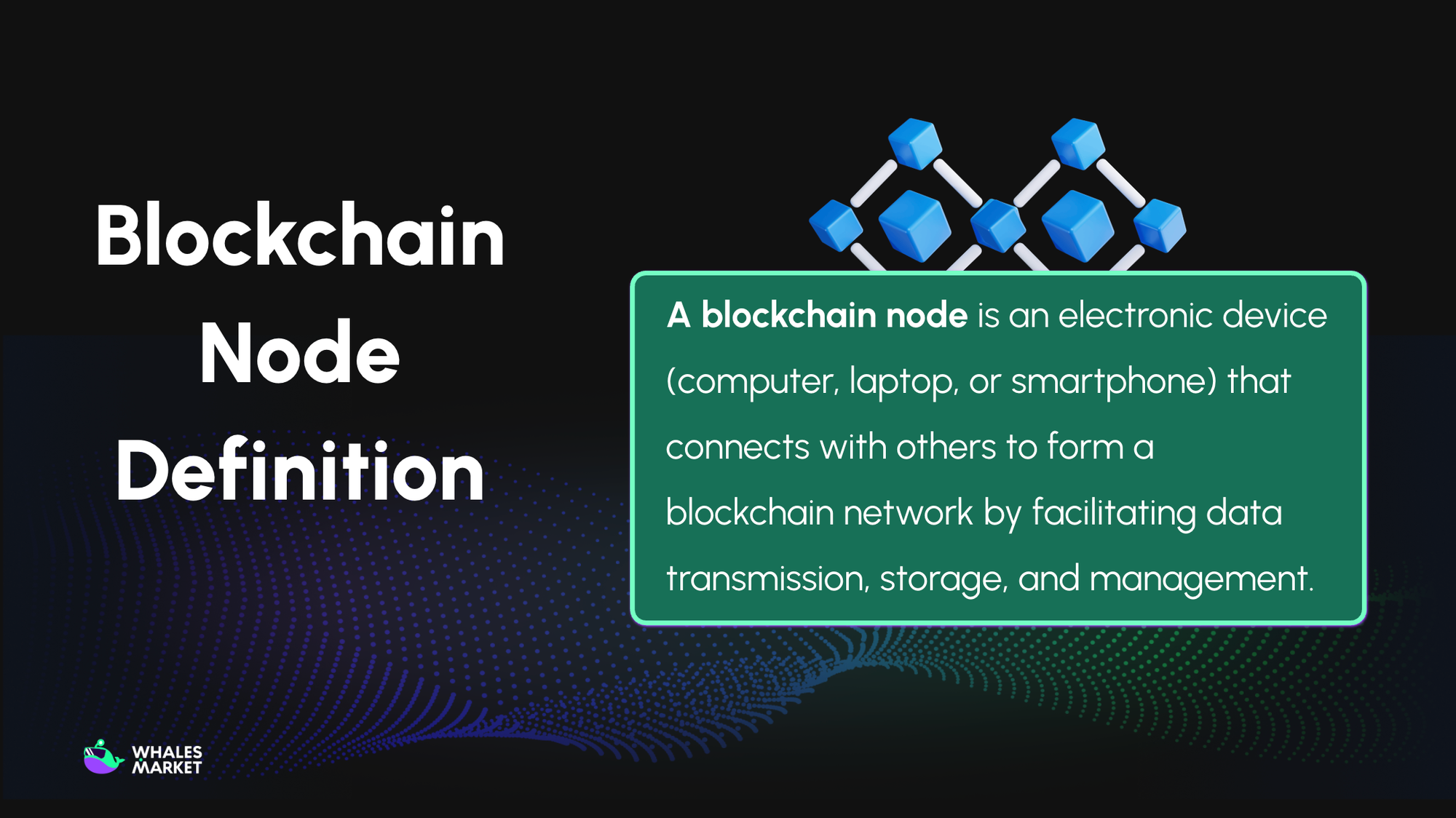
A node is an electronic device (such as a computer, laptop, or smartphone) that interacts and connects with others to form a distributed network. These nodes facilitate the transmission, storage, and management of data and transactions, effectively constituting the foundation of a blockchain.
Nodes perform critical roles such as maintaining blockchain consensus, validating and recording transactions onto blocks, and monitoring activities to ensure the security and integrity of the network.
Theoretically, a blockchain exists based on the interconnection between nodes without the need for a central server. Each node is an independent device that stores the entire blockchain's data and continuously exchanges information with others to ensure that all nodes are updated with the latest data.
The importance of Nodes in blockchain
Nodes play a critical role in operating and maintaining the integrity, security of the network. Without nodes, a blockchain cannot function properly, and the data stored on the network could be manipulated, making it easy for hackers to commit fraudulent activities.
The operational mechanism of nodes also helps a blockchain ensure the following properties:
- Accuracy: Multiple nodes collectively validate transactions based on complex consensus algorithms, which helps maintain the correctness of data on the blockchain.
- Transparency: Each node stores a copy of the ledger containing all transaction data on the network, ensuring that the blockchain is transparent and that all participants in the node system have access to the same information.
- Distribution: The blockchain network is maintained by nodes distributed globally. This helps disperse computing power across various computers to ensure better performance and reliability.
- Decentralization: Nodes interconnect to form a blockchain network that is not controlled by any single entity or intermediary organization. This decentralization makes the blockchain more trustworthy while eliminating data manipulation.
- Consensus: Nodes must follow the blockchain’s consensus mechanism to validate and record data onto blocks, which helps the blockchain prevent malicious actors from seizing control of the network (hijacking attacks).
How does Blockchain Node work?
Blockchain nodes perform three primary roles: maintaining, validating, and providing access to the network.
Think of a node as the supervisor of the blockchain. Every blockchain is a ledger containing all encrypted transaction data and can record new entries. Consequently, each node must store a copy of this ledger’s data.
When a user submits a transaction request on the blockchain, the transaction info is sent to miners or validators to await confirmation. Then, based on the blockchain’s consensus algorithm, the following steps occur:
- The transaction is validated and recorded onto a new block by a miner or validator.
- The new block containing the transaction data is broadcast to all other nodes in the network.
- Nodes collectively verify the validity and correctness of the transaction to decide whether to accept or reject the block. If nodes validate and add the block info to their copies, the blockchain reaches consensus, and the transaction is executed and completed.
At the same time, all nodes must update the information regarding the newly added block to ensure data synchronization across the network.
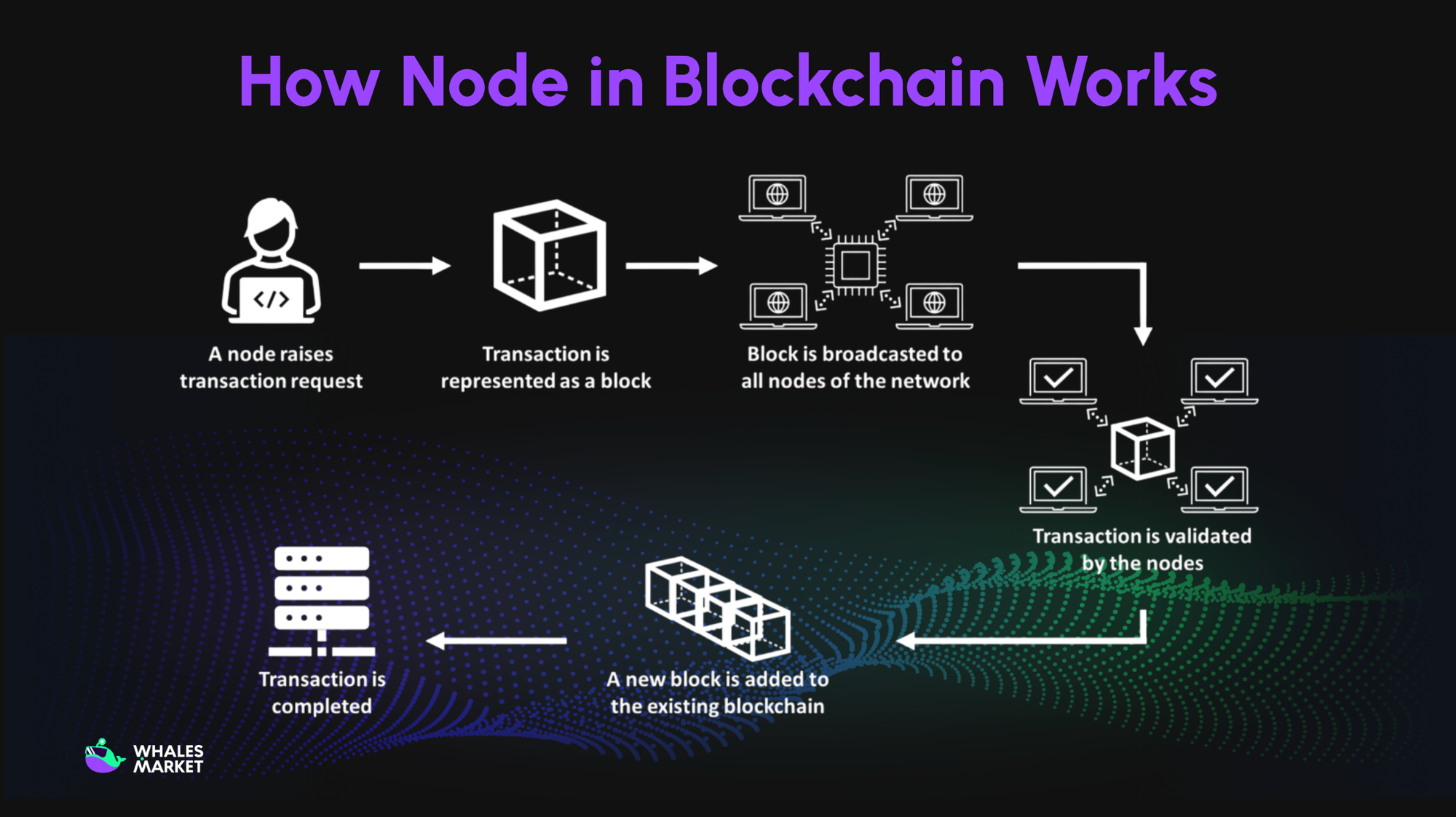
In summary, nodes in a blockchain network perform the following tasks:
- Check if a transaction block is valid and either accept or reject it.
- Store the data of that block if it is accepted.
- Broadcast and transmit this transaction data to other nodes to update and synchronize with the blockchain.
Blockchain Node Types
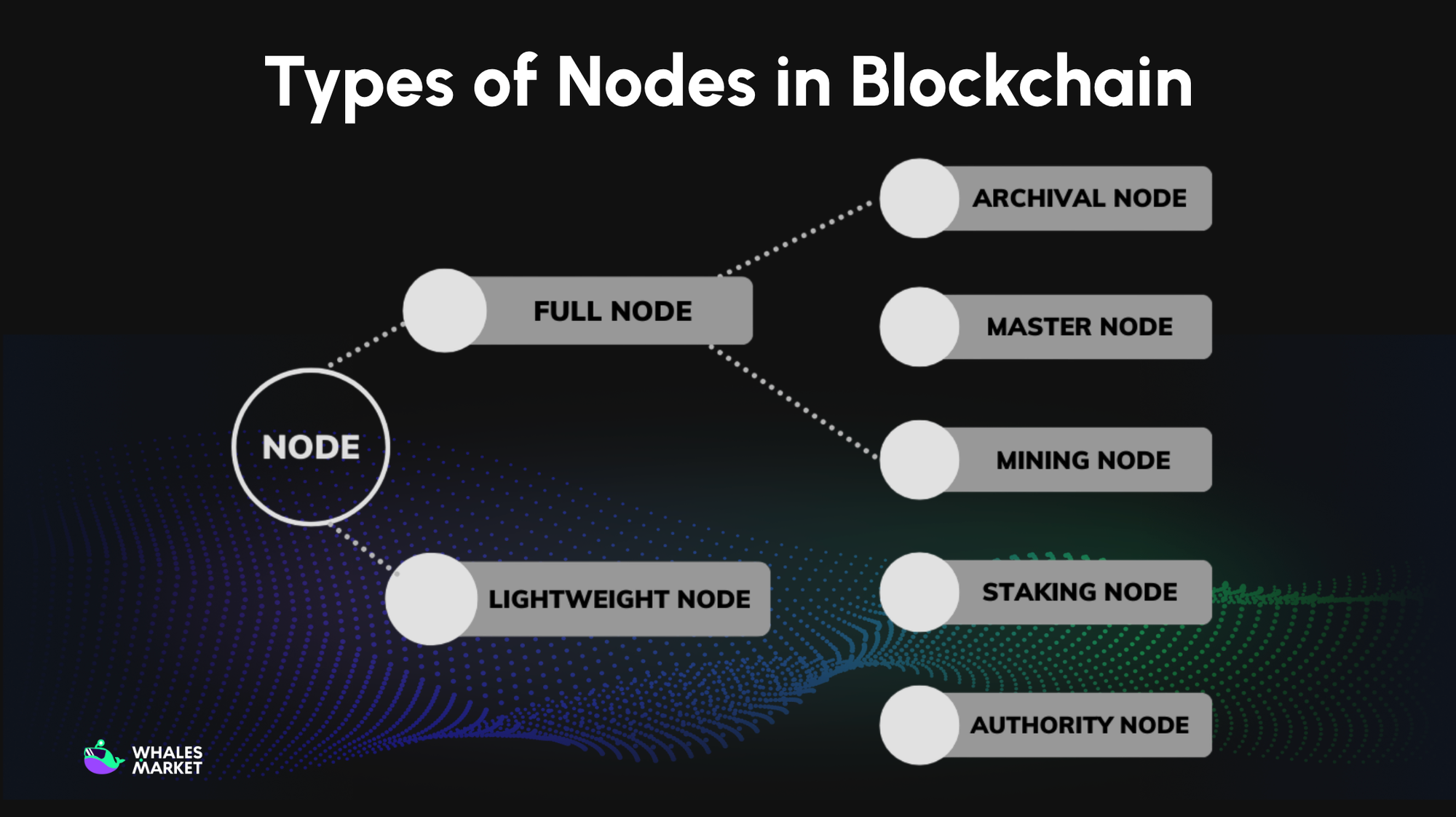
Generally, there are two main types of blockchain nodes: Full nodes and Light nodes.
- Full nodes: Store a complete copy of the blockchain's transaction history, including data from every block ever created.
- Light nodes: Only store block headers, helping participants save disk space when joining the node system.
Full Nodes
A full node operates like a server in a decentralized network. Its primary tasks include maintaining consensus among other nodes and verifying transactions.
Full nodes also store a copy of the blockchain ledger, making them more secure and enabling advanced functions such as voting rights for blockchain proposals. If more than 51% of nodes (or another ratio depending on the blockchain's rules) disagree with a proposal, it will not pass. In some cases, this can lead to a "hard fork" event, splitting the network into two different blockchains, the most famous example being the Bitcoin Hard Fork.
Key characteristics of a full node:
- Stores the complete blockchain data.
- Participates in block validation; verifies all blocks and states.
- All blockchain states can be derived from a full node.
- Provides data on demand to light nodes.
In practice, full nodes are further categorized based on their specific functions within the network, including:
- Archival nodes: These nodes store the entire historical data and the state of every single block, making them significantly larger than standard full nodes.
- Masternodes: These nodes are common in networks like Dash, these require a substantial amount of collateral to maintain specialized network features.
- Mining nodes: Used in Proof of Work (PoW) mechanisms (like Bitcoin) to solve complex puzzles and mine new blocks.
- Staking nodes: Utilized in Proof of Stake (PoS) mechanisms (like Ethereum or Solana) to lock tokens and validate transactions.
- Authority nodes: Found in more centralized networks using Proof of Authority (PoA), such as BNB Chain, where nodes are selected based on their reputation and identity.
Light Nodes
A light node, also known as a Simple Payment Verification (SPV) node, is a simplified version of a full node. Instead of storing the entire blockchain, it relies on other full nodes to validate transactions and query information to create block headers.
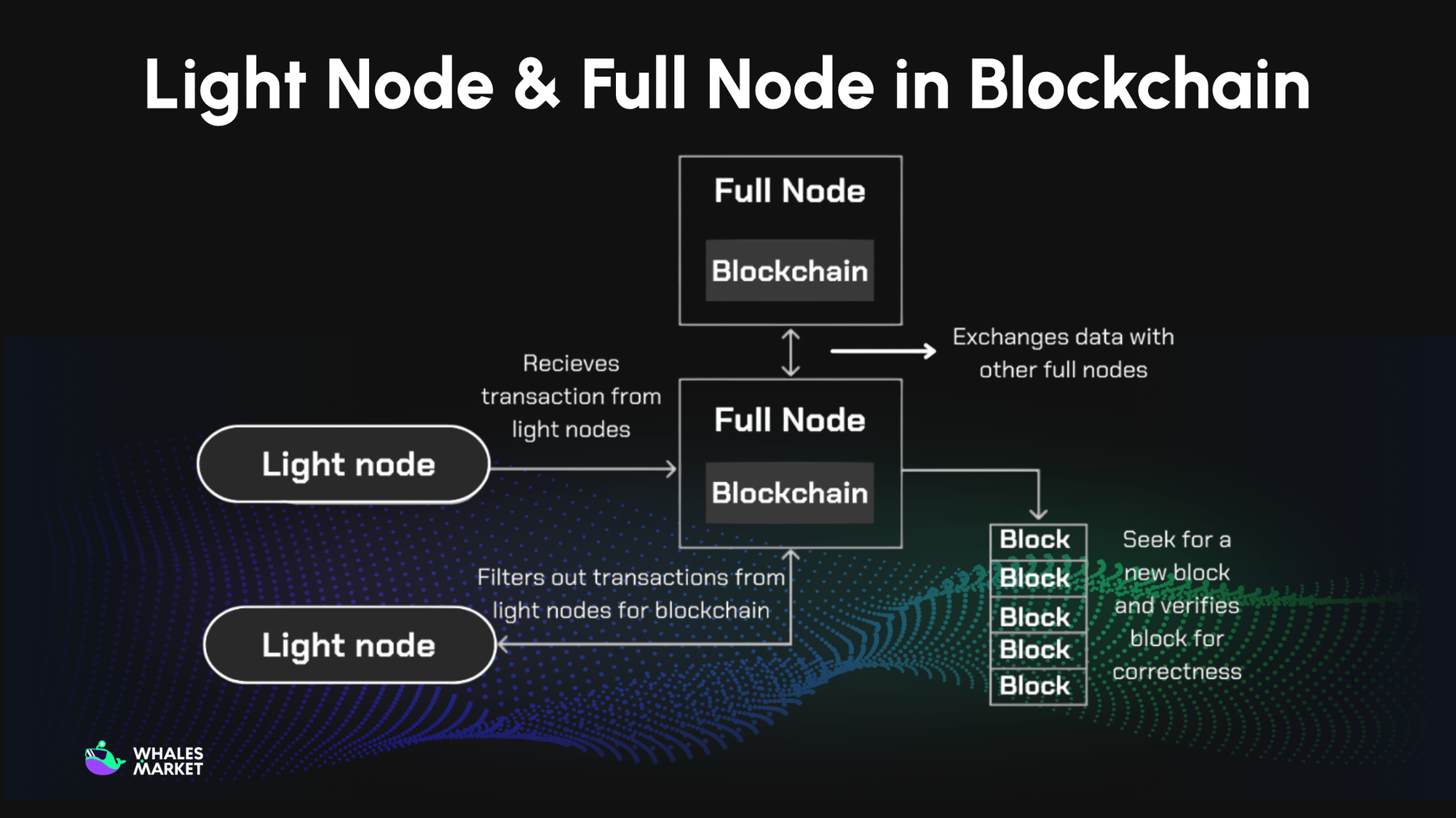
Running a light node saves memory and requires fewer resources. However, its ability to validate transactions, participate in the consensus process, and secure the blockchain is limited compared to a full node. Therefore, light nodes are commonly used in low-resource applications such as cryptocurrency wallets.
Considerations when running a Blockchain Node
Requirements for running a node
To run a blockchain node, users need to prepare the following:
- Hardware Resources: A dedicated computer with sufficient processing power (CPU), storage capacity, and memory (RAM) to meet and process the demands of running a node. Hardware requirements vary across different blockchains.
- Internet Connection: A stable and reliable internet connection to ensure the node is always updated and synchronized with the network in real-time. This helps avoid downtime risks that can cause network instability and lead to the node being penalized (slashing).
- Software: Depending on the blockchain's requirements, users must download and install the appropriate software to run the node.
- Technical Knowledge: Equipping oneself with thorough knowledge of blockchain technology is essential to configure the machine correctly and troubleshoot node issues when necessary.
Who can run a blockchain node?
Theoretically, anyone can join the system and run a node on a blockchain. However, in practice, the requirements depend on the consensus algorithm of each specific blockchain. For example:
- Proof of Work (PoW): PoW blockchains (such as Bitcoin, Litecoin, Ethereum 1.0…) require mining rigs with powerful hardware and high electricity consumption, leading to significant costs.
- Proof of Stake (PoS): Only a certain number of "top holders" have the right to run nodes for PoS blockchains (such as Ethereum 2.0, Polkadot, Avalanche, Cardano…).
- Proof of Authority (PoA): Blockchains using PoA (such as BNB Chain, Okexchain, HECO…) require nodes to be individuals or entities with reputation and credibility within the community.
Additionally, depending on the blockchain network, running a node can yield different rewards for participants, such as transaction fees, tokens, or governance rights.
Conclusion
Nodes are the operational backbone of every blockchain network and more than just connection points; they are the essential guardians of a blockchain's integrity and decentralization. By maintaining the shared ledger, validating every transaction, and ensuring network-wide consensus, nodes eliminate the need for central authorities and empower a truly trustless system.
FAQs
What is the blockchain node definition?
A blockchain node is any electronic device (such as a computer, laptop, or server) that is connected to a blockchain network. It functions as a communication point that follows a specific set of rules (protocols) to transmit, store, and validate the data within that network.
What is the purpose of a blockchain node?
The primary purpose of a node is to maintain the reliability and security of the blockchain. Nodes act as the network's "record keepers" and "judges." They ensure that every transaction is valid according to the consensus rules, prevent double-spending, and distribute the ledger's information so that no single entity can control or shut down the system.
How do I run a blockchain node?
To run a node, you need to set up a computer or VPS that meets the network's hardware specs, then install the official client software. Once launched, the node will automatically synchronize by downloading and verifying the blockchain's history, requiring a stable internet connection and regular updates to remain active in the network.
Does every blockchain have nodes?
Yes. By definition, a blockchain is a distributed ledger, and nodes are the physical infrastructure that creates that distribution. Without nodes, there would be no one to store the data, validate transactions, or maintain the network's decentralized nature. Every blockchain, from Bitcoin to the latest Layer 2 solutions, relies on a network of nodes to exist.