

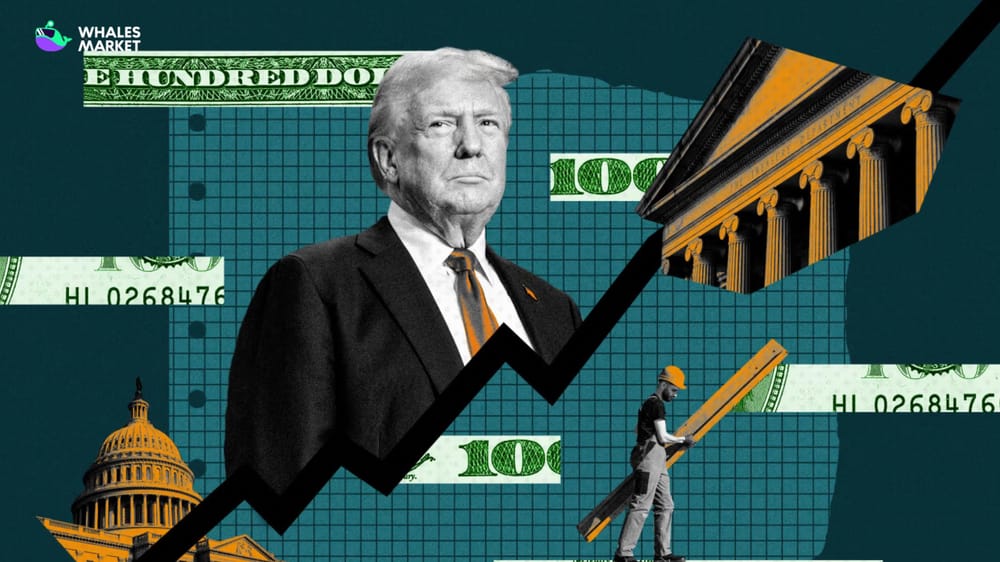
Former President Donald Trump has publicly urged the Federal Reserve to implement interest rate cuts in the coming week. The call to action includes referencing Jamie Dimon, CEO of JPMorgan Chase, as also supporting a reduction in rates.
Trump Advocates for Immediate Rate Reduction
Donald Trump's statement directly pressures the Federal Reserve to lower interest rates promptly. The former president believes this action is necessary for economic stimulus. The specific timing of "next week" suggests an urgency in his recommendation.
Trump's public statement aims to influence the Federal Reserve's upcoming decisions. The Fed's monetary policy decisions have significant impacts on the national economy. These decisions affect borrowing costs for businesses and consumers alike.
Dimon's Stance on Interest Rates
The reference to Jamie Dimon, CEO of JPMorgan Chase, adds weight to Trump's argument. While the exact context of Dimon's comments isn't specified in the initial statement, it implies a shared concern about current interest rate levels. Dimon's views are closely watched in the financial world due to his position at a major financial institution.
It is important to note that Dimon has publicly expressed concerns about persistent inflation. His views on interest rates may be nuanced and contingent on economic data. Further clarification would be needed to fully understand the extent of his agreement with Trump's call for immediate rate cuts.
Federal Reserve's Current Monetary Policy
The Federal Reserve has been closely monitoring inflation and economic growth. In recent months, the Fed has implemented a series of interest rate hikes to combat inflation. The current federal funds rate target range is 5.25 to 5.5 percent.
The Fed's decisions are based on a dual mandate of maintaining price stability and maximum employment. Economic indicators such as the Consumer Price Index (CPI) and the unemployment rate play a crucial role in shaping their policy decisions. Any shift in policy would likely be data-dependent.
Potential Economic Impact
Lowering interest rates could stimulate economic activity by making borrowing cheaper. This could lead to increased investment and consumer spending. However, it could also risk reigniting inflationary pressures if not managed carefully.
The impact of interest rate cuts can vary depending on the overall economic climate. Factors such as global economic conditions and supply chain issues can also play a significant role. The Federal Reserve must carefully weigh these factors when making its decisions.
Conclusion
Trump's call for immediate interest rate cuts places additional scrutiny on the Federal Reserve's upcoming decisions. The Fed's response will be critical in navigating the complexities of the current economic landscape. The interplay between inflation, economic growth, and monetary policy will continue to be closely watched by markets and policymakers alike.
FAQs
What is the Federal Reserve's dual mandate?
The Federal Reserve operates under a dual mandate set by Congress. This mandate requires the Fed to pursue two main objectives: maximum employment and price stability. Achieving both goals simultaneously can be challenging, as policies designed to boost employment may sometimes lead to higher inflation, and vice versa. The Fed uses various tools, including adjusting interest rates and managing the money supply, to try to balance these competing objectives.
How does the Federal Reserve decide to raise or lower interest rates?
The Federal Open Market Committee (FOMC), the Fed's monetary policy-making body, makes decisions about interest rates based on a variety of economic indicators. These indicators include inflation rates, employment figures, GDP growth, and global economic conditions. The FOMC also considers forecasts and assessments from its staff and external sources. The goal is to set interest rates at a level that promotes both maximum employment and price stability.
What is the current federal funds rate?
As of the time of this article, the current federal funds rate target range is 5.25 to 5.5 percent. This rate influences the borrowing costs for banks, which in turn affects interest rates for consumers and businesses. The Federal Reserve adjusts this rate periodically in response to changing economic conditions, aiming to maintain price stability and promote full employment.
What are some potential risks of lowering interest rates too quickly?
Lowering interest rates too rapidly can lead to several risks. One major concern is the potential for increased inflation, as lower borrowing costs can stimulate demand and push prices higher. Additionally, excessively low interest rates can create asset bubbles, where prices of assets like stocks or real estate become inflated beyond their fundamental value. This can lead to financial instability and economic downturns when the bubbles eventually burst.