

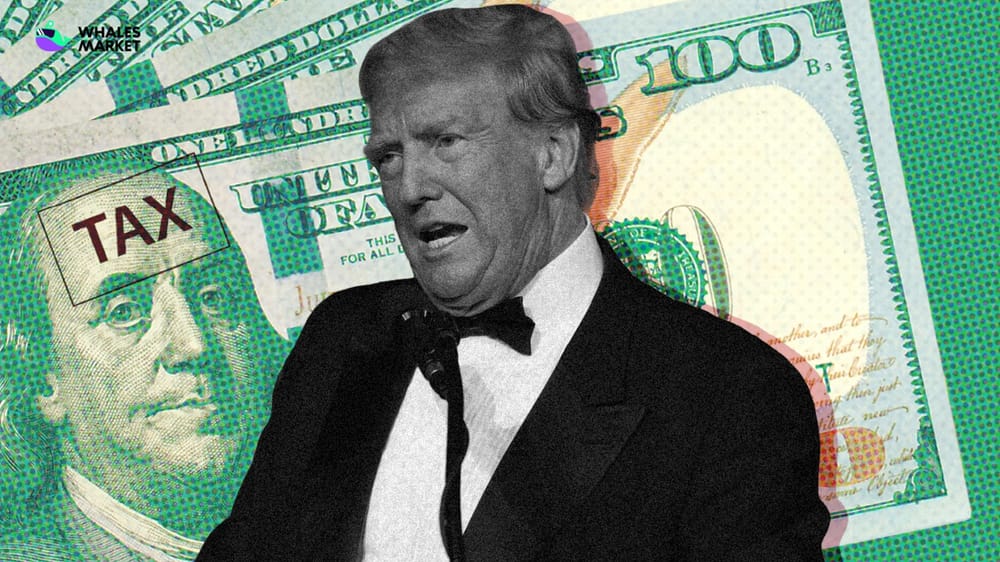
President Donald Trump recently suggested the possibility of eliminating income tax in the United States. The statement, made public via social media, has sparked debate regarding its feasibility and potential economic consequences. The proposal outlines a significant shift in the nation's tax structure.
Trump Floats Income Tax Elimination
Donald Trump stated that there could be no income tax "at some point in the not-too-distant future." The exact timeline and specific details of this potential policy change were not provided in the initial statement. The proposal hints at a radical restructuring of the federal tax system, moving away from income-based revenue.
Potential Economic Implications
Eliminating income tax would necessitate finding alternative revenue streams for the federal government. Potential replacements could include increased tariffs, sales taxes, or other forms of taxation. The impact on different income groups would vary depending on the replacement revenue model implemented. The feasibility of such a significant change would depend on numerous economic factors and political considerations.
Historical Context of Tax Reform
Tax reform has been a recurring theme in American politics. The Tax Reform Act of 1986, for example, significantly altered the tax code by lowering rates and broadening the tax base. Proposals to eliminate the income tax have surfaced periodically, often accompanied by suggestions for alternative tax systems. These proposals often face challenges related to revenue neutrality and distributional effects.
Alternative Revenue Models
If income tax were eliminated, the government would need to explore alternative revenue models. Some potential options include:
- National sales tax: A consumption-based tax levied on goods and services.
- Value-added tax (VAT): A tax on the value added at each stage of production.
- Increased tariffs: Taxes on imported goods.
Each of these options has its own set of economic and political implications.
Conclusion
The suggestion of eliminating income tax represents a potentially significant shift in fiscal policy. The feasibility and impact of such a change would depend on the specific details of the proposal and the alternative revenue streams implemented. Further details and analysis will be necessary to fully understand the potential consequences.
FAQs
What are the current sources of federal government revenue?
Currently, the largest sources of federal government revenue are individual income taxes, payroll taxes (which fund Social Security and Medicare), and corporate income taxes. Other sources include excise taxes, estate taxes, and customs duties. Individual income taxes typically account for a substantial portion of the total federal revenue collected each year.
What is a flat tax, and how does it relate to this proposal?
A flat tax is a system where all taxpayers pay the same percentage of their income, regardless of income level. While not explicitly mentioned in the initial statement, the elimination of income tax could potentially lead to discussions about implementing a flat tax system as an alternative. A flat tax is often proposed as a simpler and more efficient alternative to the current progressive income tax system.
What are some potential drawbacks of eliminating income tax?
One potential drawback is the need to find a replacement revenue source that is both economically viable and politically acceptable. Shifting the tax burden to other areas, such as consumption, could disproportionately affect lower-income individuals. Additionally, eliminating income tax could reduce the government's ability to fund essential services and programs if a suitable replacement is not found.
How would eliminating income tax affect the national debt?
The impact on the national debt would depend on whether the alternative revenue sources are sufficient to replace the lost income tax revenue. If the replacement revenue is less than the current income tax revenue, the national debt could increase. Conversely, if the replacement revenue is greater, the national debt could potentially decrease, assuming the surplus is used for debt reduction.