

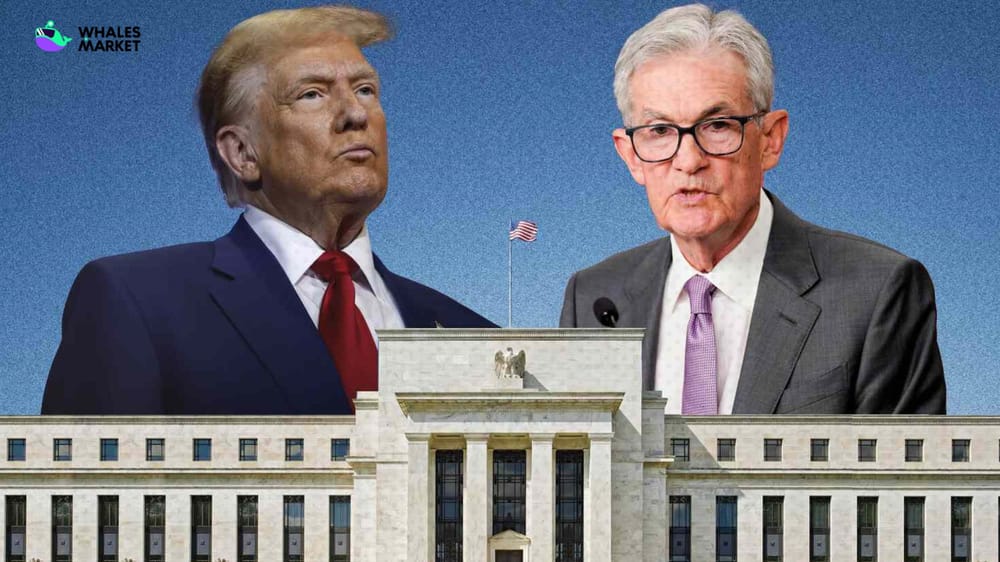
President Donald Trump recently voiced strong criticism of Federal Reserve Chair Jerome Powell, labeling him "incompetent" and a "real dope." This statement adds to a history of Trump's public commentary on the Federal Reserve's policies and leadership. The remarks come amid ongoing discussions about inflation and the Fed's monetary policy decisions. The comments have drawn attention given the Fed's crucial role in managing the U.S. economy.
Trump's Criticism of Powell
President Trump's recent criticism of Jerome Powell is not the first instance of such remarks. During his presidency, Trump frequently commented on the Federal Reserve's interest rate policies. He often expressed his desire for lower interest rates to stimulate economic growth. These public statements broke with the traditional norm of presidents avoiding direct criticism of the Fed to maintain its perceived independence.
Trump's specific choice of words, calling Powell "incompetent" and a "real dope," reflects a particularly strong level of disapproval. The timing of these comments is noteworthy, as the Federal Reserve continues to navigate economic challenges related to inflation and potential recession risks. The Fed's decisions on interest rates and other monetary tools have significant implications for businesses and consumers alike.
Federal Reserve's Role and Independence
The Federal Reserve, established in 1913, plays a central role in managing the U.S. economy. Its primary responsibilities include setting monetary policy, supervising and regulating banks, and maintaining the stability of the financial system. The Fed's monetary policy decisions, such as adjusting interest rates and reserve requirements, influence inflation, employment, and economic growth.
The Fed is designed to operate independently from direct political influence. This independence is intended to allow the Fed to make decisions based on economic data and analysis, rather than short-term political considerations. However, the Fed's actions are often subject to public scrutiny and debate, particularly during periods of economic uncertainty.
Economic Context and Inflation Concerns
Trump's comments come at a time when the U.S. economy is facing persistent inflation. The Federal Reserve has been actively raising interest rates to combat rising prices. These rate hikes aim to cool down the economy and reduce inflationary pressures. However, they also carry the risk of slowing economic growth and potentially triggering a recession.
The Fed's dual mandate is to promote maximum employment and stable prices. Balancing these two goals can be challenging, especially when inflation is high and the labor market is strong. The Fed's decisions are closely watched by investors, businesses, and consumers, as they can have a significant impact on financial markets and the overall economy.
Historical Perspective on Presidential Comments
While it is not unprecedented for presidents to comment on the Federal Reserve, direct and public criticism of the Fed chair is less common. Historically, presidents have generally refrained from making overt statements that could be interpreted as attempts to influence the Fed's decisions. This is to preserve the perception of the Fed's independence and credibility.
Trump's frequent public comments on the Fed during his presidency were a departure from this historical norm. His recent remarks about Jerome Powell continue this pattern of publicly expressing his views on the Fed's leadership and policies. The impact of such comments on the Fed's decision-making process and public perception remains a subject of ongoing debate.
Conclusion
The president's recent remarks underscore the ongoing scrutiny of the Federal Reserve's policies. The Fed's actions will continue to be closely monitored as it navigates the complexities of managing inflation and promoting economic stability. The interplay between political commentary and the Fed's independent role remains a key aspect of the economic landscape.
FAQs
What is the Federal Reserve's current target inflation rate?
The Federal Reserve aims for an average inflation rate of 2% over the longer run. This target is considered consistent with price stability and maximum employment. The Fed uses various tools, including adjusting the federal funds rate, to achieve this target. Deviations from this target, either above or below, can prompt the Fed to take action to steer inflation back towards 2%.
How does the Federal Reserve influence interest rates?
The Federal Reserve primarily influences interest rates by setting the federal funds rate, which is the target rate that banks charge each other for the overnight lending of reserves. By raising or lowering this rate, the Fed can influence other interest rates throughout the economy, such as mortgage rates, auto loan rates, and business loan rates. These changes in interest rates affect borrowing costs and investment decisions, ultimately impacting economic activity.
What are the potential risks of raising interest rates too aggressively?
Raising interest rates too quickly or too sharply can slow down economic growth and potentially lead to a recession. Higher interest rates increase borrowing costs for businesses and consumers, which can reduce investment and spending. This can lead to a decrease in demand for goods and services, potentially causing businesses to cut back on production and employment. The Federal Reserve must carefully balance the need to control inflation with the risk of triggering an economic downturn.
What is the Federal Open Market Committee (FOMC)?
The Federal Open Market Committee (FOMC) is the body within the Federal Reserve System that is responsible for setting monetary policy. The FOMC consists of twelve members: the seven members of the Board of Governors; the president of the Federal Reserve Bank of New York; and four of the remaining eleven Reserve Bank presidents, who serve on a rotating basis. The FOMC meets regularly to review economic conditions and determine the appropriate course of monetary policy.