

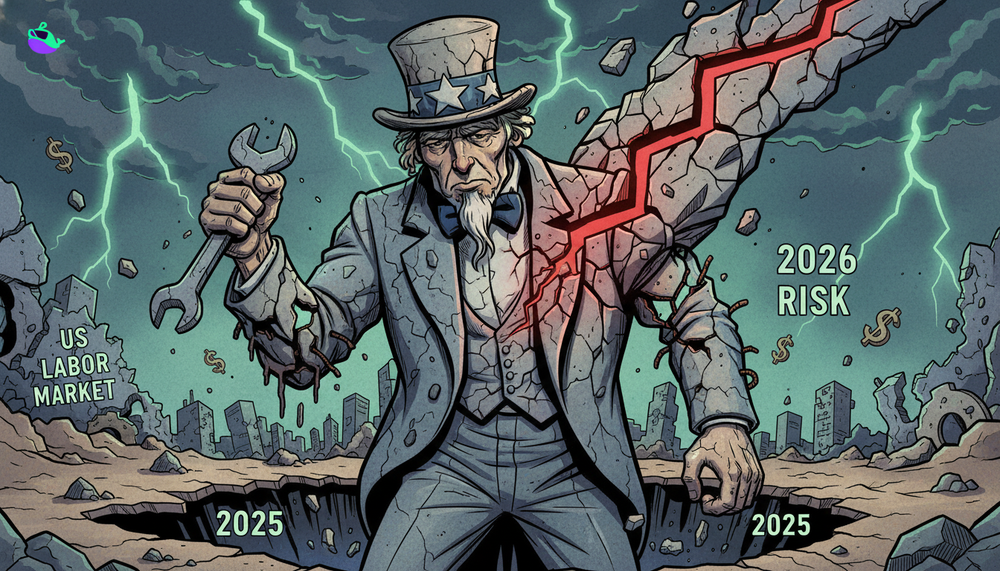
Americans seeking employment faced significant hurdles in 2025, and the outlook for 2026 remains uncertain. The labor market experienced a slowdown, raising concerns about its potential fragility.
Labor Market Stagnation and Future Risks
The unemployment rate unexpectedly rose to 4.6% in November, according to the latest jobs report. While still relatively low historically, this marks the highest level since mid-2021. Consumer sentiment also reflects this unease, with a majority anticipating further increases in unemployment. Job creation has been sluggish, with an estimated 41,000 jobs lost in October and November.
Layoffs are also starting to increase. The hiring rate remains depressed, mirroring levels seen during the early stages of the pandemic and the aftermath of the Great Recession.
One analysis suggests the labor market is currently "frozen," and the critical question is whether it will "crack." The healthcare sector accounted for a substantial portion of job growth in 2025. A decline in this sector, without offsetting gains in others, could put additional strain on the overall job market. Experts predict a continuation of the current "low-hire, low-fire" environment, characterized by a slower and more selective market for both employers and job seekers.
Factors Affecting the Labor Market
The Federal Reserve forecasts unemployment to peak at 4.5% this year, a figure already surpassed by the latest report, before declining to 4.4% by the end of 2026. Federal Reserve Chair Jerome Powell acknowledged the pressure on the job market, suggesting that job creation could turn negative.
One economist expressed concern about the weaker start to the year compared to the previous year, emphasizing that even a mild recession can disproportionately impact historically disadvantaged groups.
Key Challenges:
- Low Hiring Rates: Companies are hesitant to hire, contributing to a stagnant job market.
- Layoff Concerns: The rise in layoffs adds to the uncertainty and anxiety among job seekers.
- Sectoral Dependence: Over-reliance on specific sectors, like healthcare, makes the market vulnerable to downturns in those areas.
Implications for Younger Workers and the Future
Younger Americans entering the job market face particularly challenging conditions. A survey of employers indicated that a significant portion rated the market for 2026 college graduates as poor or fair. Most employers plan to maintain their current headcount, perpetuating the difficulties faced by recent graduates who struggled to find employment in 2025. Hiring projections for the class of 2026 are essentially flat compared to the previous year.
Strategies for College Students:
- Develop in-demand skills
- Pursue internships
- Seek on-campus employment
While some employers are considering augmenting roles with AI, most aren't planning on replacing workers. Reduced immigration may also play a role in stabilizing the unemployment rate, as fewer jobs may be needed.
Some argue that the current situation reflects the delayed effects of a soft landing achieved by the Federal Reserve. Restrictive immigration policies and an aging population are also impacting labor supply. This results in a lower "break-even" number of payrolls needed to maintain the current unemployment rate, leading to expectations of low monthly payroll gains.
FAQs
What is causing the US labor market to slow down and what are the risks for 2026?
The US labor market is slowing due to low hiring rates and increasing layoffs. The risk for 2026 is that the "frozen" labor market could "crack", especially if the healthcare sector declines without offsetting gains in other areas.
How is the current labor market impacting younger workers and recent college graduates?
Younger workers and recent college graduates are facing significant challenges due to the stagnant job market. Employers are hesitant to hire, resulting in limited opportunities and flat hiring projections for the class of 2026.
What does the Federal Reserve predict for unemployment in the near future?
The Federal Reserve initially predicted unemployment to peak at 4.5% this year, but the latest report already surpassed that. While they anticipate a slight decrease to 4.4% by the end of 2026, job creation could potentially turn negative.
You've got the context, now make it count. Capitalize on your financial knowledge and explore potential gains on Whales Market, the earliest pre market trading platform.