

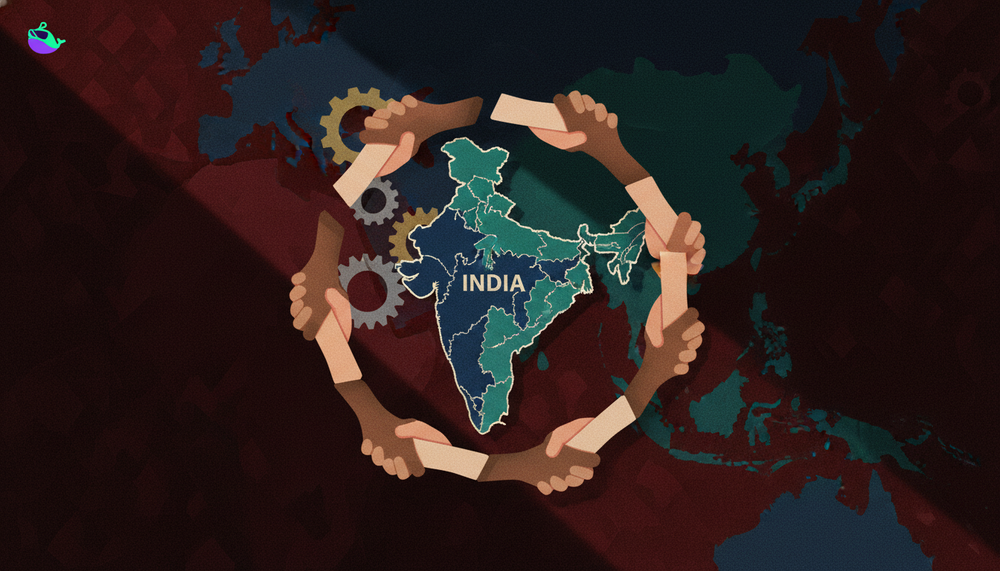
South Asian Nations Explore Cooperation, Leaving India Out
The Proposal for a New Regional Bloc
Pakistani Foreign Minister Ishaq Dar recently reaffirmed his government's interest in forming a new regional organization with Bangladesh and China during a visit to Dhaka.
This idea, initially discussed in Kunming, China, aims to create a grouping that bypasses the currently ineffective South Asian Association for Regional Cooperation (SAARC).
SAARC, the brainchild of former Bangladeshi President Ziaur Rahman, was established in 1985 in Dhaka to promote regional collaboration. It was modeled after the successful Association of Southeast Asian Nations (ASEAN).
The original members included: Bangladesh, Bhutan, India, The Maldives, Nepal, Pakistan, Sri Lanka, and Afghanistan (joined in 2007).
India's Concerns and SAARC's Decline
India was initially skeptical of SAARC, fearing that smaller member states might unite against it. Consequently, India ensured that the organization's charter stipulated that "bilateral and contentious issues" would remain outside its purview. Despite this, SAARC summits provided opportunities for informal meetings between Indian and Pakistani policymakers, which helped ease tensions.
Unfortunately, SAARC has been largely inactive for the past decade, with its last summit held in Kathmandu in 2014. A summit planned for Islamabad in 2016 was canceled after a terrorist attack in India led some members to withdraw.
The deterioration of India-Pakistan relations has significantly hampered the organization's effectiveness. Moreover, India's relationships with Bangladesh and China have also soured recently, creating challenges on multiple fronts.
Shifting Regional Dynamics and India's Isolation
Recent terrorist attacks in India, attributed to Pakistan-based organizations, coupled with a brief military conflict, have resulted in a tense stalemate. Despite some normalization, India-China relations remain strained since the Galwan Valley border clash in 2020. Furthermore, India's relationship with Bangladesh has deteriorated since the change in leadership in Dhaka.
The current Bangladeshi leadership has set aside historical grievances with Pakistan, re-establishing normal diplomatic relations and strengthening military ties. This backdrop underscores the significance of the proposed trilateral organization. While formalizing a larger grouping to enhance connectivity and economic cooperation may seem unrealistic in the short term, and other South Asian countries may hesitate to join, India has reasons to be concerned.
Implications for India
The potential exclusion of India from this new grouping, comprising its two primary adversaries (China and Pakistan) and a less cordial Bangladesh, is a cause for concern. India cannot afford to see its smaller neighbors gravitate towards this new entity. This development poses a threat to both SAARC's future and India's regional standing.
Despite its current ineffectiveness, SAARC still holds the potential for fostering informal dialogue. It has facilitated visa-free travel for certain individuals and established the South Asian University in New Delhi, promoting regional integration. An exclusive organization that excludes India would be a step backward.
If the proposed regional organization materializes, India risks further isolation. A Bangladesh-China-Pakistan alliance could have security implications for India, given the long-standing security partnership between China and Pakistan, which has occasionally included collusion against India.
FAQs
Why are some South Asian nations trying to form a new regional bloc without India?
The proposed bloc, involving Pakistan, Bangladesh, and China, aims to bypass the largely inactive SAARC. Deteriorating relations between India and these countries, along with a desire for enhanced connectivity and economic cooperation, are driving this initiative.
What is SAARC and why is it considered ineffective?
SAARC (South Asian Association for Regional Cooperation) was established in 1985 to promote regional collaboration. It has been largely inactive for the past decade due to strained India-Pakistan relations and canceled summits.
How could a new regional bloc excluding India impact India's position in South Asia?
India risks seeing its smaller neighbors gravitate towards this new entity, posing a threat to SAARC's future and India's regional standing. This could isolate India and diminish its influence in the region.
You've got the context, now make it count. Leverage your political knowledge and explore pre-market opportunities on Whales Market, known as the best pre market trading platform.