

Bulk emerges in this context as a perpetual DEX built natively on Solana, designed to close the gap between CEX-level performance and DeFi transparency. Rather than competing through flashy features, Bulk concentrates on execution efficiency, batch transactions, and multi-wallet coordination, areas that matter most to serious traders.
So how to get Bulk Airdrop? Let’s dive into this article.
Bulk Overview
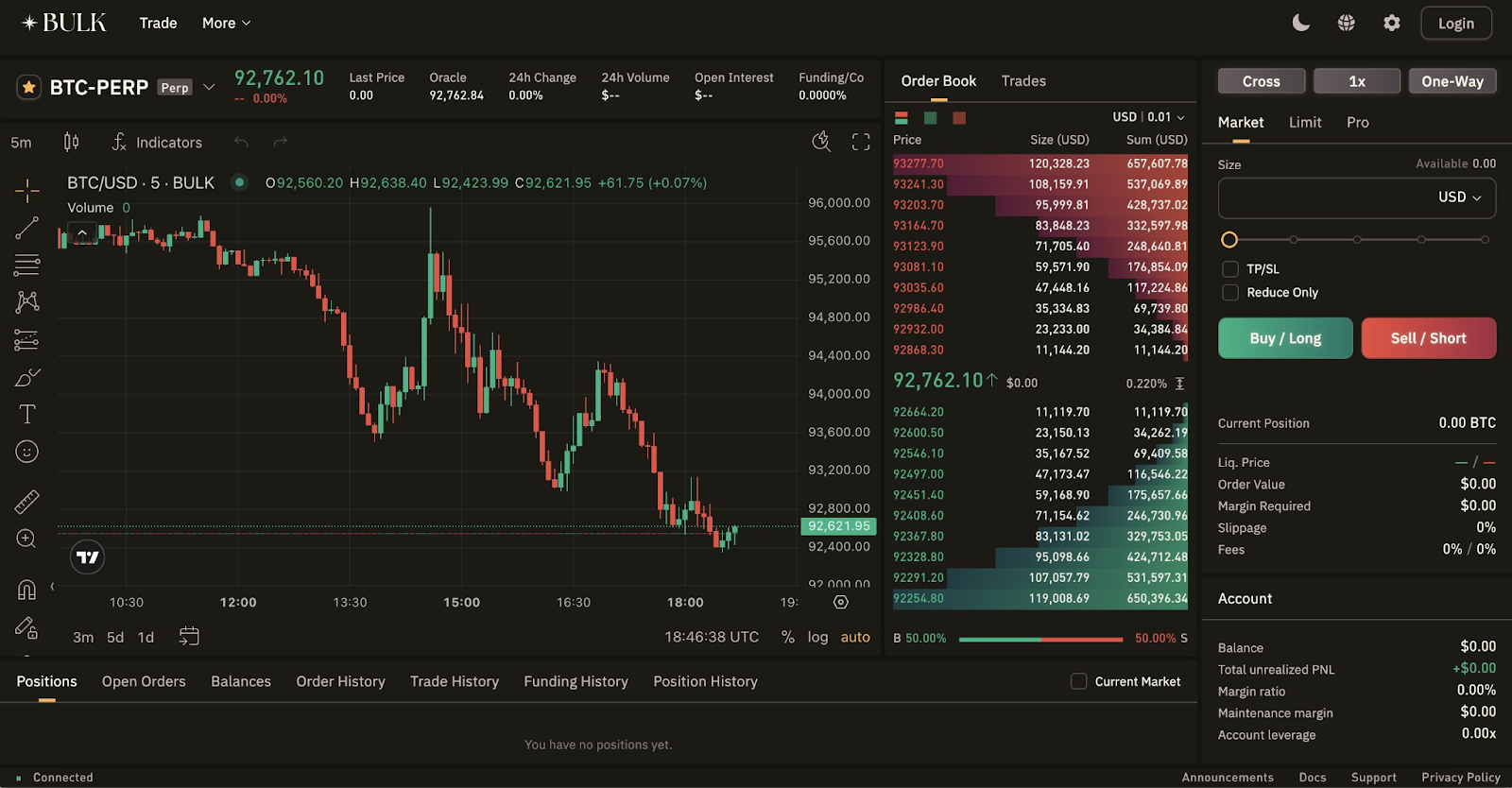
Bulk is a on-chain perpetual exchange built on Solana, aiming to bridge the gap between the experiences of centralized exchanges (CEXs) and decentralized exchanges (DEXs).
At its core, Bulk addresses common limitations of current DEXs such as high latency and high gas costs. By optimizing infrastructure and leveraging Solana's superior speed, Bulk aims to deliver a smooth, high-performance trading experience comparable to CEXs while maintaining the decentralized nature characteristic of DeFi.
Why is Bulk Airdrop worth attention?
Strong fit with the Solana trading narrative
As Solana continues to position itself as the fastest execution layer for on-chain trading, attention is shifting toward products that fully exploit this advantage. Bulk Trade is built natively on Solana and targets one of the most active segments of the ecosystem: high-frequency and multi-account trading.
Rather than introducing a new speculative primitive, Bulk Trade aligns with an existing behavior pattern on Solana, where speed, low fees, and rapid execution are essential. When an airdrop is tied to a product that fits naturally into current user behavior, it tends to attract genuine users instead of short-term hype seekers.
Bulk focuses on execution efficiency, not surface-level features
Many trading tools focus on UI polish or single-feature differentiation. Bulk Trade takes a more infrastructure-driven approach by optimizing how trades are executed at scale on Solana. The platform supports batch transactions, wallet-level coordination, and fast interaction with on-chain liquidity.
This makes it particularly relevant for advanced users who manage multiple strategies or wallets simultaneously. Bulk’s value lies in reducing operational friction rather than introducing new financial abstractions, which is often a stronger foundation for long-term usage.
Early signals suggest a usage-based airdrop
Bulk does not rely on heavy task lists, aggressive referrals, or low-effort engagement loops. Instead, the product naturally encourages usage through trading activity, experimentation with bulk execution, and repeated interaction with core features.
This pattern is consistent with previous airdrops where allocations favored users who actually used the product under real conditions, such as Lighter. For experienced airdrop hunters, this usually indicates lower competition, less wallet farming, and a distribution that better reflects real contribution to the ecosystem.
How to get Bulk Airdrop
The Bulk Airdrop targets users who actively experience the platform.
Step 1: Acquire and Use BulkSOL
Swap SOL for BulkSOL using the Jupiter aggregator.
BulkSOL is BulkTrade’s official liquid staking token and represents direct exposure to the protocol’s core staking layer.
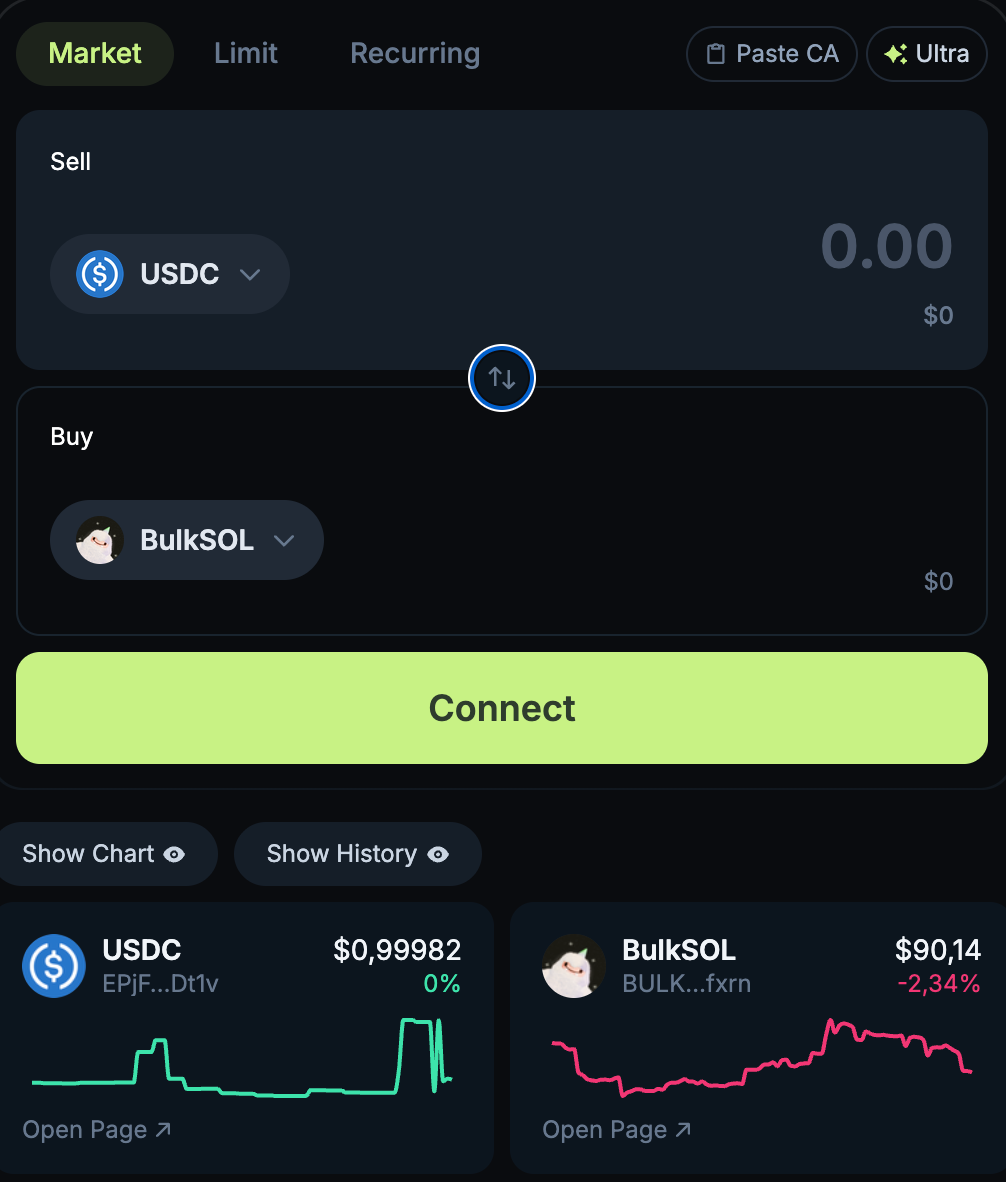
Holding and using BulkSOL is important because it is the primary on-chain asset tied to BulkTrade. Early holders and active users are likely monitored. If you are testing, starting with 1-2 SOL is reasonable, then scaling based on your overall airdrop farming budget.
Step 2: Deposit BulkSOL into Exponent
Deposit your BulkSOL into the Exponent Finance LST pool.
This step serves multiple purposes. You earn yield on your BulkSOL position, and more importantly, the Exponent interface explicitly states that deposits earn future BULK points.
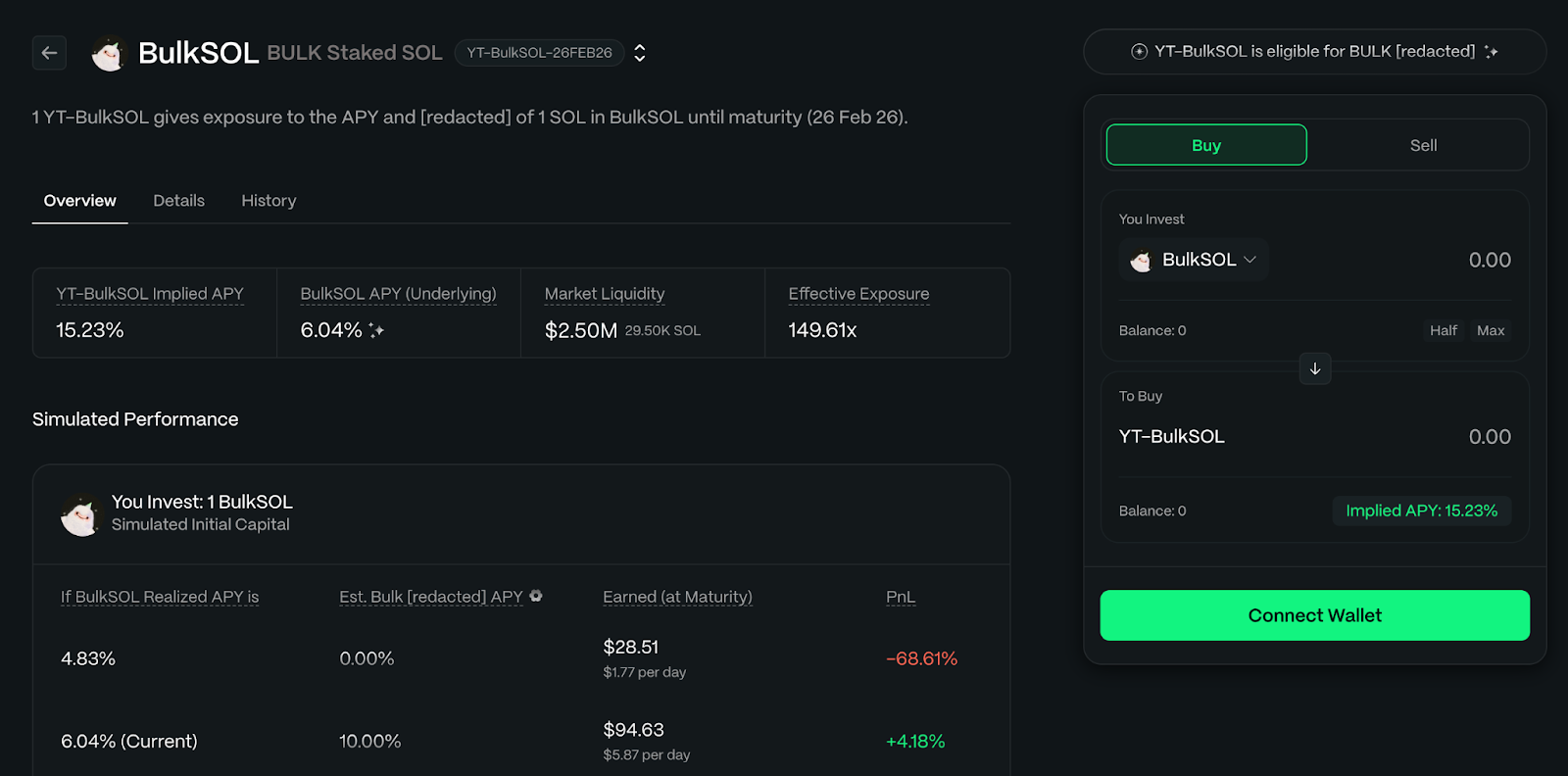
After depositing, you will receive receipt tokens that reflect both the size and duration of your position. Before committing funds, confirm that the pool interface clearly shows point accrual or similar tracking language, as this signals eligibility for future rewards.
Step 3: Join the community and pursue roles
Beyond on-chain actions, joining the BulkTrade Discord is recommended.
Participate authentically by asking technical questions, providing product feedback, or contributing useful content.
Community roles such as OG or Contributor are often associated with airdrop multipliers in similar projects. Focus on quality engagement rather than spamming or role hunting, as meaningful contributions are more likely to be recognized.
Step 4: Trade on testnet when available
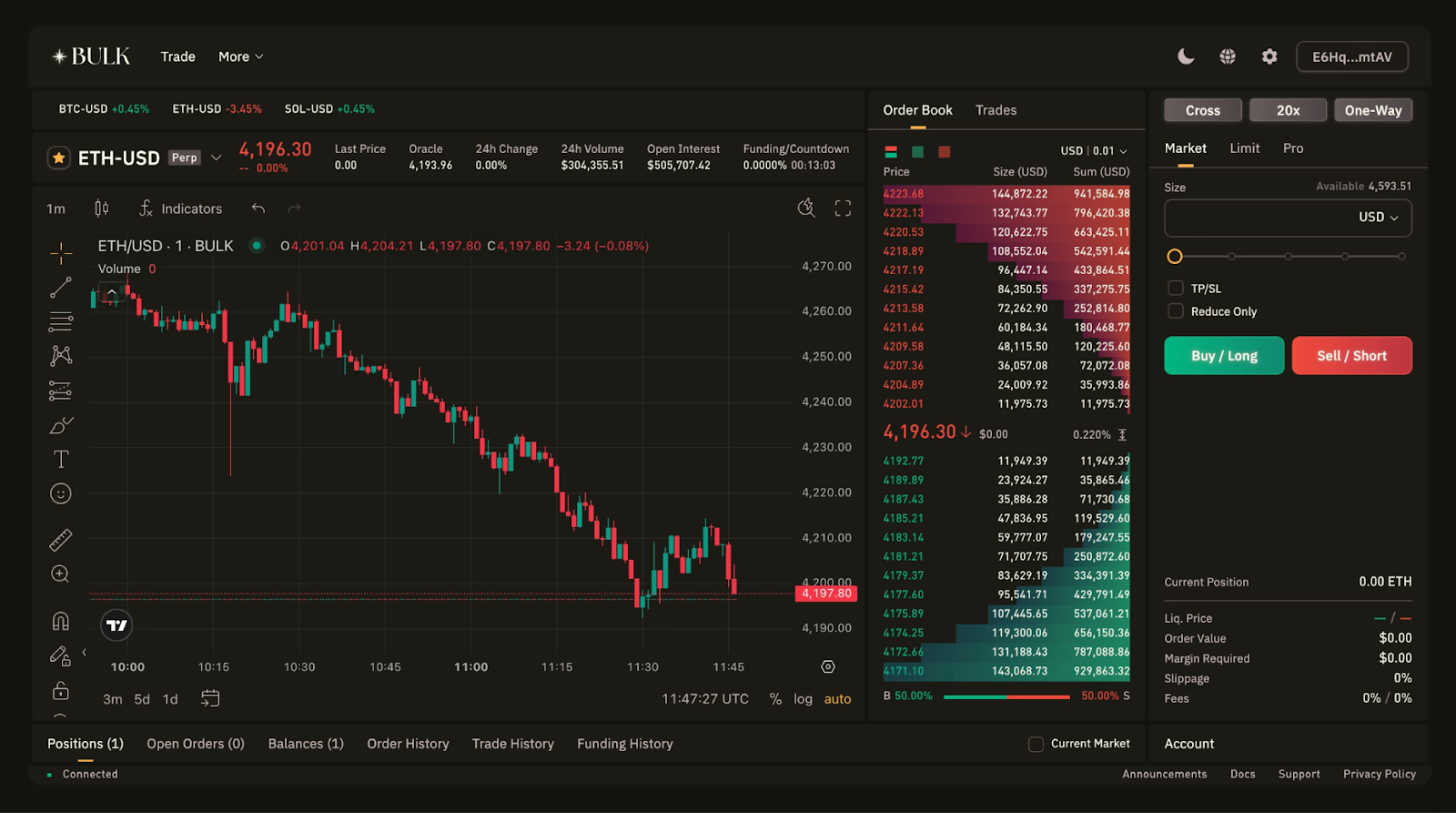
Actively place trades using different order types, sizes, and markets to simulate real usage.
Avoid wash trading or repetitive patterns. Testnet activity is commonly weighted in DEX airdrops, especially for users who identify bugs, report issues, or provide actionable feedback to the team.
Conclusion
Bulk positions itself as an infrastructure-first perpetual DEX that aligns naturally with Solana’s core strengths: speed, low cost, and high throughput. By targeting real trading behavior such as bulk execution, multi-wallet coordination, and frequent interaction with on-chain liquidity, Bulk avoids the common pitfall of chasing hype-driven features.
FAQs
1. What makes Bulk different from other perp DEXs?
Bulk focuses on execution efficiency rather than UI-driven features, supporting batch transactions, multi-wallet workflows, and high-frequency trading use cases.
2. Why is the Bulk airdrop gaining attention?
Because early signs indicate a usage-based airdrop model that rewards real trading activity instead of low-effort tasks or referral farming.
3. Will testnet activity count toward the airdrop?
Testnet trading is commonly rewarded in DEX airdrops, especially when users provide feedback, report bugs, or test different trading scenarios.
4. Is Bulk suitable for beginners?
Bulk is more tailored toward active and advanced traders, but beginners can still participate by testing features and gradually increasing usage.