


Miden enters crypto landscape as a STARK-based ZK-rollup designed around client-side proving and parallel transaction execution. Rather than optimizing for short-term liquidity incentives, Miden focuses on execution architecture, enabling off-chain computation with on-chain verification while maintaining Ethereum’s security guarantees.
So how to get Miden Airdrop? Let’s dive into this article.
Miden Overview
Miden is a ZK-rollup solution operating on a modular architecture. Miden's design focuses on Ethereum's security and scalability by applying ZKP technology, particularly STARK-proofs, to support applications requiring high security.
A key feature of Miden is its parallel transaction execution capability to improve throughput and scalability. The platform is also developed to build high-speed, secure, and developer-friendly dApps through support for popular programming languages like Rust and TypeScript.

Previously, Miden was part of the Polygon ecosystem but has now separated and operates independently.
Why is Miden Airdrop worth attention?
Strong alignment with the modular and zk-native narrative
As Ethereum continues to evolve toward a modular architecture, scalability discussions are increasingly centered around zero-knowledge systems. Rather than competing purely on throughput or short-term liquidity incentives, new infrastructure projects are focusing on execution environments that are provable, private, and verifiable by design.
Miden positions itself directly within this zk-native direction. Instead of being just another general-purpose rollup, it is built around client-side proving and STARK-based architecture, which introduces a different execution model compared to traditional EVM rollups. This places Miden closer to the long-term research direction of Ethereum scalability rather than short-cycle narrative rotations.
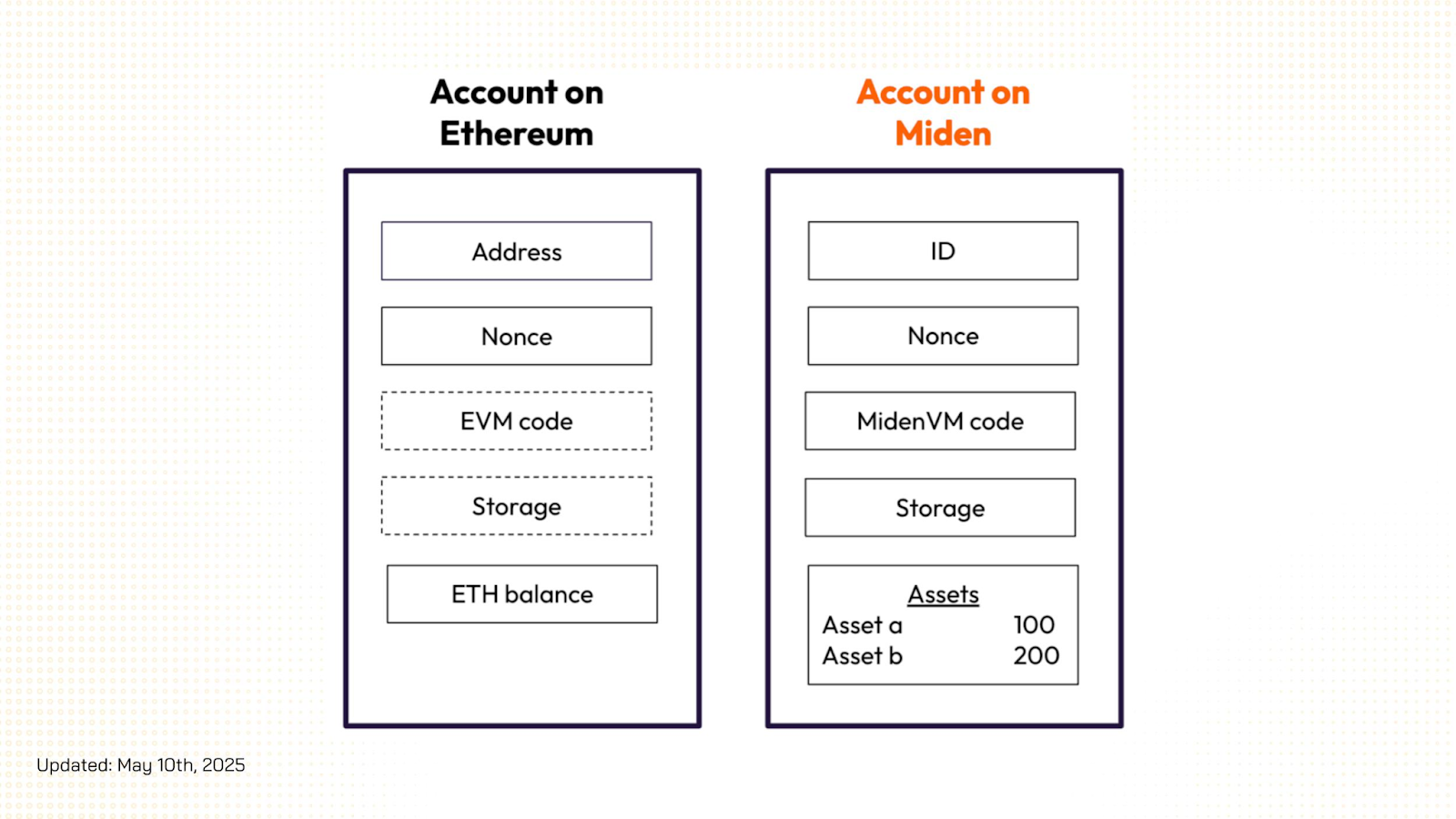
When an airdrop is tied to infrastructure that aligns with Ethereum’s modular and zk roadmap, attention typically extends beyond speculative users and toward developers and technically engaged participants.
Focus on execution architecture, not surface incentives
Many emerging L2 ecosystems attempt to bootstrap growth through liquidity programs, aggressive campaigns, or ecosystem token loops. Miden’s positioning is structurally different. The core value proposition lies in its execution design, including off-chain computation with on-chain verification, STARK proofs, and a virtual machine optimized for verifiable computation.
This makes interaction patterns more infrastructure-oriented rather than purely transactional. Instead of encouraging repetitive low-signal actions, the ecosystem is more likely to reward experimentation, development activity, and meaningful protocol interaction.
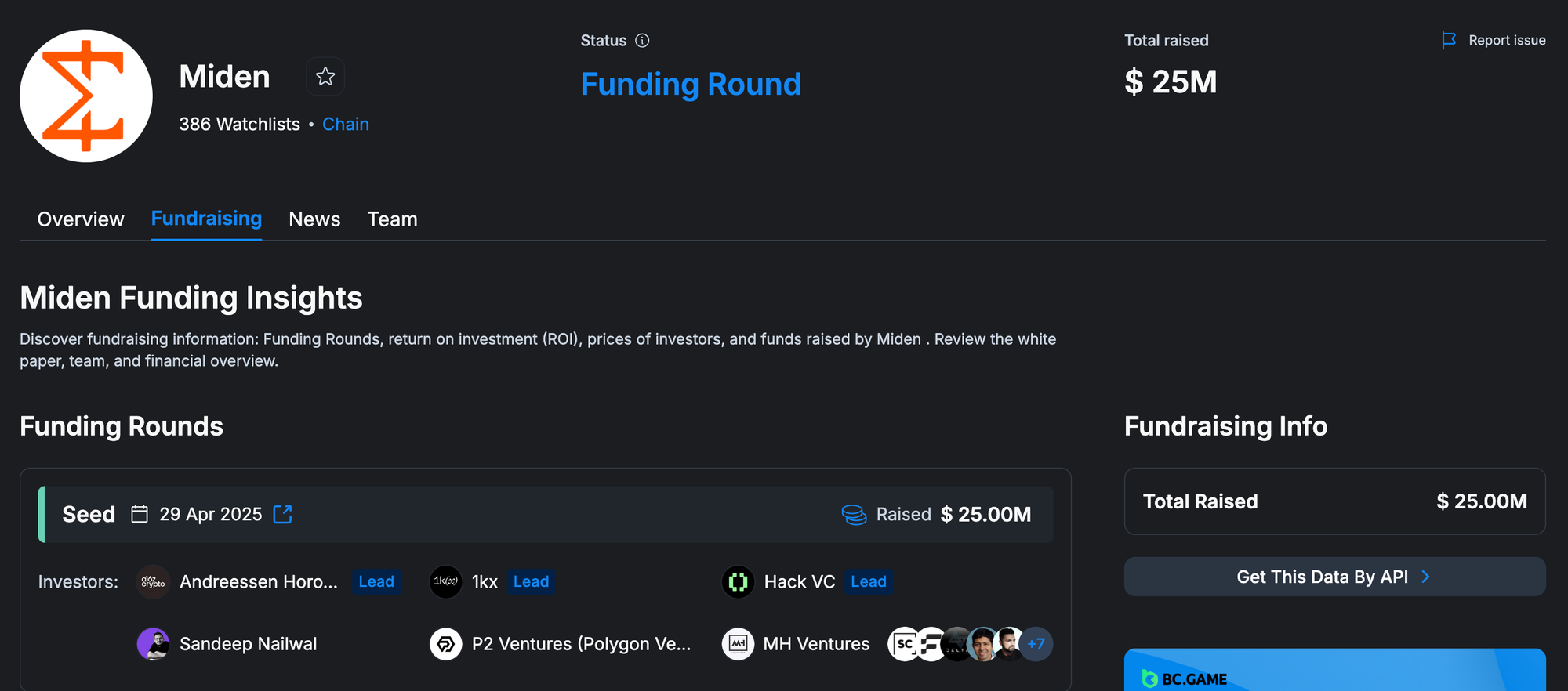
Meanwhile, Miden has raised total of $25M fundraising, lead by Andreessen Horowitz.
Early signals suggest contribution-weighted distribution
Miden has not relied on heavy gamified task lists or short-term farming mechanics. Instead, ecosystem engagement has revolved around developer participation, testnet usage, experimentation with proving systems, and exploration of its execution environment.
Historically, infrastructure-driven airdrops tend to allocate more meaningfully toward participants who interact under real conditions, particularly during early technical phases. For experienced airdrop participants, this usually implies lower farming saturation and a distribution pattern that reflects ecosystem contribution rather than volume-based noise.
In that context, Miden stands out not because of short-term speculation, but because its airdrop is structurally tied to a deeper architectural shift within Ethereum’s scaling roadmap.
How to get Miden Airdrop
The Miden airdrop is expected to reward early users who interact with the test environment and complete basic on-chain actions. The process focuses on wallet setup, faucet interaction, and token minting activity, which may serve as tracked engagement for future token distribution.
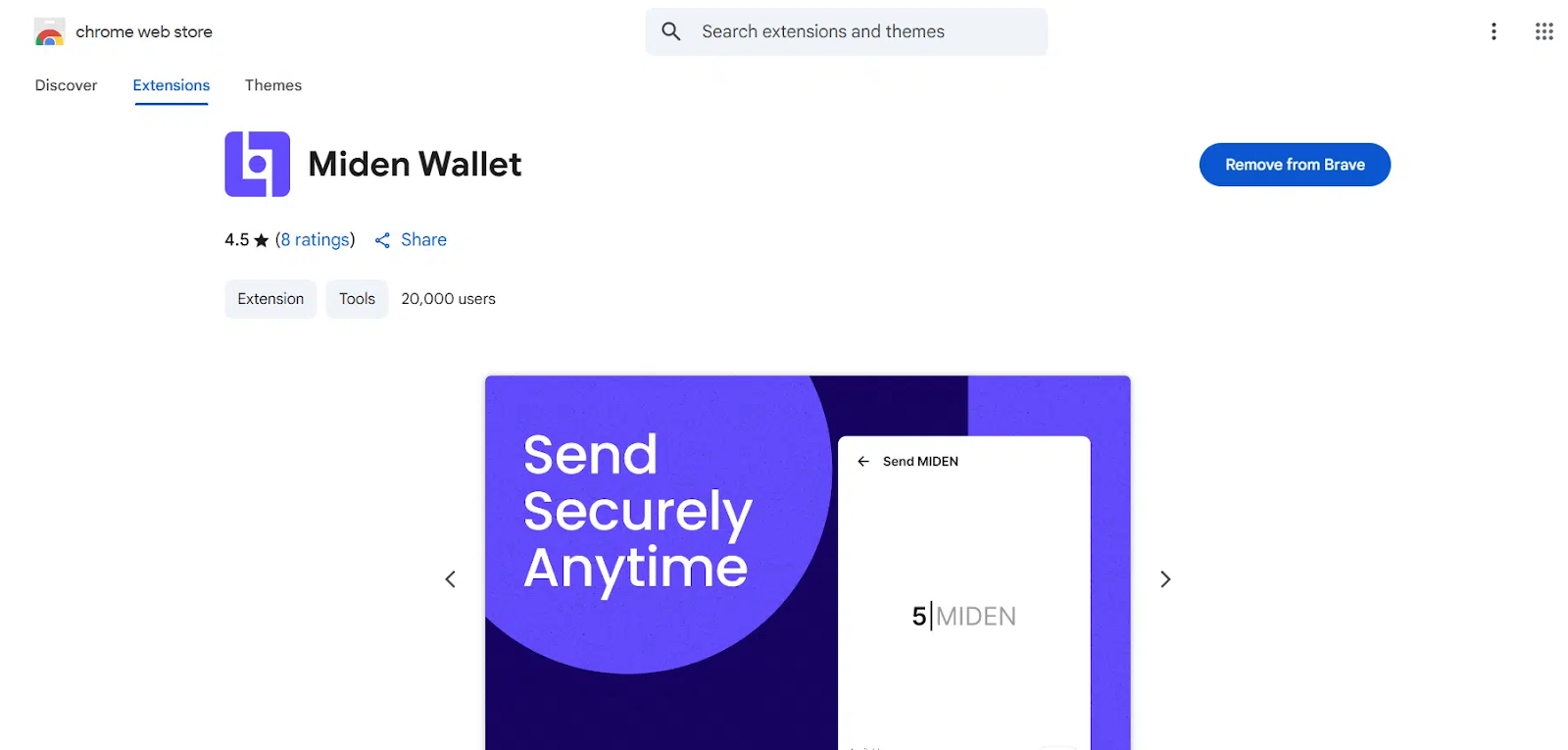
Step 1: Install the Miden Wallet
First, install the Miden Wallet browser extension from the official source.
After installation:
- Create a new wallet
- Securely store your seed phrase
- Complete the wallet setup process
This wallet will be required for all interactions within the Miden ecosystem.
Step 2: Access the Faucet and connect your wallet
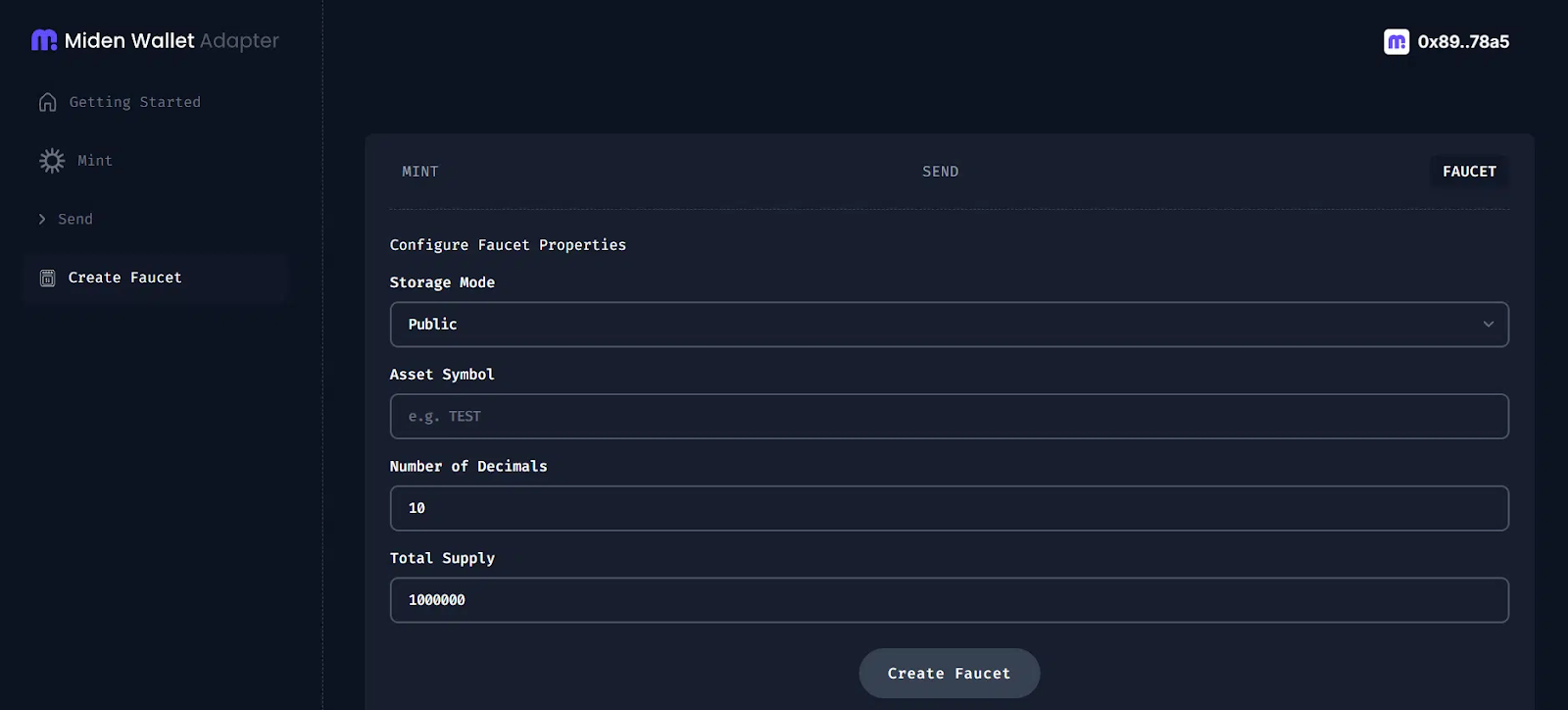
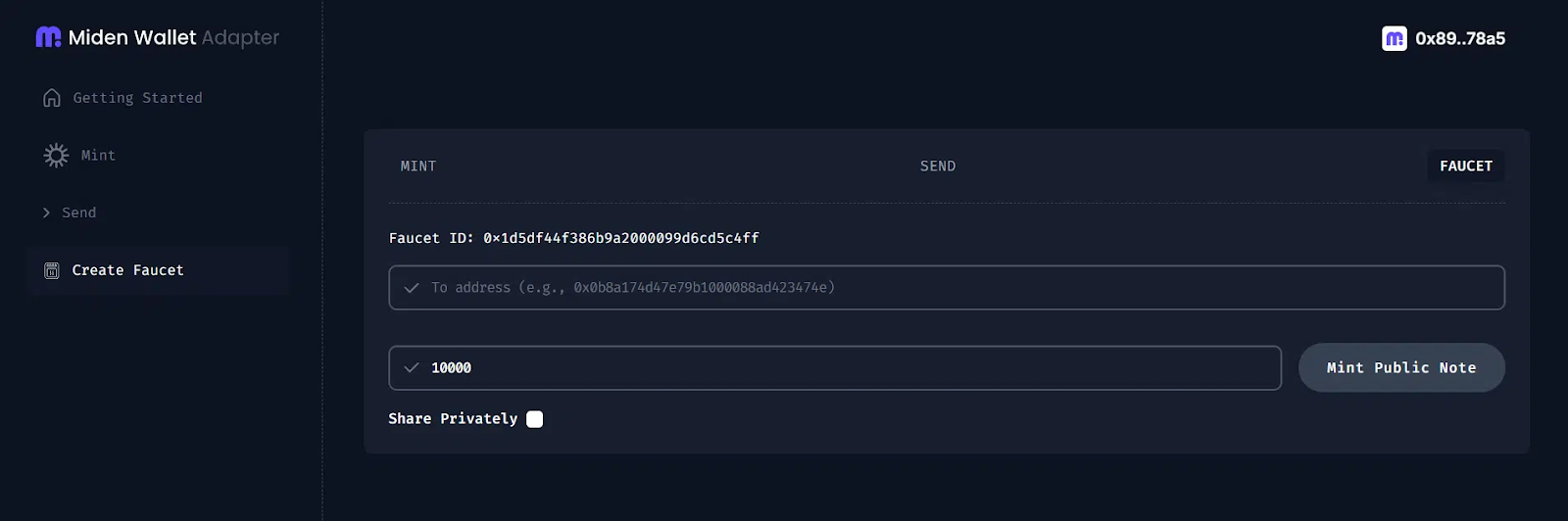
Next, go to https://miden.leo.app/faucet.
Then:
- Connect your Miden Wallet
- Create a faucet instance
Creating a faucet allows you to request test tokens that will be used in later steps.
Step 3: Mint a Public Note
Copy your Miden wallet address and select “Mint Public Note.”
This action initiates the token minting process and records your wallet activity on the network.
Step 4: Confirm the transaction
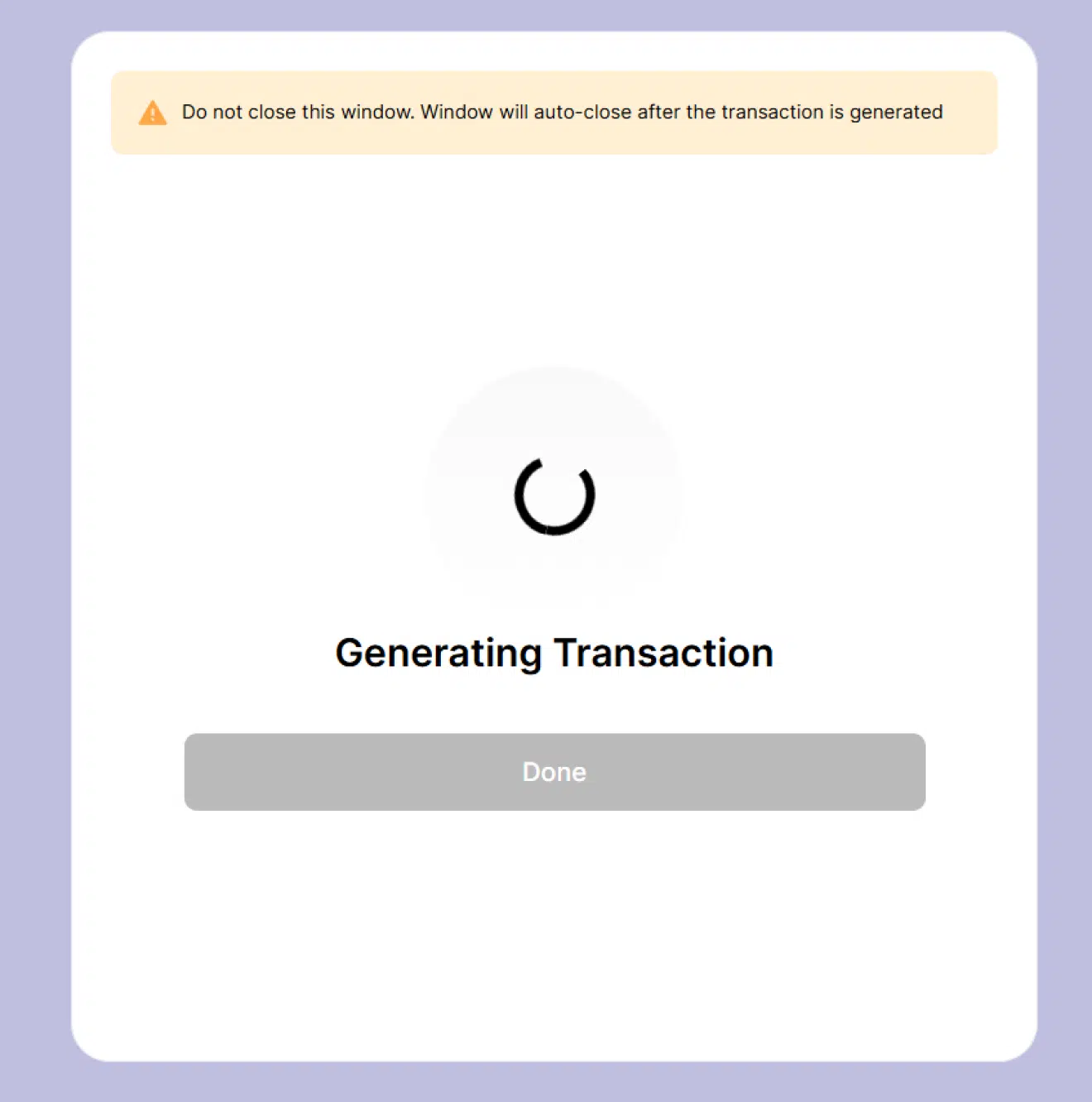
Review the transaction details in your wallet and confirm it.
This step ensures the mint request is submitted to the network. Once completed, the faucet tab will automatically close, indicating the tokens have been generated successfully.
Step 5: Send minted tokens
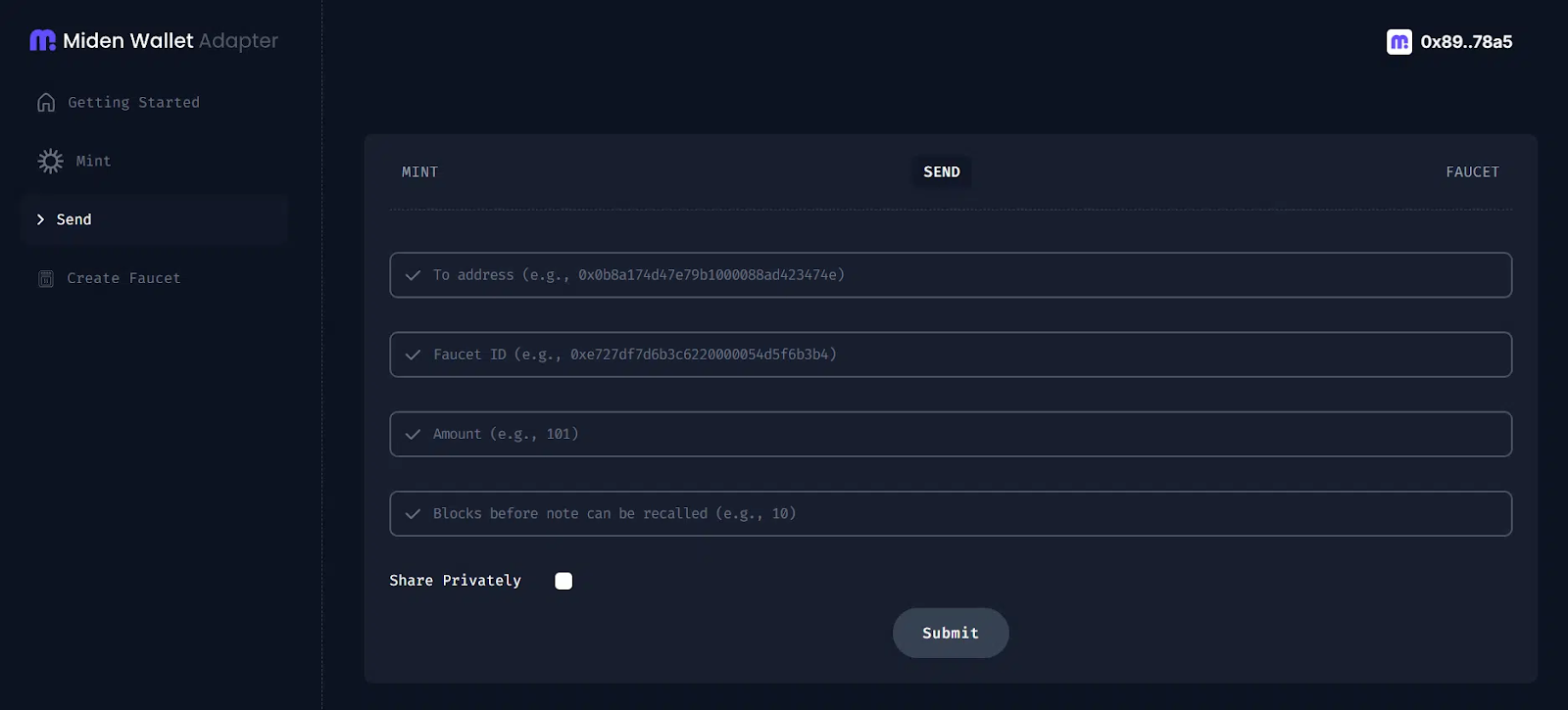
With your newly minted tokens, send them to another wallet address or even back to your own wallet.
Important:
- In the Faucet ID field, enter the ID of the faucet you previously created
- Fill in all required details carefully
- Click “Submit” and confirm the transaction
This transfer activity may demonstrate additional on-chain usage beyond simple minting.
Step 6: Monitor official updates
After completing the interaction steps, monitor Miden’s official announcements and community channels for future updates regarding eligibility, snapshots, or token distribution details.
Early and consistent participation is often a key factor in ecosystem-based airdrops.
Conclusion
Miden positions itself at the intersection of Ethereum’s modular vision and zk-native execution. By leveraging STARK proofs, client-side proving, and parallel processing, the project moves beyond incremental rollup improvements and instead explores a fundamentally different execution model.
FAQs
1. How is Miden different from traditional EVM rollups?
Unlike standard EVM rollups that primarily optimize throughput, Miden focuses on client-side proving and verifiable computation using STARK proofs. Its execution model differs structurally from typical optimistic or zkEVM rollups.
2. Why is the Miden airdrop considered noteworthy?
The project aligns closely with Ethereum’s modular and zk-native roadmap. Early signals suggest that engagement may be contribution-weighted, favoring meaningful technical interaction over repetitive farming behavior.
3. Who is likely to benefit from participating early?
Developers, technically engaged users, and early testnet participants who experiment with wallet setup, minting, and transaction flows are more aligned with Miden’s infrastructure-focused approach.
4. Is Miden still part of the Polygon ecosystem?
No. While Miden previously operated within the Polygon ecosystem, it has since separated and now operates independently.
5. What type of applications can be built on Miden?
Miden supports high-security, scalable dApps and provides developer-friendly tooling with support for programming languages such as Rust and TypeScript.