

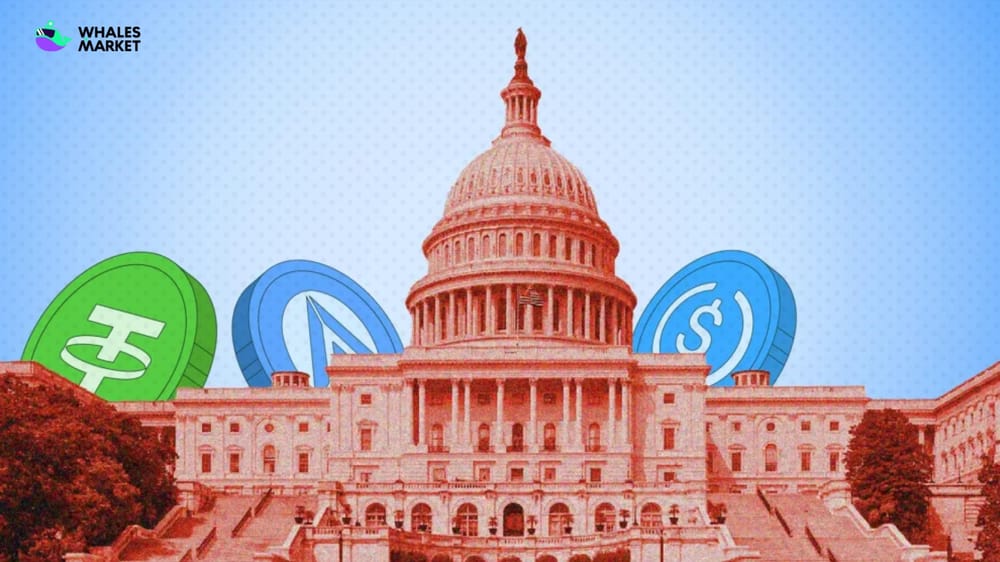
Following the passage of the GENIUS Act in the United States, opinions diverge among Wall Street analysts regarding the potential impact on the U.S. dollar and Treasury bill demand. While some anticipate a boost from stablecoins, others remain skeptical, citing specific provisions within the legislation that could limit its effectiveness. Major financial institutions are taking a measured approach to assessing the long-term implications.
Wall Street Divided on Stablecoin Impact After GENIUS Act
Strategists from JPMorgan, Deutsche Bank, and Goldman Sachs are adopting a cautious stance regarding the potential for stablecoins to significantly increase demand for the U.S. dollar and Treasury bills. Their analysis suggests that it is premature to predict a substantial shift in market dynamics. The core of their argument lies in the specifics of the recently passed GENIUS Act and its potential limitations.
A key concern is the Act's prohibition of interest payments on stablecoins. This restriction diminishes the incentive for individuals and institutions to move funds from traditional savings accounts and money market funds into stablecoins. Without the prospect of earning interest, the appeal of holding stablecoins as a store of value may be limited, thus impacting the anticipated increase in USD demand.
T-Bill Demand: Rotation vs. New Money
The potential for increased Treasury bill demand stemming from stablecoin adoption is also under scrutiny. Analysts suggest that any observed increase in T-bill purchases may primarily reflect a rotation of existing assets rather than a net inflow of new capital into the market. This distinction is crucial in determining the true impact of stablecoins on the broader financial landscape.
If stablecoin issuers are simply reallocating existing funds into T-bills, the overall effect on USD demand and the Treasury market would be less pronounced. A genuine increase in demand would require new money entering the system, driven by increased adoption and usage of stablecoins for various transactions and investment activities.
GENIUS Act Restrictions and Incentives
The GENIUS Act's prohibition on interest-bearing stablecoins is a central point of contention. This provision directly impacts the attractiveness of stablecoins as an alternative to traditional savings vehicles. The absence of interest earnings could deter widespread adoption, particularly among more conservative investors seeking yield.
The Act's impact on stablecoin utility extends beyond simple savings. Without interest, stablecoins may primarily serve as a medium of exchange or a tool for accessing decentralized finance (DeFi) applications. The extent to which these use cases can drive significant USD and T-bill demand remains uncertain, according to the analysts at JPMorgan, Deutsche Bank, and Goldman Sachs.
Conclusion
The passage of the GENIUS Act has introduced a new dynamic into the stablecoin market, prompting a reassessment of its potential impact on the U.S. dollar and Treasury bill demand. While the long-term effects remain uncertain, the current debate highlights the importance of regulatory frameworks in shaping the future of digital assets and their integration into the traditional financial system. The market will continue to watch how the Act influences stablecoin adoption and usage in the coming months.
FAQs
What is the GENIUS Act?
The GENIUS Act is a recently passed piece of legislation in the United States that aims to provide a regulatory framework for stablecoins. While the specific details of the Act are not fully outlined in the provided context, it is known to include a provision that prohibits interest payments on stablecoins. This aspect of the Act is a key factor in the current debate among Wall Street strategists regarding the potential impact of stablecoins on USD and T-bill demand.
Why are interest-bearing stablecoins important for USD demand?
Interest-bearing stablecoins could potentially attract a significant amount of capital from traditional savings accounts and money market funds. This shift would increase the demand for U.S. dollars as users acquire stablecoins, and subsequently, the demand for Treasury bills as stablecoin issuers invest their reserves. The absence of interest, as mandated by the GENIUS Act, diminishes this incentive, potentially limiting the overall impact on USD and T-bill demand.
What are the alternative use cases for stablecoins if they don't offer interest?
Even without interest, stablecoins can still serve several important functions. They can be used as a medium of exchange for everyday transactions, providing a faster and more efficient alternative to traditional payment methods. Additionally, stablecoins are widely used within the decentralized finance (DeFi) ecosystem, facilitating lending, borrowing, and trading activities on blockchain platforms. The extent to which these use cases can drive significant USD and T-bill demand is still being evaluated.
What does "holder rotation" mean in the context of T-bill demand?
"Holder rotation" refers to a scenario where existing holders of assets, such as money market funds or other short-term investments, shift their holdings into Treasury bills through stablecoins. This differs from a net increase in demand, which would involve new capital entering the market. If the increase in T-bill demand is primarily due to rotation, the overall impact on the Treasury market and the U.S. dollar would be less significant.
This content is derived directly from the source at the X account referenced below: WuBlockchain