

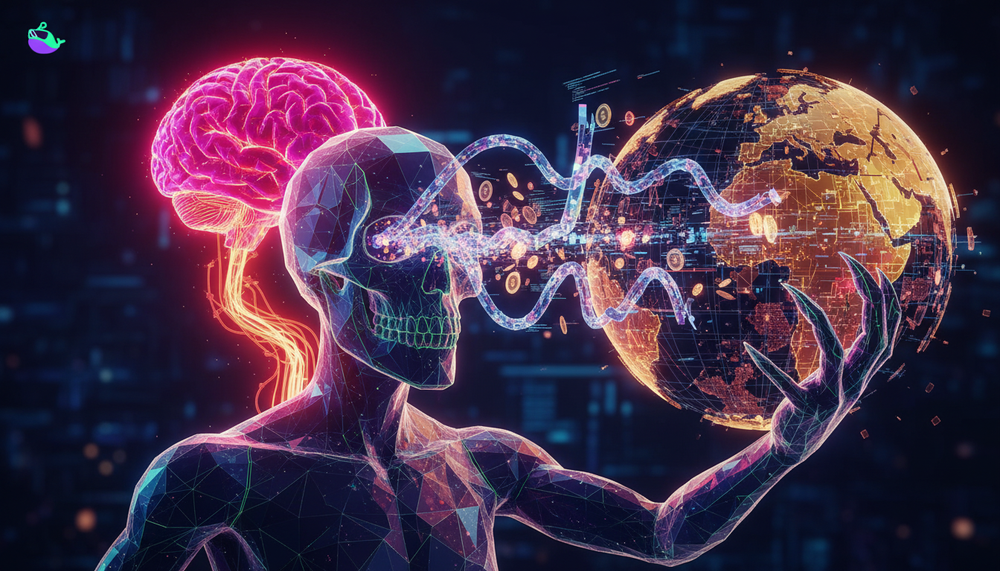
Generative AI is rapidly transforming the landscape of cybersecurity, presenting both opportunities and challenges.
While it empowers developers to automate tasks and accelerate software creation, it also provides hackers with unprecedented capabilities to infiltrate networks, steal data, and demand ransom.
The New Era of AI-Powered Cybersecurity Threats
According to Tom Goldstein, a computer science professor and director of the Center for Machine Learning at the University of Maryland, we are entering a "new era of security" marked by rapid change. He believes these new AI-based tools currently offer a greater advantage to attackers than defenders.
- Anthropic's report: In November, Anthropic revealed that a Chinese state-sponsored group exploited its Claude coding tool to conduct a large-scale cyber espionage campaign, successfully infiltrating a small number of approximately thirty global targets, including major tech companies, financial institutions, chemical manufacturers, and government agencies.
- OpenAI's assessment: Earlier this month, OpenAI issued a report indicating that its coding platform poses a "high" level of cybersecurity risk.
Cybersecurity professionals are also leveraging AI to identify and patch vulnerabilities, but hackers appear to maintain a lead, at least for now. The rise of AI-powered hacking is creating a more complex and dangerous threat environment.
How AI is Amplifying Hacking Techniques
Cybersecurity has always involved a constant back-and-forth between attackers and defenders. Hackers relentlessly search for vulnerabilities in software, aiming to exploit weaknesses and gain unauthorized access. Phishing attacks, involving mass emails and texts, also remain a popular method to compromise systems.
The problem is that generative AI is supercharging these hacking capabilities.
Chris Thompson, a distinguished engineer at IBM, emphasizes that enterprises are already struggling with the existing scale and sophistication of attacks. Now, cybercrime AI tools will exacerbate the problem, leading to more vulnerabilities being discovered and exploited.
Thompson predicts a significant increase in the speed of attacks, as hackers automate tasks using AI. This allows them to target thousands of organizations concurrently, limited only by budget and risk tolerance. This illustrates the scale of AI security threats.
AI is also enhancing phishing campaigns, allowing cybercriminals to craft more convincing emails with accurate grammar and spelling. This has led to a dramatic increase in click-through rates, with some reports indicating a jump from 10-12% to as high as 54-60% when LLMs are used to generate phishing emails.
Michael Sentonas, president of CrowdStrike, noted that North Korean hackers are using generative AI to create realistic résumés for job applications overseas, aiming to secure employment that can funnel money to the regime and expand its industrial espionage capabilities. This is a form of financial fraud AI.
AI on the Defense: Cybersecurity Professionals Fight Back
While hackers are leveraging AI for malicious purposes, cybersecurity professionals are also deploying LLMs to bolster their defenses. These tools can improve efficiency, enabling them to identify more vulnerabilities in less time, patch software effectively, or use vulnerabilities for offensive hacking. Generative AI cybersecurity is becoming an essential tool.
Generative AI can also empower junior cybersecurity professionals, providing them with capabilities similar to those of experienced cyber defenders. This allows them to triage incidents, respond effectively, and implement incident response playbooks.
FAQs
How is generative AI cybersecurity impacting financial institutions and what are the biggest AI security threats?
Generative AI is enabling hackers to discover and exploit vulnerabilities faster, leading to an increase in successful attacks. Financial institutions are at risk due to the potential for AI-powered hacking to accelerate the speed and sophistication of cybercrime AI tools.
What are some examples of AI-powered hacking and how does financial fraud AI play a role?
Examples include AI-enhanced phishing campaigns with dramatically increased click-through rates and the use of AI to create realistic résumés for espionage purposes. Financial fraud AI can be used to automate and scale fraudulent activities, making them harder to detect.
What can be done to mitigate the risks of generative AI cybersecurity and AI security threats?
Cybersecurity professionals are leveraging AI to identify and patch vulnerabilities, but attackers currently have an advantage. Enterprises need to invest in advanced AI-driven security solutions and stay ahead of emerging AI-powered hacking techniques to protect against cybercrime AI tools.
You've got the context, now make it count. Capitalize on your newfound knowledge and position yourself for profit, because Whales Market enables pre market crypto trading.