

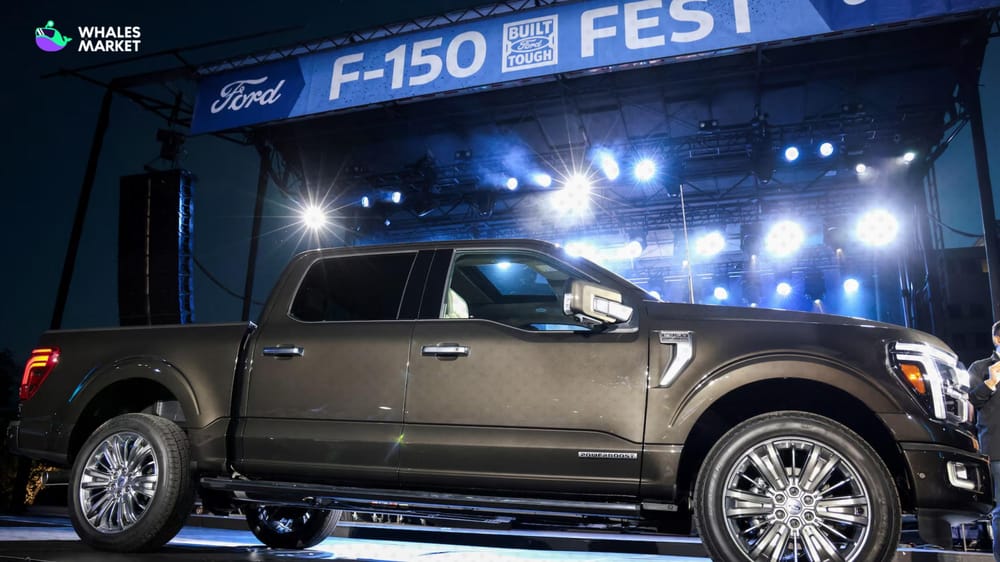
Ford Adjusts EV Strategy with $19.5 Billion Charge, Cancels F-150 Lightning EV, and Ventures into Battery Storage.
Ford has announced a significant shift in its electric vehicle strategy, moving away from a purely EV-focused approach to a hybrid and extended-range EV (EREV) model. This transition will involve a substantial $19.5 billion in charges. Key decisions include the cancellation of the current F-150 Lightning EV and a reallocation of battery production efforts.
"The operating reality has changed," stated Ford CEO Jim Farley. The company is now prioritizing investments in areas with higher growth potential, such as Ford Pro, its truck and van division, hybrid vehicles, and the new battery energy storage business.
Shift in EV Development and Production
Ford will now concentrate its North American EV development on a new, cost-effective, and versatile Universal EV Platform. This platform will be used for smaller, more efficient EVs, aiming to appeal to a wider customer base. The first vehicle based on this platform will be a fully connected midsize pickup truck, manufactured at the Louisville Assembly Plant starting in 2027.
The next iteration of the F-150 Lightning will transition to an EREV architecture and will be assembled at the Rouge Electric Vehicle Center in Dearborn, Michigan. EREVs utilize an onboard gasoline engine to charge the vehicle's batteries, effectively extending their range. Production of the current generation F-150 Lightning has ceased, with employees being reassigned to the Dearborn Truck Plant to support increased production of gasoline and hybrid F-150 models, partly due to the impact of the Novelis aluminum plant fires.
Ford is also converting its Tennessee Electric Vehicle Center into the Tennessee Truck Plant, where it will manufacture new gasoline-powered Ford trucks starting in 2029. The Ohio Assembly Plant will become a central hub for Ford Pro, assembling new gasoline and hybrid commercial vans in 2029, replacing a previously planned EV van, along with Super Duty truck chassis cabs.
Battery Storage Business and Future Outlook
Ford is venturing into the battery energy storage system business, repurposing existing EV battery plants in Kentucky and Michigan. Lisa Drake, Ford's VP of technology platforms, emphasized the potential for commercial customers, including grid-scale utility providers and data centers. Smaller batteries produced at the Marshall, Michigan plant could also be used for residential applications.
By 2030, Ford anticipates that approximately 50% of its global volume will consist of hybrids, extended-range EVs, and fully electric vehicles, a significant increase from 17% in 2025. The company did not specify the exact percentage breakdown between EREVs, EVs, and hybrids. Last week, Ford announced that a subsidiary would now fully own and operate the two battery plants in Kentucky that it operated with SK On as part of a joint venture, but that SK On would now fully own and operate a Tennessee battery plant that was part of the venture.
Financial Implications of the Strategic Shift
The financial ramifications of these strategic changes are substantial. Ford anticipates recording approximately $19.5 billion in special items, with $12.5 billion recognized in the fourth quarter and the remaining $7.0 billion in 2026 and 2027.
These charges include $5.5 billion in cash charges related to vehicle cancellations, mostly paid in 2026, and an $8 billion asset impairment charge, encompassing a writedown of EV assets. Restructuring and the assumption of assets, such as the Kentucky battery plants from SK ON, account for $6 billion.
| Item | Amount (Billions) |
|---|---|
| Cash Charges | $5.5 |
| Asset Impairment | $8.0 |
| Restructuring/Asset Assumption | $6.0 |
| **Total** | **$19.5** |
Despite these special items, Ford has raised its 2025 adjusted EBIT guidance to approximately $7 billion, citing ongoing business strength and cost improvements. This represents an improvement from the previous guidance of $6 billion to $6.5 billion, which was reduced following the Novelis fires. Ford has reaffirmed its adjusted free cash flow guidance range, projecting it to be at the high end of $2 billion to $3 billion.
FAQs
Why is Ford taking a $19.5 billion charge and changing its EV strategy?
Ford is shifting its focus to hybrid and extended-range EVs (EREVs) due to changing market conditions and a desire to invest in areas with higher growth potential, such as Ford Pro and battery storage. This strategic pivot necessitates a $19.5 billion charge.
What does the cancellation of the current F-150 Lightning EV mean for future electric trucks from Ford?
The current F-150 Lightning EV production has ceased, and the next generation will be an extended-range EV (EREV). Ford will also develop a new, smaller, fully electric midsize pickup truck on a new Universal EV Platform, expected in 2027.
What is Ford's new battery storage business and who is it targeting?
Ford is repurposing existing EV battery plants to create battery energy storage systems for commercial customers like grid-scale utility providers and data centers. Smaller batteries may also be used for residential applications.
You've got the context, now make it count. Put your knowledge to work and start trading crypto prediction market today on Whales Market, the leading crypto premarket venue.