

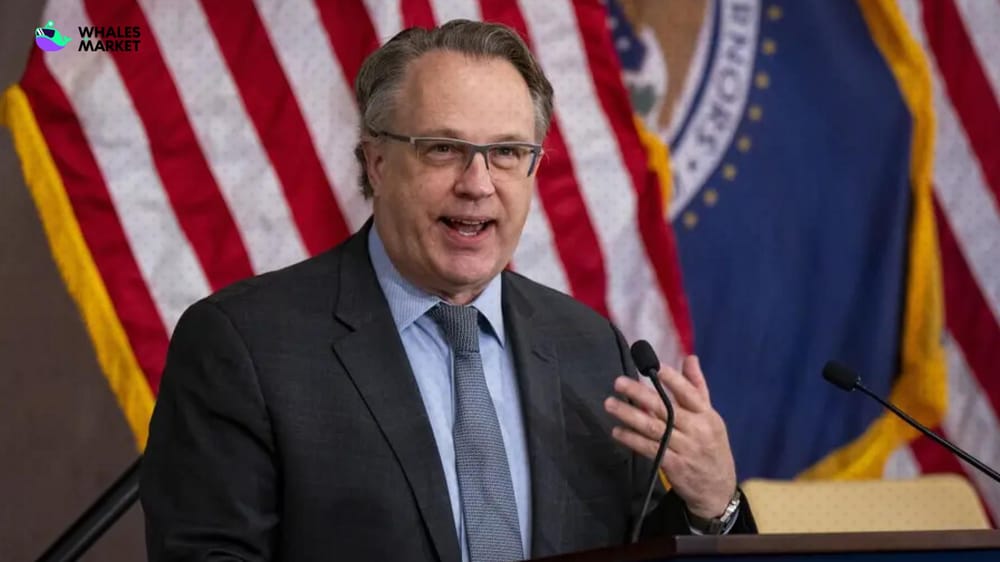
New York Federal Reserve President John Williams indicated that the Federal Reserve's benchmark policy rate is nearing a neutral stance, forecasting an acceleration in economic activity in 2026. He shared these insights during a speech in New Jersey, expressing optimism that the economy is on the verge of a resurgence characterized by robust growth and stable prices.
Economic Outlook and Monetary Policy
Williams' remarks follow the Fed's recent policy meeting where growth projections for 2026 were revised upward, coinciding with a reduction in interest rates to a target range of 3.5% to 3.75%. He believes this adjustment has shifted the Fed's position from "modestly restrictive" towards a more neutral level. This suggests that further rate reductions may be warranted before reaching a truly neutral stance, one that neither stimulates nor restrains economic expansion.
He also reiterated that the downside risks to employment have increased, while the upside risks to inflation have lessened. Many indicators of the job market are now comparable to pre-pandemic levels. The labor market is cooling gradually, without any major rise in layoffs or other signs of rapid deterioration.
Inflation and Growth Projections
Williams observed that the impact of tariffs on inflation has been less pronounced and more prolonged than initially anticipated, estimating their contribution to inflation at roughly half a percentage point. Looking forward, he does not foresee tariffs triggering secondary or spillover effects on inflation, nor does he anticipate widespread supply chain disruptions. Furthermore, he noted a steady decline in shelter inflation and a gradual deceleration in wage growth.
He projects GDP growth, adjusted for inflation, to reach approximately 2.25% in 2026, propelled by fiscal policy tailwinds, favorable financial conditions, increased investment in artificial intelligence, and a recovery from the government shutdown. This growth forecast surpasses his estimate of around 1.5% for the current year. He also anticipates that inflation will decrease to just under 2.5% next year and ultimately reach the Fed's 2% target in 2027. The unemployment rate is expected to rise to about 4.5% by the end of this year due to the government shutdown, but is then projected to decline over the next few years.
Susan Collins' Perspective
Boston Fed President Susan Collins expressed her support for the recent rate cut in a LinkedIn post, characterizing it as a "close call." While she initially leaned towards maintaining steady policy in November, new information available by the December meeting led her to believe that the balance of risks had shifted slightly.
Collins noted a perceived decrease in the likelihood of a substantial further increase in inflation. However, she remains wary of the potential for inflation to become more persistent, emphasizing new language in the Fed's policy statement that indicates a pause. She expressed a desire for greater clarity regarding the inflation outlook before implementing further policy adjustments, aiming to ensure a timely return of inflation to the Committee's 2 percent objective.
FAQs
What does the Fed's recent interest rate cut mean for the economy?
According to John Williams, the rate cut moves the Fed's policy from "modestly restrictive" towards a neutral stance, suggesting further reductions may be needed to neither stimulate nor restrain economic expansion. He also anticipates the economy will pick up steam in 2026.
What are the key factors expected to drive economic growth in 2026?
Williams projects GDP growth of 2.25% in 2026, driven by fiscal policy, favorable financial conditions, AI investment, and recovery from the government shutdown. He also notes a decline in shelter inflation and wage growth.
When does the Fed expect inflation to reach its 2% target?
While Williams anticipates inflation will decrease to just under 2.5% next year, he projects it will ultimately reach the Fed's 2% target in 2027. He also doesn't foresee tariffs causing widespread supply chain disruptions or secondary inflation effects.
You've got the context, now make it count. Capitalize on this market momentum and potentially get ahead of the curve; explore Whales Market for pre market trading crypto.