

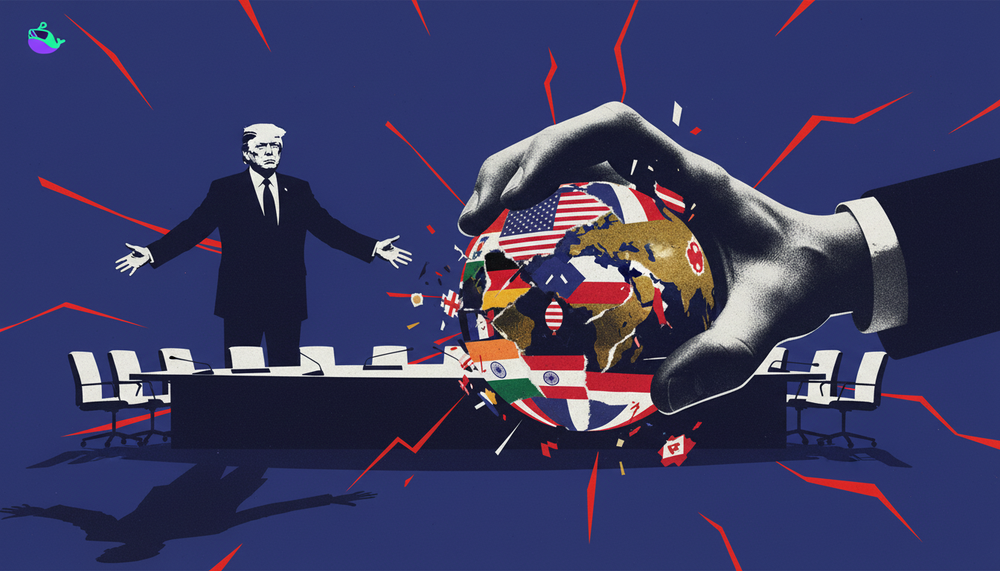
The G-20, arguably the most vital forum for global governance in a world increasingly marked by division, is facing a critical juncture. Originating as a meeting of finance ministers in response to the 1997 Asian financial crisis, it evolved into a crucial platform where the world's 20 largest economies collaborate on addressing shared global challenges.
With the United Nations experiencing a decline in influence and its Security Council facing persistent gridlock, the G-20 has gained increased significance. Despite its inherent shortcomings, such as being an unrepresentative body where decisions rely on consensus and lack binding authority, it has successfully united major players from both the global North and South.
Threat to G-20's Stability
The established order is now fracturing. As the United States assumes the rotating G-20 presidency and prepares to host the upcoming summit at a Miami golf resort owned by President Donald Trump, it is simultaneously taking steps to exclude South Africa and disregard the priorities that have guided the G-20 in recent years. Without strong opposition from other members, the U.S. risks isolating itself from global governance, potentially creating a void in multilateral leadership that other nations will fill.
Recent events highlight this concerning trend. Senior officials from member states convened in Washington to prepare for the 2026 summit, but South Africa was notably barred from participating. This marks the first instance in the G-20's history where a host country has unilaterally excluded another member, representing the culmination of the U.S.'s nearly year-long diplomatic pressure on South Africa. This began with Trump's absence from the November 2025 G-20 summit in Johannesburg, followed by Secretary of State Marco Rubio's public criticism of the African National Congress-led government's policies.
Underlying Tensions and Potential Consequences
Several factors contribute to the strained relationship between the U.S. and South Africa. A White House order condemned South Africa's "egregious actions," particularly allegations of land seizures from white farmers and the country's decision to pursue a genocide case against Israel. Influenced by Elon Musk, who claims the white Afrikaner minority is being persecuted, the U.S. has also imposed significant tariffs on South African goods, mirroring those applied to other BRICS nations.
However, the exclusion of South Africa from the G-20 has broader implications. The G-20 operates on consensus, and there was no vote authorizing the removal of a member. While technically an invitation isn't required for attendance, the U.S. could potentially block visas for the South African delegation. More importantly, this action signals a shift towards arbitrary expulsion at the host country's discretion. The U.S. is reportedly considering replacing South Africa with Poland, setting a dangerous precedent that undermines the principle of consensus.
Allowing this move to stand would significantly weaken the G-20's ability to address critical global challenges. The G-20's members collectively represent 85% of the global GDP, three-quarters of world trade, and two-thirds of the world's population. In 2009, the G-20 mobilized \$1.1 trillion to combat the global financial crisis. During the COVID-19 pandemic, the group deployed trillions more, but ultimately failed to achieve debt relief due to a lack of private creditor participation. In 2021, it reached a landmark global minimum corporate tax agreement.
Shifting Priorities and Future Outlook
Furthermore, Trump's actions threaten to undermine the G-20's progress in addressing its existing limitations. Recent summits hosted by Indonesia, India, Brazil, and South Africa have prioritized the concerns of the Global South, focusing on climate change, inequality, and debt sustainability. The Johannesburg summit in particular emphasized these issues. However, these priorities could now be disregarded entirely. Rubio has dismissed South Africa's priorities as divisive and radical, suggesting that the Miami agenda will focus on different priorities.
FAQs
Why is the G-20 important and what challenges is it facing?
The G-20 is a crucial forum for global economic cooperation, especially as the UN's influence declines. It faces challenges as the US, the upcoming host, is taking actions that threaten the G-20's established order and consensus-based decision-making.
Why is the US excluding South Africa from the upcoming G-20 summit?
The US is excluding South Africa due to disagreements over South Africa's policies, including allegations of land seizures and its genocide case against Israel. The US has also cited concerns about the treatment of white Afrikaners.
What are the potential consequences of the US actions toward the G-20?
The US actions could isolate it from global governance, create a leadership void, and undermine the G-20's principle of consensus. Replacing South Africa with Poland could set a dangerous precedent for arbitrary expulsions.
You've got the context, now make it count. Put your knowledge to work and explore the opportunities in crypto premarket on Whales Market.