

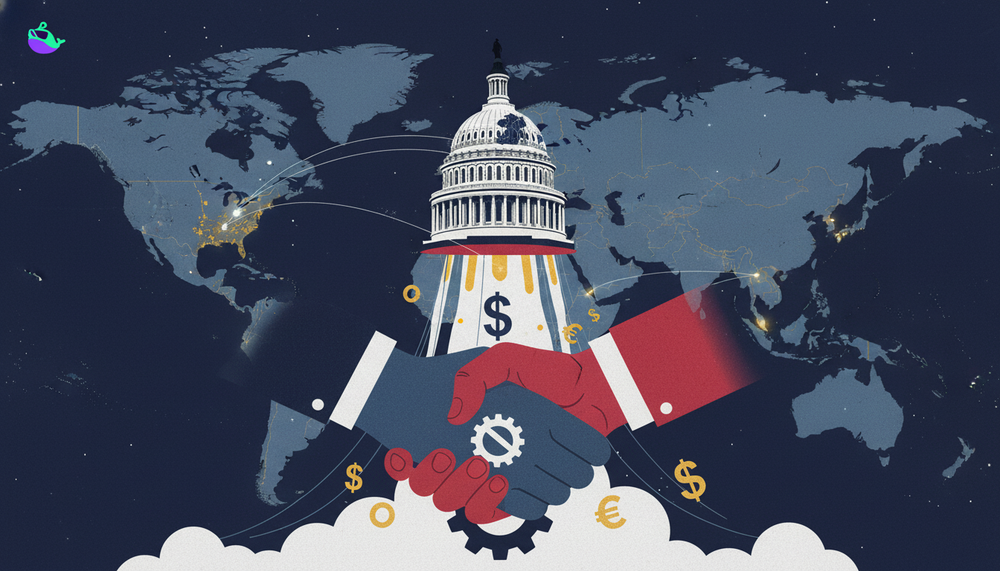
Congress is on the verge of approving legislation to reauthorize and significantly expand the lending capabilities of a crucial U.S. agency focused on global infrastructure finance. This move comes after extensive negotiations and aims to empower the U.S. Development Finance Corporation (DFC) to play a more prominent role in international development.
Expanding the DFC's Authority
The Senate is expected to approve the annual $900 billion defense authorization bill, which the House has already passed. This comprehensive bill includes provisions to modernize the DFC, extend its authorization through 2031, and dramatically increase its lending limit. The agency's maximum lending capacity will jump from $60 billion to $205 billion, enabling it to finance larger and more impactful projects worldwide.
The final legislation reflects compromises between Republicans, who sought to ease restrictions on the DFC, and a bipartisan group of lawmakers, particularly in the Senate, who insisted on maintaining the agency's focus on less-developed nations. This balance ensures the DFC can address critical infrastructure needs while prioritizing support for countries that need it most.
New Focus Areas and Restrictions
The legislation introduces a significant change by allowing the DFC to invest in wealthy countries, albeit with specific limitations. These restrictions include:
- Limiting financing in high-income countries to a maximum of 25% of a project's total cost.
- Ensuring that lending to high-income countries never exceeds 10% of the DFC's overall loan portfolio.
- Restricting loans for infrastructure projects in wealthy countries to key sectors: energy, critical minerals and rare earths, and information and communications technology (e.g., undersea cables).
These limitations are designed to prevent the DFC from shifting its focus entirely away from developing nations while still allowing it to address strategic infrastructure needs in wealthier countries.
Strategic Importance and State Department Provisions
The DFC was initially created with bipartisan support during the Trump administration to promote sustainable economic growth in low- and middle-income countries and to provide an alternative to China's Belt and Road Initiative. The increased lending capacity will allow the DFC to more effectively compete with China in this space.
The National Defense Authorization Act (NDAA) for fiscal year 2026 also incorporates several State Department-related provisions, similar to previous years. Due to the State Department's historical difficulty in securing dedicated floor time for its own authorization bill, it has become common practice to include diplomatic and soft power-related provisions in the must-pass defense bill.
This year's bill includes non-controversial aspects of House Foreign Affairs Committee Chairman Brian Mast's efforts to reauthorize the State Department, focusing on areas such as management structure, consular affairs, human re, and political affairs.
Challenges and Future Outlook
Despite Mast's ambitious goal of passing a full State Department reauthorization bill, deep disagreements with House Democrats, particularly regarding changes introduced by the Trump administration, prevented the passage of a comprehensive bill. The lack of bipartisan support in the House effectively doomed the effort in the Senate, where bipartisan consensus is essential for overcoming the filibuster.
Mast's office highlighted the bill's codification of the department's regional assistant secretaries as a significant achievement. Mast acknowledged that this year's reauthorization attempt was a learning experience and intends to build upon it in the coming year. He expressed hope that the Senate would eventually adopt a similar approach to State Department authorizations as it does with the NDAA, demonstrating a growing political willingness in the House to return to annual State Department authorizations.
FAQs
What is the U.S. Development Finance Corporation (DFC) and what does it do?
The DFC is a U.S. agency that provides financing for infrastructure projects in developing countries. It aims to promote sustainable economic growth and offer an alternative to initiatives like China's Belt and Road Initiative.
How will the new legislation change the DFC's lending capabilities?
The legislation will significantly increase the DFC's lending limit from $60 billion to $205 billion and extend its authorization through 2031. It also allows the DFC to invest in wealthy countries, with limitations, in key sectors like energy and communications.
Why are State Department provisions included in the defense authorization bill?
The State Department has historically struggled to get its own authorization bill passed, so non-controversial diplomatic and soft power-related provisions are often included in the must-pass National Defense Authorization Act (NDAA). This allows for updates to the State Department's management and operations.
You've got the context, now make it count. Leverage your political knowledge and predict the market impact by exploring premarket trading crypto on Whales Market.